S
STMicroelectronics
| Series | Category | # Parts | Status | Description |
|---|---|---|---|---|
| Part | Spec A | Spec B | Spec C | Spec D | Description |
|---|---|---|---|---|---|



| Series | Category | # Parts | Status | Description |
|---|---|---|---|---|
| Part | Spec A | Spec B | Spec C | Spec D | Description |
|---|---|---|---|---|---|
| Part | Category | Description |
|---|---|---|
 STMicroelectronics STEVAL-ISA068V1Obsolete | Development Boards Kits Programmers | EVAL BOARD FOR ST1S32 |
 STMicroelectronics 74VCXHQ163245TTRObsolete | Integrated Circuits (ICs) | IC TRANSLATION TXRX 2.7V 48TSSOP |
 STMicroelectronics | Development Boards Kits Programmers | VNQ9050LAJ EVALUATION BOARD |
 STMicroelectronics LSM303DLHCTRObsolete | Sensors Transducers | IMU ACCEL/MAG 3-AXIS I2C 14LGA |
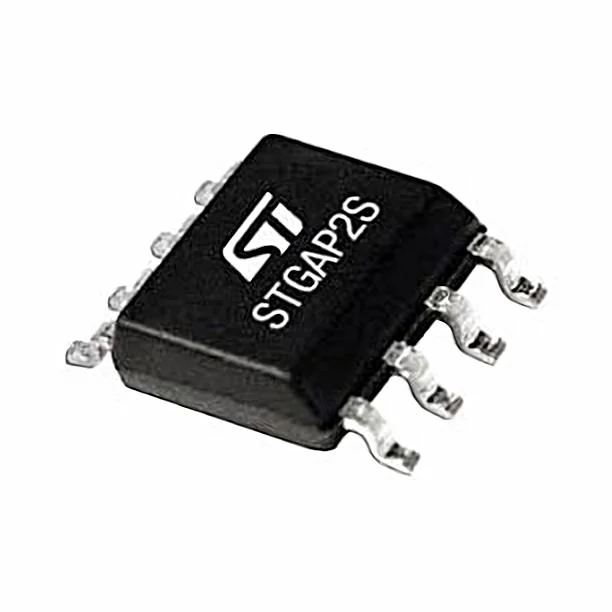 STMicroelectronics M93C56-WMN6TObsolete | Integrated Circuits (ICs) | EEPROM SERIAL-MICROWIRE 2K-BIT 256 X 8/128 X 16 3.3V/5V 8-PIN SO N T/R |
STMicroelectronics | Integrated Circuits (ICs) | STM32U |
 STMicroelectronics TS831-3IZObsolete | Integrated Circuits (ICs) | IC SUPERVISOR 1 CHANNEL TO92-3 |
 STMicroelectronics STMPE1208SQTRObsolete | Integrated Circuits (ICs) | IC I/O EXPANDER I2C 12B 40QFN |
 STMicroelectronics STM32L1-MAGNETObsolete | Development Boards Kits Programmers | IAR EXPERIMENT STM32 L1 EVAL BRD |
 STMicroelectronics VNB35N07Obsolete | Integrated Circuits (ICs) | IC PWR DRIVER N-CHAN 1:1 D2PAK |
| Series | Category | # Parts | Status | Description |
|---|---|---|---|---|
STD3LN80K5N-channel 800 V, 2.75 Ohm typ., 2 A MDmesh K5 Power MOSFET in a DPAK package | Discrete Semiconductor Products | 1 | Active | This very high voltage N-channel Power MOSFET is designed using MDmesh™ K5 technology based on an innovative proprietary vertical structure. The result is a dramatic reduction in on-resistance and ultra-low gate charge for applications requiring superior power density and high efficiency. |
| FETs, MOSFETs | 3 | Obsolete | ||
STD3N62N-channel 620 V, 2.2 Ohm typ., 2.7 A SuperMESH3(TM) Power MOSFET in DPAK package | Discrete Semiconductor Products | 1 | Active | These MDmesh™ K3 Power MOSFETs are the result of improvements applied to STMicroelectronics’ MDmesh™ technology, combined with a new optimized vertical structure. These devices boast an extremely low on-resistance, superior dynamic performance and high avalanche capability, rendering them suitable for the most demanding applications. |
STD3N65N-channel 650 V, 1.4 Ohm typ., 3.5 A MDmesh M6 Power MOSFET in a DPAK package | Discrete Semiconductor Products | 1 | Active | The new MDmesh M6 technology incorporates the most recent advancements to the well-known and consolidated MDmesh family of SJ MOSFETs. STMicroelectronics builds on the previous generation of MDmesh devices through its new M6 technology, which combines excellent RDS(on)per area improvement with one of the most effective switching behaviors available, as well as a user-friendly experience for maximum end-application efficiency. |
STD3N80N-channel 800 V, 2.8 Ohm typ., 2.5 MDmesh K5 Power MOSFET in a DPAK package | Discrete Semiconductor Products | 1 | Active | This very high voltage N-channel Power MOSFET is designed using MDmesh K5 technology based on an innovative proprietary vertical structure. The result is a dramatic reduction in on-resistance and ultra-low gate charge for applications requiring superior power density and high efficiency. |
STD3NK100ZN-channel 1000 V, 5.4 Ohm typ., 2.5 A SuperMESH Power MOSFET in a DPAK package | FETs, MOSFETs | 1 | Active | This high-voltage device is a Zener-protected N-channel Power MOSFET developed using the SuperMESH technology by STMicroelectronics, an optimization of the well-established PowerMESH. In addition to a significant reduction in on-resistance, this device is designed to ensure a high level of dv/dt capability for the most demanding applications. |
STD3NK50ZT4N-channel 500 V, 2.8 Ohm typ., 2.3 A SuperMESH Power MOSFET in a DPAK package | Discrete Semiconductor Products | 1 | Active | These high-voltage devices are Zener-protected N-channel Power MOSFETs developed using the SuperMESH™ technology by STMicroelectronics, an optimization of the well-established PowerMESH™. In addition to a significant reduction in on-resistance, these devices are designed to ensure a high level of dv/dt capability for the most demanding applications. |
STD3NK60Z-1N-channel 600 V, 3.2 Ohm typ., 2.4 A SuperMESH PowerMOSFET in IPAK package | Transistors | 1 | NRND | These high-voltage devices are Zener-protected N-channel Power MOSFETs developed using the SuperMESH™ technology by STMicroelectronics, an optimization of the well-established PowerMESH™. In addition to a significant reduction in on-resistance, these devices are designed to ensure a high level of dv/dt capability for the most demanding applications. |
STD3NK60ZT4N-channel 600 V, 3.2 Ohm typ., 2.4 A SuperMESH PowerMOSFET in DPAK package | Transistors | 1 | NRND | These high-voltage devices are Zener-protected N-channel Power MOSFETs developed using the SuperMESH™ technology by STMicroelectronics, an optimization of the well-established PowerMESH™. In addition to a significant reduction in on-resistance, these devices are designed to ensure a high level of dv/dt capability for the most demanding applications. |
STD3NK80Z-1N-channel 800 V, 3.8 Ohm typ., 2.5 A SuperMESH Power MOSFET in IPAK package | Discrete Semiconductor Products | 1 | Active | This high-voltage device is a Zener-protected N-channel Power MOSFET developed using the SuperMESH technology by STMicroelectronics, an optimization of the well-established PowerMESH. In addition to a significant reduction in on-resistance, this device is designed to ensure a high level of dv/dt capability for the most demanding applications. |