R
Renesas Electronics Corporation
| Series | Category | # Parts | Status | Description |
|---|---|---|---|---|
| Part | Spec A | Spec B | Spec C | Spec D | Description |
|---|---|---|---|---|---|



| Series | Category | # Parts | Status | Description |
|---|---|---|---|---|
| Part | Spec A | Spec B | Spec C | Spec D | Description |
|---|---|---|---|---|---|
| Part | Category | Description |
|---|---|---|
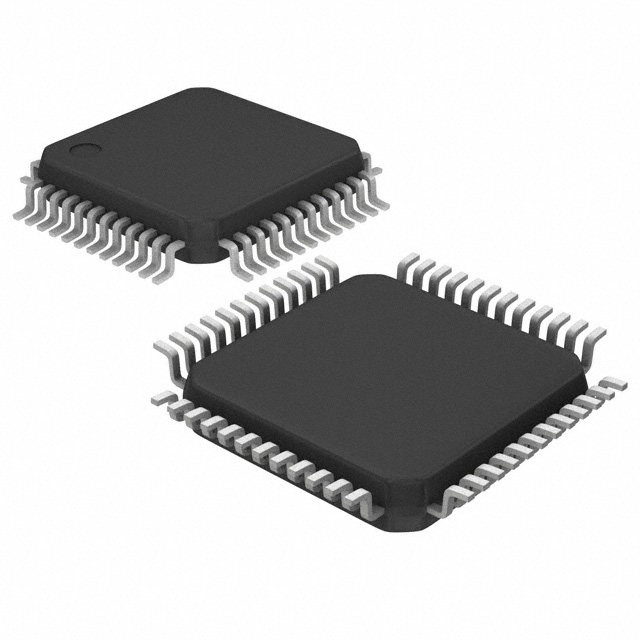 Renesas Electronics Corporation | Integrated Circuits (ICs) | IC MCU 32BIT 1MB FLASH 48LFQFP |
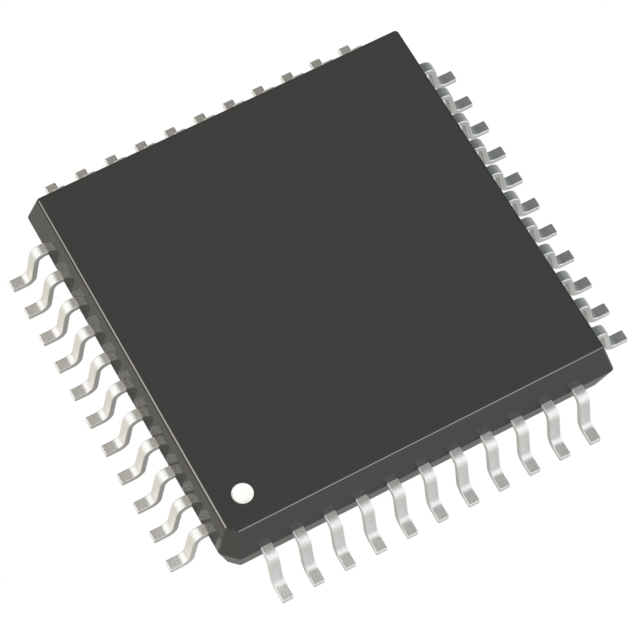 Renesas Electronics Corporation | Integrated Circuits (ICs) | 16-BIT GENERAL MCU RL78/G23 96K |
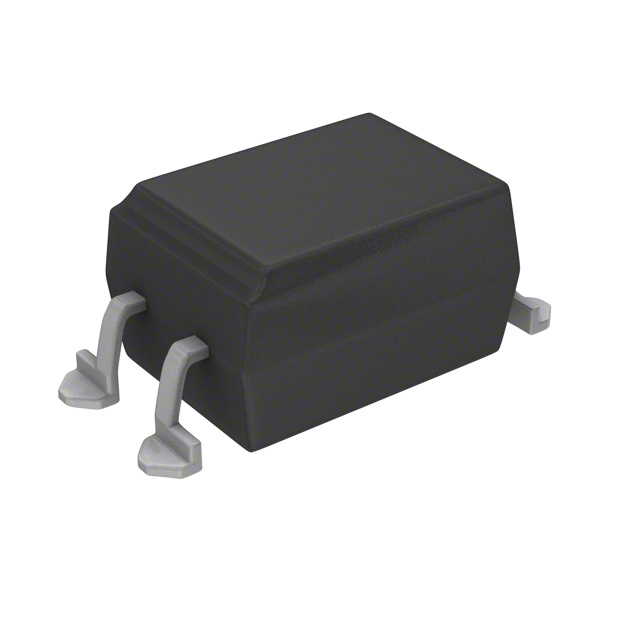 Renesas Electronics Corporation | Isolators | OPTOISOLATOR 5KV TRANS 4SMD |
Renesas Electronics Corporation | Integrated Circuits (ICs) | IC REG PQFN |
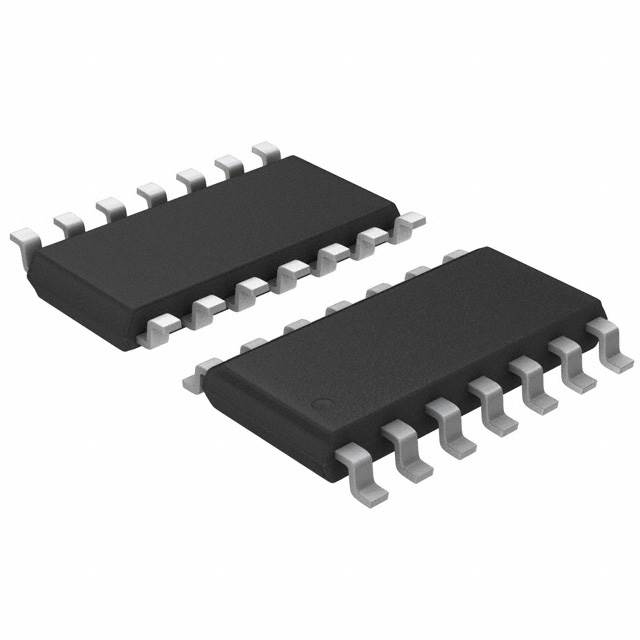 Renesas Electronics Corporation X1228S14-2.7Obsolete | Integrated Circuits (ICs) | IC RTC CLK/CALENDAR I2C 14SOIC |
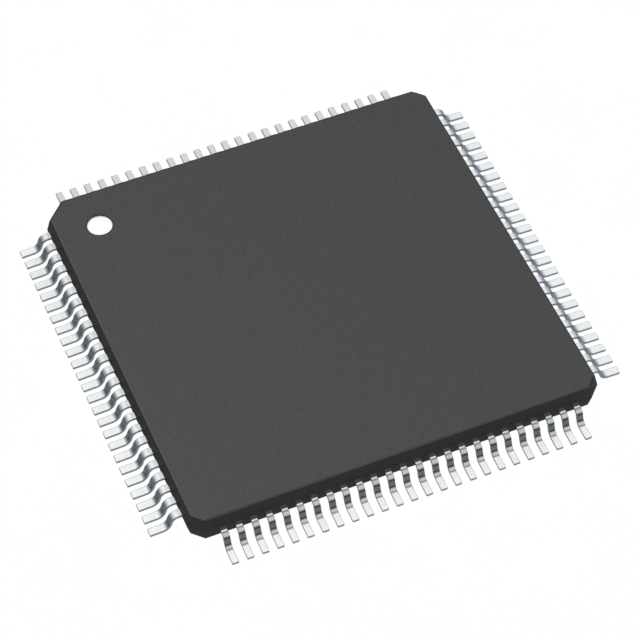 Renesas Electronics Corporation | Integrated Circuits (ICs) | 32-BIT MICROCONTROLLER OPTIMIZED FOR DUAL-MOTOR AND PFC CONTROL |
Renesas Electronics Corporation R5F104FJAFP#V0Obsolete | Integrated Circuits (ICs) | LOW POWER, HIGH FUNCTION, GENERAL PURPOSE MICROCONTROLLERS FOR MOTOR CONTROL, INDUSTRIAL AND METERING APPLICATIONS |
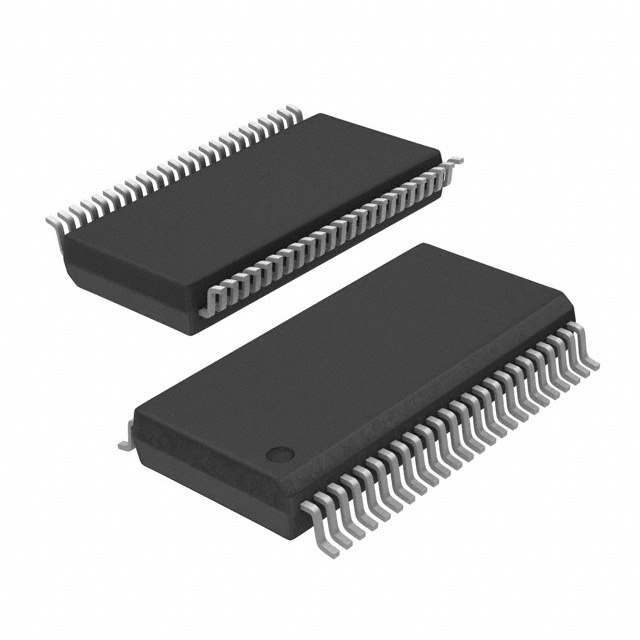 Renesas Electronics Corporation MK1493-03BGILFTRObsolete | Integrated Circuits (ICs) | IC CLOCK GENERATOR 48TSSOP |
Renesas Electronics Corporation | Development Boards Kits Programmers | E10A-USB SH4AL-DSP LICENSE TOOL |
Renesas Electronics Corporation | Integrated Circuits (ICs) | 32BIT MCU R32C/100X |
| Series | Category | # Parts | Status | Description |
|---|---|---|---|---|
| Clock Generators, PLLs, Frequency Synthesizers | 3 | Active | ||
| Clock/Timing | 2 | Active | ||
| Clock Generators, PLLs, Frequency Synthesizers | 2 | Active | ||
| Clock Generators, PLLs, Frequency Synthesizers | 2 | Active | ||
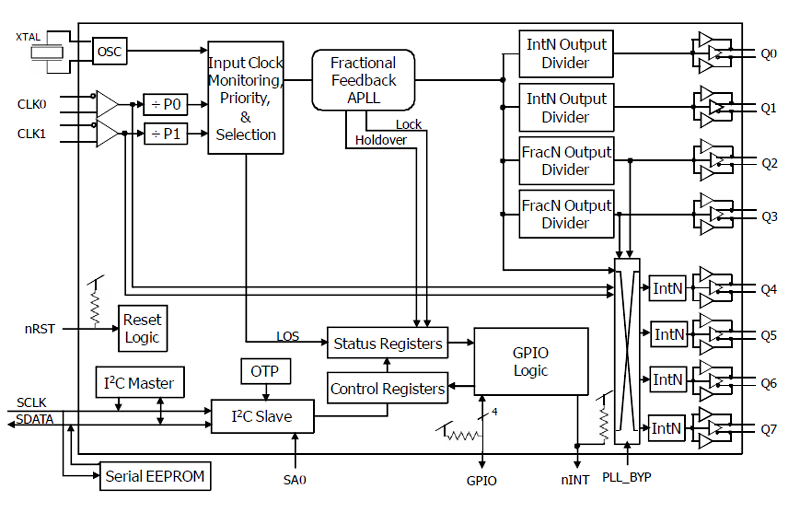
8T49N285FemtoClock NG Universal Frequency Translator (2-in/1-PLL/8-out) | Clock Generators, PLLs, Frequency Synthesizers | 4 | Active | The 8T49N285 has one fractional-feedback PLL that can be used as a frequency translator with jitter attenuation or a frequency synthesizer. It is equipped with six integer and two fractional output dividers, allowing the generation of up to eight different output frequencies, ranging from 8 kHz to 1 GHz. Output frequencies can be completely independent of the input frequencies, and up to three of these frequencies can be completely independent of each other. The eight outputs may select among LVPECL, LVDS, HCSL or LVCMOS output levels.
The 8T49N285 is ideal for use in a wide range of equipment, including 10G/40G/100G SONET/SDH and Ethernet network line cards, wireless base station baseband units, broadcast video, carrier Ethernet switches, OTN, or in test and measurement applications. For example, the 8T49N285 can be used in GbE/10GbE/100GbE Synchronous Ethernet line card applications in order to preserve the G.8262 compliance from the Synchronous Equipment Timing Source (SETS) on the timing card.
Renesas’ third generation Universal Frequency Translator family also includes the8T49N286(4-in / 2-PLL / 8-out), and8T49N287(2-in / 2-PLL / 8-out), and the8T49N242(2-in / 1-PLL / 4-out). These devices are complemented by the82P33714and82P33731synchronous equipment timing source (SETS) for Synchronous Ethernet (SyncE) and 10G-40G SyncE, respectively.
To see other devices in this product family, visit theUniversal Frequency Translatorspage. |
| Application Specific Clock/Timing | 5 | Active | ||
| Clock/Timing | 5 | Active | ||
| Clock/Timing | 2 | Active | ||
| Clock Generators, PLLs, Frequency Synthesizers | 3 | Obsolete | ||
8T49N4811I2C Programmable Ethernet Clock Generator | Clock/Timing | 1 | Obsolete | The 8T49N4811 is a highly flexible FemtoClock®NG pin-programmable clock generator suitable for networking and communications applications. It can generate five different output frequencies with multiple copies of each. A fundamental mode crystal, single-ended, or differential input reference may be used as the source for the output frequency.
The use of pin programming to select the input source/frequency, desired output frequencies, and output styles allows a single device to be used in a wide variety of applications without the need for register programming.
Selection pins use 3-level options to maximize flexibility while minimizing package size. Selection is performed by tying a selection pin high or low or by leaving it floating, eliminating the need for passive components to drive a desired logic level. |