M
Microchip Technology
| Series | Category | # Parts | Status | Description |
|---|---|---|---|---|
| Part | Spec A | Spec B | Spec C | Spec D | Description |
|---|---|---|---|---|---|



| Series | Category | # Parts | Status | Description |
|---|---|---|---|---|
| Part | Spec A | Spec B | Spec C | Spec D | Description |
|---|---|---|---|---|---|
| Part | Category | Description |
|---|---|---|
Microchip Technology | Crystals Oscillators Resonators | CMOS OUTPUT CLOCK OSCILLATOR, 24MHZ NOM |
 Microchip Technology | Crystals Oscillators Resonators | MEMS OSC |
 Microchip Technology | Integrated Circuits (ICs) | 1GHZ ARM CORTEX A7 W/ MIPI CAMERA AND 2GB INTEGRATED DDR3L |
 Microchip Technology | Discrete Semiconductor Products | DIODE GEN PURP 100V 12A DO203AA |
 Microchip Technology MSMBJ5372BLTB | Circuit Protection | VOLTAGE REGULATOR |
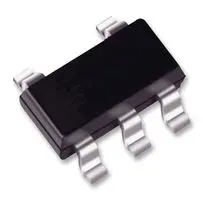 Microchip Technology | Integrated Circuits (ICs) | OPERATIONAL AMPLIFIER, 1 CHANNELS, 10 MHZ, 15 V/ΜS, 2.2V TO 5.5V, SOT-23, 5 PINS |
Microchip Technology LE9531CMQCTObsolete | Integrated Circuits (ICs) | IC TELECOM INTERFACE 28QFN |
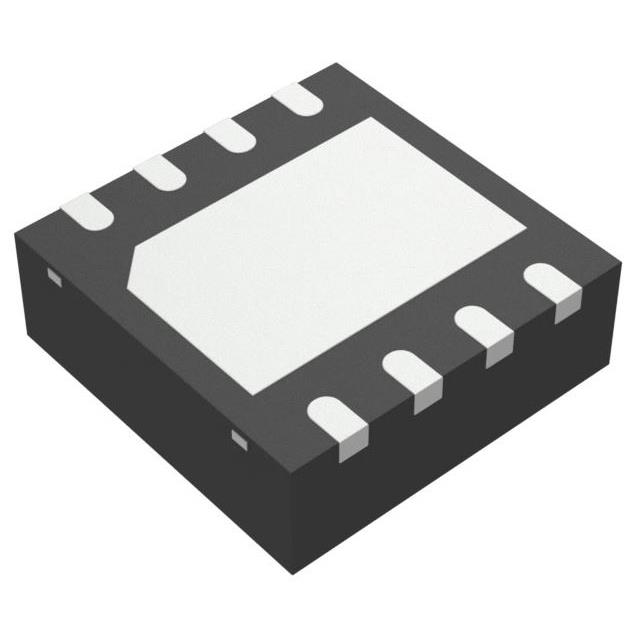 Microchip Technology MCP2021-330E/MD-AE2VAOObsolete | Integrated Circuits (ICs) | IC TRANSCEIVER |
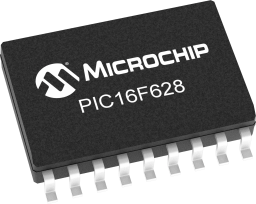 Microchip Technology | Integrated Circuits (ICs) | MCU 8-BIT PIC16 PIC RISC 3.5KB FLASH 3.3V/5V 18-PIN SOIC W TUBE |
Microchip Technology VCC6-LCF-212M500000Obsolete | Crystals Oscillators Resonators | DIFFERENTIAL XO +3.3 VDC +/-5% L |
| Series | Category | # Parts | Status | Description |
|---|---|---|---|---|
| Application Specific Microcontrollers | 1 | Active | ||
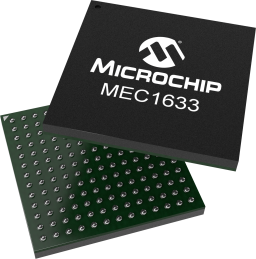
MEC1633Embedded Controller | Embedded | 1 | Active | MEC1633
is the mixed signal base component of a multi-device advanced I/O
controller architecture which incorporates a high-performance 32-bit ARC
625D embedded microcontroller with a 192KB Embedded Flash Subsystem, 16KB of
SRAM and a 1KB EEPROM Emulation. It communicates with the system host using the
Intel® Low Pin Count bus.
This
product is the Embedded Controller Base Component of a split-architecture
Advanced I/O Controller system that uses BC-LinkTM communication
protocol to access up to three companion components. MEC1633 is directly
powered by two separate suspend supply planes (VBAT and VTR) and senses a
third runtime power plane (VCC) to provide "instant on" and system power
management functions. Integrated VTR Reset Interface and a system Power Management
Interface that supports low-power states and can drive state changes because
of hardware wake events as defined by the MEC1633 Wake Interface included.
**Family parts**MEC1633-AUE-BLK00
MEC1633L-AUE
MEC1633X-AUE |
| Application Specific Microcontrollers | 4 | Active | ||
MEC1703Embedded Controller | Integrated Circuits (ICs) | 3 | Active | MEC1703 adds 2KB EEPROM.
The MEC170x is a family of keyboard and embedded controller designs customized for notebooks and industrial computing platforms. The family is a highly-configurable, mixed signal, advanced I/O controller architecture. Every device in the family incorporates a 32-bit ARM Cortex M4F Microcontroller core with a closely-coupled SRAM for code and data. A secure bootloader is used to download the custom firmware image from the system’s shared SPI Flash device, thereby allowing system designers tocustomize the device’s behavior.
MEC170x products may be configured to communicate with the system host through one of three host interfaces: Intel Low Pin Count (LPC), eSPI, or I2C. This family of products are designed to operate as either a stand-alone I/O device or as an EC Base Component of a split-architecture Advanced I/O Controller system which uses BC-Link communication protocol to access up to two BC bus companion components. The BC-Link protocol is peer-to-peer providing communication between the MEC170x embedded controller and registers located in a companion device.
**Family parts**
MEC1703K-F2-SZ
MEC1703K-P2-X/XY
MEC1703K-P2-XY
MEC1703Q-C2-XY
MEC1703Q-F2-SZ
NOTE: While the MEC170x family of embedded controllers is still supported, the enhanced features offered by the latest MEC152x and MEC172x families are highly recommended for new designs. |
| Integrated Circuits (ICs) | 1 | Active | ||
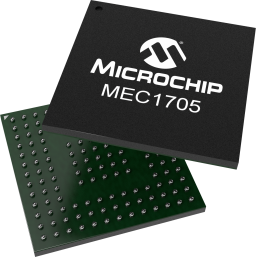
MEC1705Embedded Controller | Embedded | 2 | Active | MEC1705 is customized for embedded and industrial computing platforms. It is available in extended temperature range of -40oC to +85oC. 2 UARTS and 2 KB of EEPROM are included.
The family MEC17xx is a highly-configurable, mixed signal, advanced I/O controller architecture. Every device in the family incorporates a 32-bit ARM Cortex M4F Microcontroller core with a closely-coupled SRAM for code and data. A secure bootloader is used to download the custom firmware image from the system’s shared SPI Flash device, thereby allowing system designers to customize the device’s behavior.
MEC170x products may be configured to communicate with the system host through one of three host interfaces: Intel Low Pin Count (LPC), eSPI, or I2C. This family’s products are designed to operate as either a stand-alone I/O device or as an EC Base Component of a split-architecture Advanced I/O Controller system which uses BC-Link communication protocol to access up to two BC bus companion components. The BC-Link protocol is peer-to-peer providing communication between the MEC170x embedded controller and registers located in a companion device.
Similar Products: MEC1701, MEC1704, MEC1418, MEC1428
**Family parts**
MEC1705Q-C2-I/SZ
NOTE: While the MEC170x family of embedded controllers is still supported, the enhanced features offered by the latest MEC152x and MEC172x families are highly recommended for new designs. |
MEC1723Embedded Controller with 2KB EEPROM | Application Specific Microcontrollers | 2 | Active | The MEC1723 is a low power integrated embedded controller designed for notebook applications storage enclosure platforms. The MEC1723 is a highly-configurable, mixed-signal, advanced I/O controller. It contains a 32-bit ARM® Cortex-M4F processor core with closely-coupled memory for optimal code execution and data access. An internal ROM, embedded in the design, is used to store the power on/boot sequence and APIs available during run time.
When VTR\_CORE is applied to the device, the secure bootloader API is used to download the custom firmware image from the system’s shared SPI Flash device, thereby allowing system designers to customize the device’s behavior. The MEC1723 device is directly powered by a minimum of two separate suspend supply planes (VBAT and VTR) and senses a third runtime power plane (VCC) to provide "instant on" and system power management functions. The MEC1723 has two banks of I/O pins that are able to operate at either 3.3 V or 1.8 V. Operating at 1.8V allows the MEC1723 to interface with the latest platform controller hubs and will lower the overall power consumed by the device, Whereas 3.3V allows this device to be integrated into legacy platforms that require 3.3V operation.
The MEC1723 host interface is the Intel® Enhanced Serial Peripheral Interface (eSPI). The eSPI Interface is a 1.8V interface that operates in single, double and quad I/O modes. The eSPI Interface supports all four eSPI channels: Peripheral Channel, Virtual Wires Channel, OOB Message Channel, and Run-time Flash Access Channel. The eSPI hardware Flash Access Channel is used by the Boot ROM to support Master Attached Flash Sharing (MAFS). In addition, the MEC1723 has specially designed hardware to support Slave Attached Flash Sharing (SAFS). The eSPI SAFS Bridge imposes Region-Based Protection and Locking security feature, which limits access to certain regions of the flash to specific masters. There may be one or more masters (e.g., BIOS, ME, etc) that will access the SAF via the eSPI interface. The ARM® Cortex-M4F processor is also considered a master, which will also have its access limited to EC only regions of SPI Flash as determined by the customer firmware application.The MEC1723 secure bootloader authenticates and optionally decrypts the SPI Flash OEM boot image using the AES-256, ECDSA, SHA-512 cryptographic hardware accelerators. The MEC1723 hardware accelerators support 128-bit and 256-bit AES encryption, ECDSA and EC\_KCDSA signing algorithms, 1024-bits to 4096-bits RSA and Elliptic asymmetric public key algorithms, and a True Random Number Generator (TRNG). Runtime APIs are provided in the ROM for customer application code to use the cryptographic hardware. Additionally, the device offers lockable OTP storage for private keys and IDs.
The MEC1723 is designed to be incorporated into low power PC architecture designs and supports ACPI sleep states (S0-S5). During normal operation, the hardware always operates in the lowest power state for a given configuration. The chip power management logic offers two low power states: light sleep and heavy sleep. These features can be used to support S0 Connected Standby state and the lower ACPI S3-S5 system sleep states. In connected standby, any eSPI command will wake the device and be processed. When the chip is sleeping, it has many wake events that can be configured to return the device to normal operation. Some examples of supported wake events are PS2 wake events, RTC, Week Alarm, Hibernation Timer, or any GPIO pin.
The MEC1723 offers a software development system interface that includes a Trace FIFO Debug port, a host accessible serial debug port with a 16C550A register interface, a Port 80 BIOS Debug Port, and a 2-pin Serial Wire Debug (SWD) interface. Also included is a 4-wire JTAG interface used for Boundary Scan testing. |
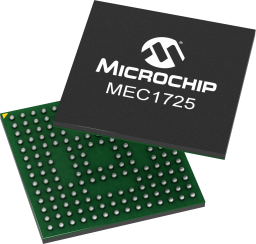
MEC1725Embedded Controller with Diode Temp Sensor | Application Specific Microcontrollers | 1 | Active | The MEC1725 is a family of low power integrated embedded controller designed for notebook applications storage enclosure platforms. The MEC1725 is a highly-configurable, mixed-signal, advanced I/O controller. It contains a 32-bit ARM® Cortex-M4F processor core with closely-coupled memory for optimal code execution and data access. An internal ROM, embedded in the design, is used to store the power on/boot sequence and APIs available during run time.
When VTR\_CORE is applied to the device, the secure bootloader API is used to download the custom firmware image from the system’s shared SPI Flash device, thereby allowing system designers to customize the device’s behavior. The MEC1725 device is directly powered by a minimum of two separate suspend supply planes (VBAT and VTR) and senses a third runtime power plane (VCC) to provide "instant on" and system power management functions. The MEC1725 has two banks of I/O pins that are able to operate at either 3.3 V or 1.8 V. Operating at 1.8V allows the MEC1725 to interface with the latest platform controller hubs and will lower the overall power consumed by the device, Whereas 3.3V allows this device to be integrated into legacy platforms that require 3.3V operation.
The MEC1725 host interface is the Intel® Enhanced Serial Peripheral Interface (eSPI). The eSPI Interface is a 1.8V interface that operates in single, double and quad I/O modes. The eSPI Interface supports all four eSPI channels: Peripheral Channel, Virtual Wires Channel, OOB Message Channel, and Run-time Flash Access Channel. The eSPI hardware Flash Access Channel is used by the Boot ROM to support Master Attached Flash Sharing (MAFS). In addition, the MEC1725 has specially designed hardware to support Slave Attached Flash Sharing (SAFS). The eSPI SAFS Bridge imposes Region-Based Protection and Locking security feature, which limits access to certain regions of the flash to specific masters. There may be one or more masters (e.g., BIOS, ME, etc) that will access the SAF via the eSPI interface. The ARM® Cortex-M4F processor is also considered a master, which will also have its access limited to EC only regions of SPI Flash as determined by the customer firmware application.The MEC1725 secure bootloader authenticates and optionally decrypts the SPI Flash OEM boot image using the AES-256, ECDSA, SHA-512 cryptographic hardware accelerators. The MEC1725 hardware accelerators support 128-bit and 256-bit AES encryption, ECDSA and EC\_KCDSA signing algorithms, 1024-bits to 4096-bits RSA and Elliptic asymmetric public key algorithms, and a True Random Number Generator (TRNG). Runtime APIs are provided in the ROM for customer application code to use the cryptographic hardware. Additionally, the device offers lockable OTP storage for private keys and IDs.
The MEC1725 is designed to be incorporated into low power PC architecture designs and supports ACPI sleep states (S0-S5). During normal operation, the hardware always operates in the lowest power state for a given configuration. The chip power management logic offers two low power states: light sleep and heavy sleep. These features can be used to support S0 Connected Standby state and the lower ACPI S3-S5 system sleep states. In connected standby, any eSPI command will wake the device and be processed. When the chip is sleeping, it has many wake events that can be configured to return the device to normal operation. Some examples of supported wake events are PS2 wake events, RTC, Week Alarm, Hibernation Timer, or any GPIO pin.
The MEC1725 offers a software development system interface that includes a Trace FIFO Debug port, a host accessible serial debug port with a 16C550A register interface, a Port 80 BIOS Debug Port, and a 2-pin Serial Wire Debug (SWD) interface. Also included is a 4-wire JTAG interface used for Boundary Scan testing. |
MEC1727Embedded Controller with 512 KB Internal SPI Flash | Embedded | 2 | Active | The MEC1727 is a low power integrated embedded controller designed for notebook applications storage enclosure platforms. The MEC1727 is a highly-configurable, mixed-signal, advanced I/O controller. It contains a 32-bit ARM® Cortex-M4F processor core with closely-coupled memory for optimal code execution and data access. An internal ROM, embedded in the design, is used to store the power on/boot sequence and APIs available during run time. When VTR\_CORE is applied to the device, the secure bootloader API is used to download the custom firmware image from the system’s shared SPI Flash device, thereby allowing system designers to customize the device’s behavior. The MEC1727 device is directly powered by a minimum of two separate suspend supply planes (VBAT and VTR) and senses a third runtime power plane (VCC) to provide "instant on" and system power management functions. The MEC1727 has one banks of I/O pins that are able to operate at 3.3 V (VTR1), one bank that is 1.8V (VTR3) and one bank that can operate at 3.3V/1.8V (VTR2). Operating at 1.8V allows the MEC1727 to interface with the latest platform controller hubs and will lower the overall power consumed by the device, Whereas 3.3V allows this device to be integrated into legacy platforms that require 3.3V operation.
The MEC1727 host interface is the Intel® Enhanced Serial Peripheral Interface (eSPI). The eSPI Interface is a 1.8V interface that operates in single, double and quad I/O modes. The eSPI Interface supports all four eSPI channels: Peripheral Channel, Virtual Wires Channel, OOB Message Channel, and Run time Flash Access Channel. The eSPI hardware Flash Access Channel is used by the Boot ROM to support Master Attached Flash Sharing (MAFS). In addition, the MEC1727 has specially designed hardware to support Slave Attached Flash Sharing (SAFS). The eSPI SAFS Bridge imposes Region-Based Protection and Locking security feature, which limits access to certain regions of the flash to specific masters. There may be one or more masters (e.g., BIOS, ME, etc) that will access the SAF via the eSPI interface. The ARM® Cortex-M4F processor is also considered a master, which will also have its access limited to EC only regions of SPI Flash as determined by the customer firmware application.The MEC1727 secure bootloader authenticates and optionally decrypts the SPI Flash OEM boot image using the AES-256, ECDSA, SHA-512 cryptographic hardware accelerators. The MEC1727 hardware accelerators support 128-bit and 256-bit AES encryption, ECDSA and EC\_KCDSA signing algorithms, 1024-bits to 4096-bits RSA and Elliptic asymmetric public key algorithms, and a True Random Number Generator (TRNG). Runtime APIs are provided in the ROM for customer application code to use the cryptographic hardware. Additionally, the device offers lockable OTP storage for private keys and IDs.
The MEC1727 is designed to be incorporated into low power PC architecture designs and supports ACPI sleep states (S0-S5). During normal operation, the hardware always operates in the lowest power state for a given configuration. The chip power management logic offers two low power states: light sleep and heavy sleep. These features can be used to support S0 Connected Standby state and the lower ACPI S3-S5 system sleep states. In connected standby, any eSPI command will wake the device and be processed. When the chip is sleeping, it has many wake events that can be configured to return the device to normal operation. Some examples of supported wake events are PS2 wake events, RTC, Week Alarm, Hibernation Timer, or any GPIO pin.
The MEC1727 offers a software development system interface that includes a Trace FIFO Debug port, a host accessible serial debug port with a 16C550A register interface, a Port 80 BIOS Debug Port, and a 2-pin Serial Wire Debug (SWD) interface. Also included is a 4-wire JTAG interface used for Boundary Scan testing.
The MEC1727 also supports eSPI host interface, with Master attached Flash and Slave attached Flash Sharing. |
MG1001-1060-C-to-W-Band-GunnCW-Epi-Up-Gunn | RF Diodes | 1 | Active | GaAs Gunn diodes epi-down are fabricated from epitaxial layers grown at MSC using the chemical vapor deposition (CVD) epitaxy process. The layers are processed using propriety techniques resulting in ultra-low phase and 1/f noise. The diodes are available in a variety of microwave ceramic packages for operation from 9.5-25 GHz. |