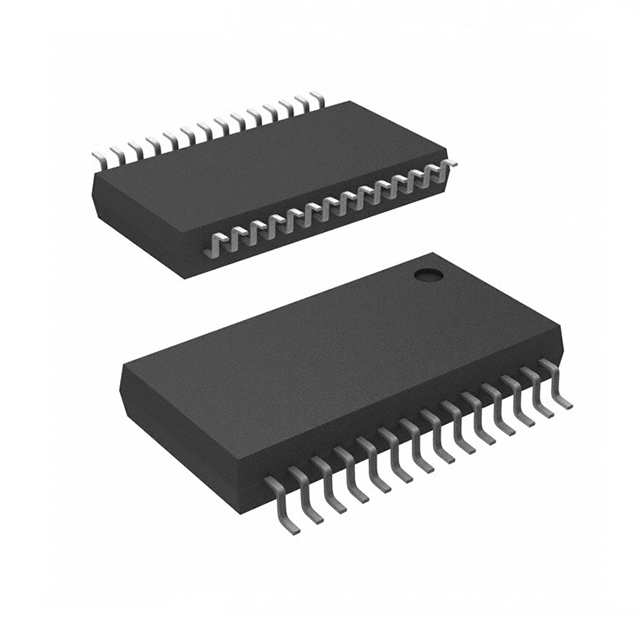
ADS42JB49IRGCR
Active2-CHANNEL DUAL ADC PIPELINED 250MSPS 14-BIT JESD204B 64-PIN VQFN EP T/R
Deep-Dive with AI
Search across all available documentation for this part.
ADS42JB49IRGCR
Active2-CHANNEL DUAL ADC PIPELINED 250MSPS 14-BIT JESD204B 64-PIN VQFN EP T/R
Technical Specifications
Parameters and characteristics for this part
| Specification | ADS42JB49IRGCR |
|---|---|
| Mounting Type | Surface Mount |
| Package / Case | 64-VFQFN Exposed Pad |
| Supplier Device Package | 64-VQFN (9x9) |
Pricing
Prices provided here are for design reference only. For realtime values and availability, please visit the distributors directly
| Distributor | Package | Quantity | $ | |
|---|---|---|---|---|
| Digikey | Tape & Reel (TR) | 2000 | $ 151.25 | |
| Texas Instruments | LARGE T&R | 1 | $ 140.36 | |
| 100 | $ 127.05 | |||
| 250 | $ 123.42 | |||
| 1000 | $ 121.00 | |||
Description
General part information
ADS42JB49 Series
The ADS42JB69 and ADS42JB49 are high-linearity, dual-channel, 16- and 14-bit, 250-MSPS, analog-to-digital converters (ADCs). These devices support the JESD204B serial interface with data rates up to3.125 Gbps. The buffered analog input provides uniform input impedance across a wide frequency range while minimizing sample-and-hold glitch energy making it easy to drive analog inputs up to very high input frequencies. A sampling clock divider allows more flexibility for system clock architecture design. The devices employ internal dither algorithms to provide excellent spurious-free dynamic range (SFDR) over a large input frequency range.
The ADS42JB69 and ADS42JB49 are high-linearity, dual-channel, 16- and 14-bit, 250-MSPS, analog-to-digital converters (ADCs). These devices support the JESD204B serial interface with data rates up to3.125 Gbps. The buffered analog input provides uniform input impedance across a wide frequency range while minimizing sample-and-hold glitch energy making it easy to drive analog inputs up to very high input frequencies. A sampling clock divider allows more flexibility for system clock architecture design. The devices employ internal dither algorithms to provide excellent spurious-free dynamic range (SFDR) over a large input frequency range.
Documents
Technical documentation and resources