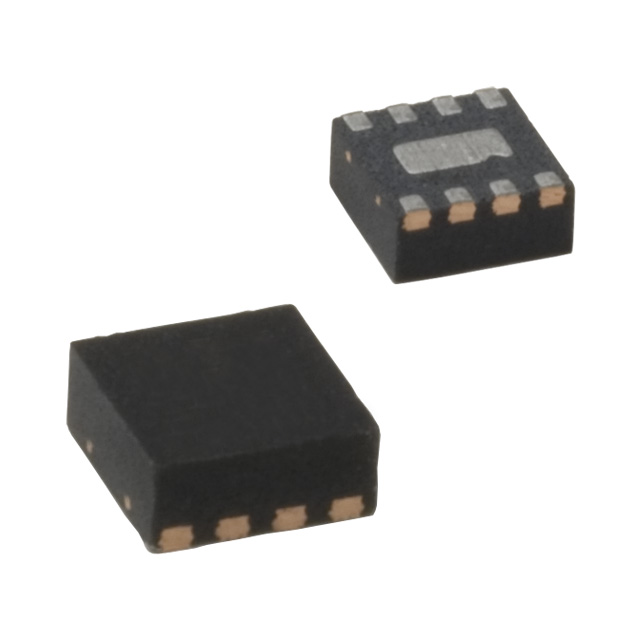
MIC2291-34YML-TR
ActivePHOTO FLASH LED DRIVER W/34V OVP 8 VDFN 2X2X0.9MM T/R ROHS COMPLIANT: YES
Deep-Dive with AI
Search across all available documentation for this part.
MIC2291-34YML-TR
ActivePHOTO FLASH LED DRIVER W/34V OVP 8 VDFN 2X2X0.9MM T/R ROHS COMPLIANT: YES
Deep-Dive with AI
Technical Specifications
Parameters and characteristics for this part
| Specification | MIC2291-34YML-TR |
|---|---|
| Applications | Camera Flash |
| Current - Output / Channel | 1.2 A |
| Dimming | Analog, PWM |
| Frequency | 1.2 MHz |
| Internal Switch(s) | True |
| Mounting Type | Surface Mount |
| Number of Outputs | 1 |
| Operating Temperature [Max] | 125 ¯C |
| Operating Temperature [Min] | -40 °C |
| Package / Case | 8-MLF®, 8-VFDFN Exposed Pad |
| Supplier Device Package | 8-MLF® (2x2) |
| Topology | Step-Up (Boost) |
| Type | DC DC Regulator |
| Voltage - Output | 34 V |
| Voltage - Supply (Max) [Max] | 10 V |
| Voltage - Supply (Min) [Min] | 2.5 V |
Pricing
Prices provided here are for design reference only. For realtime values and availability, please visit the distributors directly
| Distributor | Package | Quantity | $ | |
|---|---|---|---|---|
| Digikey | Cut Tape (CT) | 1 | $ 1.82 | |
| 25 | $ 1.52 | |||
| 100 | $ 1.45 | |||
| Digi-Reel® | 1 | $ 1.82 | ||
| 25 | $ 1.52 | |||
| 100 | $ 1.45 | |||
| Tape & Reel (TR) | 5000 | $ 1.45 | ||
| Microchip Direct | T/R | 1 | $ 1.82 | |
| 25 | $ 1.52 | |||
| 100 | $ 1.37 | |||
| 1000 | $ 1.34 | |||
| 5000 | $ 1.32 | |||
| Newark | Each (Supplied on Full Reel) | 100 | $ 1.42 | |
Description
General part information
MIC2291 Series
The MIC2291 is a 1.2MHz pulse-width modulation (PWM), boost-switching regulator that is optimized for high-current, white LED photo flash applications. With a guaranteed switch current of 1.2A, the MIC2291 easily drives a string of three white LEDs in series at 100mA, ensuring a high level of brightness and eliminating several ballast resistors.
The MIC2291 implements a constant frequency, 1.2MHz PWM control scheme. The high frequency PWM operation saves board space by reducing external component sizes. The added benefit of the constant frequency PWM scheme, in contrast to variable frequency topologies, is much lower noise and input ripple injected back to the battery source.
To optimize efficiency, the feedback voltage is set to only 95mV. This reduces the power dissipation in the current set resistor, and allows the lowest total output voltage, hence minimal current draw from the battery.
Documents
Technical documentation and resources