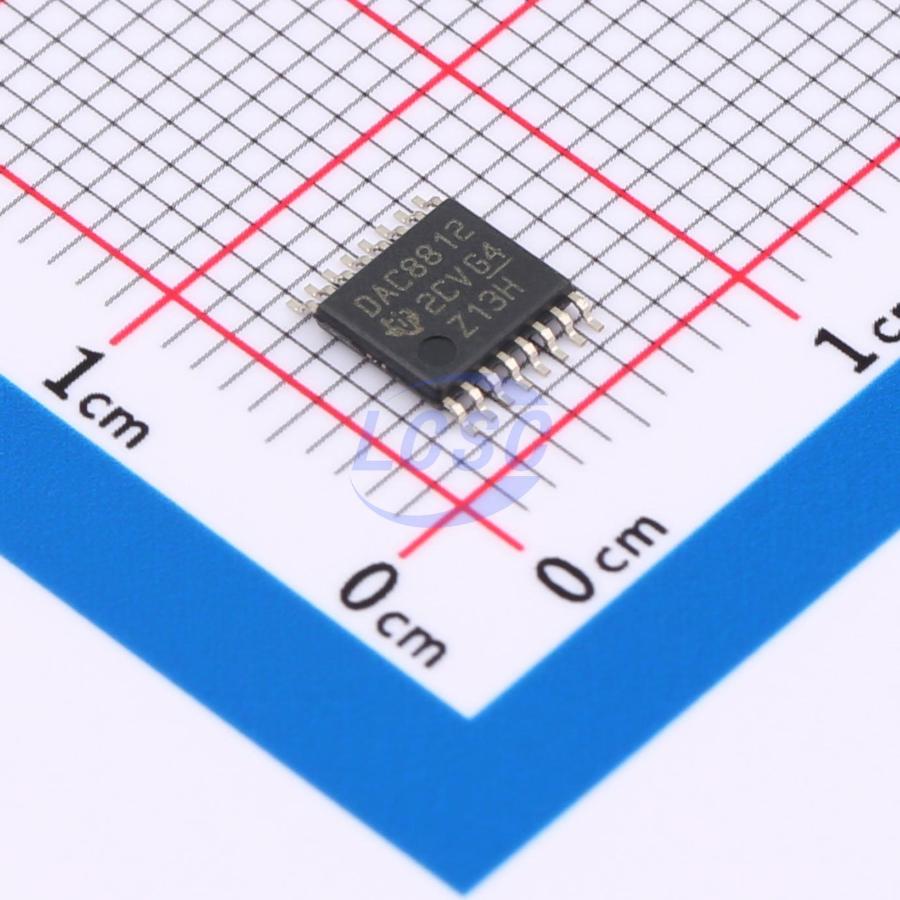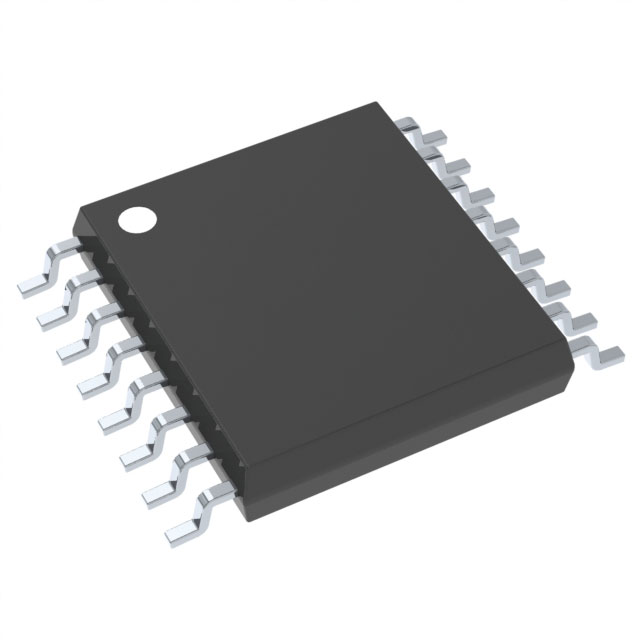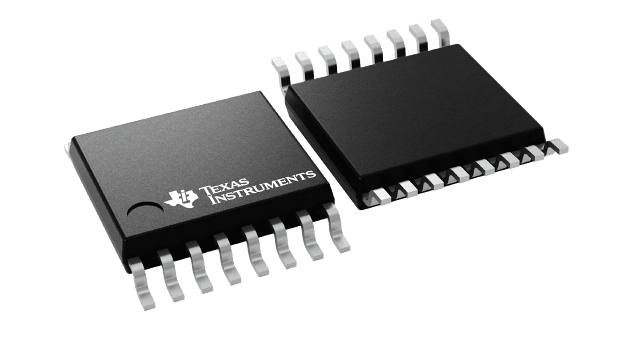
DAC8812ICPW
Active16-BIT, DUAL SERIAL INPUT MULTIPLYING DIGITAL-TO-ANALOG CONVERTER
Deep-Dive with AI
Search across all available documentation for this part.
DAC8812ICPW
Active16-BIT, DUAL SERIAL INPUT MULTIPLYING DIGITAL-TO-ANALOG CONVERTER
Deep-Dive with AI
Technical Specifications
Parameters and characteristics for this part
| Specification | DAC8812ICPW |
|---|---|
| Architecture | Multiplying DAC |
| Data Interface | SPI |
| Differential Output | False |
| INL/DNL (LSB) | ±1 (Max) |
| Mounting Type | Surface Mount |
| Number of Bits | 16 |
| Operating Temperature [Max] | 85 °C |
| Operating Temperature [Min] | -40 °C |
| Output Type | Current - Unbuffered |
| Package / Case | 16-TSSOP |
| Package / Case [x] | 0.173 in |
| Package / Case [y] | 4.4 mm |
| Reference Type | External |
| Settling Time | 500 ns |
| Supplier Device Package | 16-TSSOP |
| Voltage - Supply, Analog [Max] | 5.5 V |
| Voltage - Supply, Analog [Min] | 2.7 V |
| Voltage - Supply, Digital [Max] | 5.5 V |
| Voltage - Supply, Digital [Min] | 2.7 V |
Pricing
Prices provided here are for design reference only. For realtime values and availability, please visit the distributors directly
| Distributor | Package | Quantity | $ | |
|---|---|---|---|---|
| Digikey | Tube | 1 | $ 28.70 | |
| 10 | $ 26.47 | |||
| 90 | $ 22.61 | |||
| 270 | $ 21.56 | |||
| Texas Instruments | TUBE | 1 | $ 24.44 | |
| 100 | $ 21.35 | |||
| 250 | $ 16.46 | |||
| 1000 | $ 14.72 | |||
Description
General part information
DAC8812 Series
The DAC8812 is a dual, 16-bit, current-output digital-to-analog converter (DAC) designed to operate from a single 2.7-V to 5.5-V supply.
The applied external reference input voltage VREFdetermines the full-scale output current. An internal feedback resistor (RFB) provides temperature tracking for the full-scale output when combined with an external I-to-V precision amplifier.
A double-buffered, serial data interface offers high-speed, 3-wire, SPI and microcontroller compatible inputs using serial data in (SDI), clock (CLK), and a chip-select (CS). A common level-sensitive load DAC strobe (LDAC) input allows simultaneous update of all DAC outputs from previously loaded input registers. Additionally, an internal power-on reset forces the output voltage to zero at system turnon. An MSB pin allows system reset assertion (RS) to force all registers to zero code when MSB = 0, or to midscale code when MSB = 1.
Documents
Technical documentation and resources