LIS2DW12TR
ActiveACCELEROMETER TRIPLE ±2G/±4G/±8G/±16G 1.62V TO 3.6V 0.244MG/DIGIT/0.488MG/DIGIT/0.976MG/DIGIT/1.952M… MORE
LIS2DW12TR
ActiveACCELEROMETER TRIPLE ±2G/±4G/±8G/±16G 1.62V TO 3.6V 0.244MG/DIGIT/0.488MG/DIGIT/0.976MG/DIGIT/1.952M… MORE
Technical Specifications
Parameters and characteristics for this part
| Specification | LIS2DW12TR |
|---|---|
| Acceleration Range | 8 g, 4 g, 2 g, 16 g |
| Axis [x] | X |
| Axis [y] | Y |
| Axis [z] | Z |
| Bandwidth | 400 Hz |
| Features | Selectable Scale |
| Mounting Type | Surface Mount |
| Operating Temperature [Max] | 85 °C |
| Operating Temperature [Min] | -40 C |
| Output Type | SPI, I2C |
| Package / Case | 12-WFLGA |
| Sensitivity (LSB/g) | 4098 LSB/g, 512 LSB/g |
| Supplier Device Package | 12-LGA (2x2) |
| Type | Digital |
| Voltage - Supply [Max] | 3.6 V |
| Voltage - Supply [Min] | 1.62 V |
Pricing
Prices provided here are for design reference only. For realtime values and availability, please visit the distributors directly
Description
General part information
LIS2DW12 Series
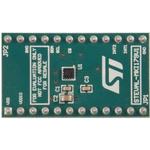
The STEVAL-MKI179V1 adapter board is designed to facilitate the evaluation of the LIS2DW12 3-axis accelerometer. The board offers an effective solution for fast system prototyping and device evaluation directly within the user’s own application.
The STEVAL-MKI179V1 can be plugged into a standard DIL24 socket. The adapter provides the complete LIS2DW12 pinout and comes ready to use with the required decoupling capacitors on the VDD power supply line.
This adapter is supported by the STEVAL-MKI109V3 and STEVAL-MKI109D evaluation platforms that include a high-performance 32-bit microcontroller functioning as a bridge between the sensor and a PC, on which it is possible to use the downloadable MEMS Studio graphical user interface or dedicated software routines for customized applications.
Documents
Technical documentation and resources