Technical Specifications
Parameters and characteristics for this part
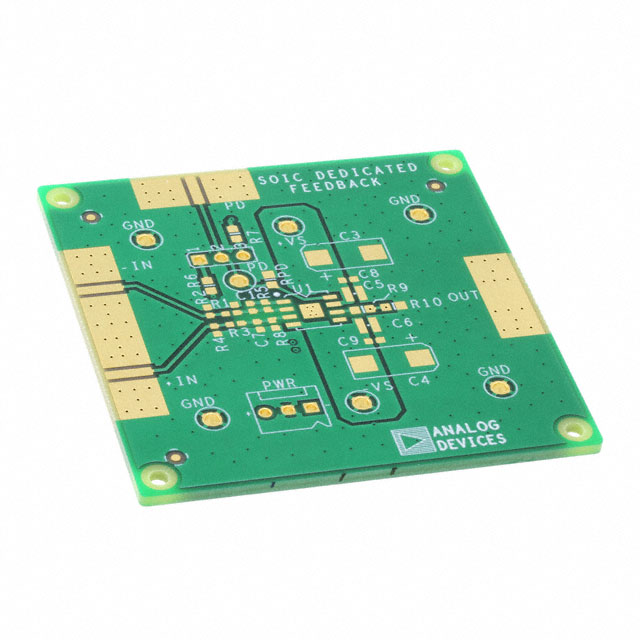
| Specification | AD8045ARD-EBZ |
|---|---|
| Amplifier Type | Voltage Feedback |
| Board Type | Bare (Unpopulated) |
| Channels per IC | 1 - Single |
| Supplied Contents | Board(s) |
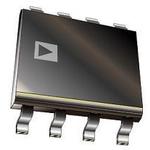
| Utilized IC / Part | 8-SOIC Package |
Pricing
Prices provided here are for design reference only. For realtime values and availability, please visit the distributors directly
| Distributor | Package | Quantity | $ | |
|---|---|---|---|---|
Description
General part information
AD8045 Series
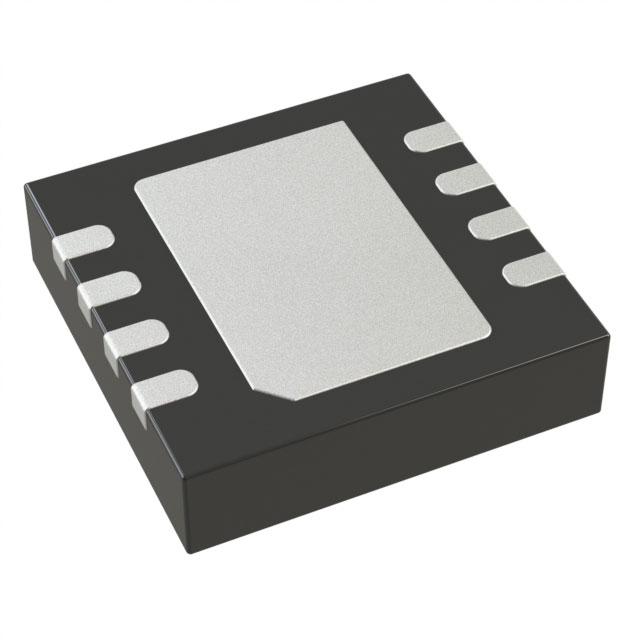
The AD8045 is a unity-gain stable voltage feedback amplifier with ultralow distortion, low noise, and high slew rate. With a spurious-free dynamic range of −90 dBc at 20 MHz, the AD8045 is an ideal solution in a variety of applications, including ultrasound, automated test equipment (ATE), active filters, and analog-todigital converter (ADC) drivers. The Analog Devices, Inc., proprietary next generation XFCB process and innovative architecture enable such high performance amplifiers.The AD8045 features a low distortion pinout for the LFCSP, which improves second harmonic distortion and simplifies the layout of the circuit board.The AD8045 has a 1 GHz bandwidth, a 1350 V/µs slew rate, and settles to 0.1% in 7.5 ns. With a wide supply voltage range (3.3 V to 12 V) and a low offset voltage (200 µV), the AD8045 is an ideal candidate for systems that require high dynamic range, precision, and high speed.The AD8045 amplifier is available in a 3 mm × 3 mm LFCSP and the standard 8-lead SOIC. Both packages feature an exposed paddle that provides a low thermal resistance path to the printed circuit board (PCB). This enables more efficient heat transfer and increases reliability. The AD8045 works over the extended industrial temperature range (−40°C to +125°C).ApplicationsInstrumentationIF and baseband amplifiersActive filtersADC driversDAC buffers
Documents
Technical documentation and resources