Deep-Dive with AI
Search across all available documentation for this part.
Deep-Dive with AI
Technical Specifications
Parameters and characteristics for this part
| Specification | LAN9500A-ABZJ |
|---|---|
| Function | Bridge, USB to Ethernet |
| Interface | USB |
| Operating Temperature [Max] | 70 °C |
| Operating Temperature [Min] | 0 °C |
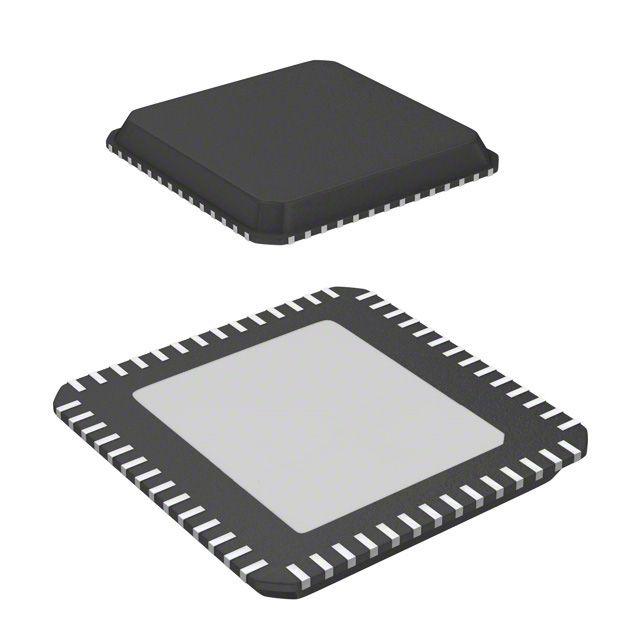
| Package / Case | 56-VFQFN Exposed Pad |
| Protocol | Ethernet |
| Standards | 10/100 Base-T/TX PHY, USB 2.0 |
| Supplier Device Package | 56-QFN (8x8) |
| Voltage - Supply | 3.3 V, 2.5 V, 1.2 V |
Pricing
Prices provided here are for design reference only. For realtime values and availability, please visit the distributors directly
| Distributor | Package | Quantity | $ | |
|---|---|---|---|---|
| Digikey | Tray | 1 | $ 5.11 | |
| 25 | $ 4.27 | |||
| 100 | $ 4.13 | |||
| Microchip Direct | TRAY | 1 | $ 5.11 | |
| 25 | $ 4.27 | |||
| 100 | $ 3.90 | |||
| 1000 | $ 3.57 | |||
| 5000 | $ 3.41 | |||
Description
General part information
LAN9500A Series
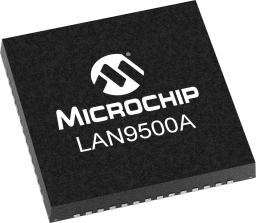
Microchip's LAN9500 and LAN9500A Hi-Speed USB 2.0 to 10/100 Ethernet controllers provide a high-performance, cost-competitive USB to Ethernet connectivity solution containing an integrated 10/100 Ethernet PHY, Hi-Speed USB 2.0 PHY, Hi-Speed USB 2.0 controller, 10/100 Ethernet MAC, TAP controller, EEPROM controller and FIFO controller in a compact 56-pin QFN package.
The LAN9500/9500A support ±8kV HBM and ±15kV air discharge ESD protection and require only a single 25MHz crystal, which helps to keep BOM costs for external components to a minimum. An external MII and Turbo MII interface provides support for Fast Ethernet, HomePlug® and HomePNA™ (HPNA) functionality.
These devices feature Microchip's proprietary NetDetach™ and UniClock™ technologies. NetDetach allows for up to a 25% reduction in system power by enabling the host CPU to enter a low-power state when Ethernet is inactive. UniClock simplifies the clocking scheme and reduces system BOM costs by using a single 25MHz crystal for both USB and Ethernet connectivity – without the need for additional components when adding USB hubs. Both devices are available in commercial (0°C to 70°C) and industrial temperature range (-40°C to 85°C) options.
Documents
Technical documentation and resources