


Deep-Dive with AI
Search across all available documentation for this part.
Deep-Dive with AI
Technical Specifications
Parameters and characteristics for this part
| Specification | SY100EL91ZC |
|---|---|
| Channel Type | Unidirectional |
| Channels per Circuit | 3 |
| Input Signal | PECL |
| Mounting Type | Surface Mount |
| Number of Circuits | 1 |
| Operating Temperature (Max) | 85 °C |
| Operating Temperature (Min) | 0 °C |
| Output Signal | ECL |
| Output Type | Differential |
| Package Length | 0.295 in |
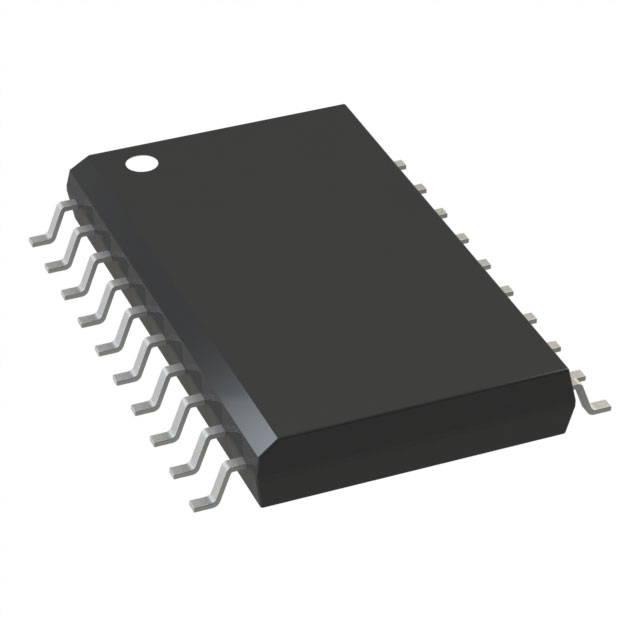
| Package Name | 20-SOIC |
| Package Width | 7.5 mm |
| Translator Type | Mixed Signal |
| Part | Output Type | Operating Temperature (Min) | Operating Temperature (Max) | Input Signal | Channels per Circuit | Translator Type | Package Length | Package Name | Package Width | Channel Type | Number of Circuits | Mounting Type | Output Signal |
|---|---|---|---|---|---|---|---|---|---|---|---|---|---|
Microchip Technology | Differential | 0 °C | 85 °C | LVPECL | 3 | Mixed Signal | 0.295 in | 20-SOIC | 7.5 mm | Unidirectional | 1 | Surface Mount | ECL LVECL |
Microchip Technology | Differential | -40 °C | 85 °C | PECL | 3 | Mixed Signal | 0.295 in | 20-SOIC | 7.5 mm | Unidirectional | 1 | Surface Mount | ECL |
Microchip Technology | Differential | -40 °C | 85 °C | LVPECL | 3 | Mixed Signal | 0.295 in | 20-SOIC | 7.5 mm | Unidirectional | 1 | Surface Mount | ECL LVECL |
Microchip Technology | Differential | 0 °C | 85 °C | PECL | 3 | Mixed Signal | 0.295 in | 20-SOIC | 7.5 mm | Unidirectional | 1 | Surface Mount | ECL |
 Microchip Technology | Differential | -40 °C | 85 °C | LVPECL | 3 | Mixed Signal | 0.295 in | 20-SOIC | 7.5 mm | Unidirectional | 1 | Surface Mount | ECL LVECL |
Microchip Technology | Differential | 0 °C | 85 °C | PECL | 3 | Mixed Signal | 0.295 in | 20-SOIC | 7.5 mm | Unidirectional | 1 | Surface Mount | ECL |
Microchip Technology | Differential | -40 °C | 85 °C | PECL | 3 | Mixed Signal | 0.295 in | 20-SOIC | 7.5 mm | Unidirectional | 1 | Surface Mount | ECL |
Microchip Technology | Differential | 0 °C | 85 °C | LVPECL | 3 | Mixed Signal | 0.295 in | 20-SOIC | 7.5 mm | Unidirectional | 1 | Surface Mount | ECL LVECL |
Pricing
Prices provided here are for design reference only. For realtime values and availability, please visit the distributors directly
| Distributor | Package | Quantity | $ | Updated |
|---|---|---|---|---|
| Digikey | Bulk | 228 | $ 3.43 | <2d |
CAD
3D models and CAD resources for this part
Description
General part information
100EL91 Series
The SY100EL91L is a triple LVPECL-to-ECL or LVPECL-to-LVECL translator. A VBB output is provided for interfacing with single ended PECL signals at the input. If a single ended input is to be used, the VBB output should be connected to the D input. The active signal would then drive the D input. When used, the VBB output should be bypassed to ground via a 0.01µF capacitor. The VBB output is designed to act as the switching reference for the EL91L under single ended input switching conditions. As a result this pin can only source/sink up to 0.5mA of current.To accomplish the level translation the EL91L requires three power rails. The VCC supply should be connected to the positive supply, and the VEE pin should be connected to the negative power supply. The GND pins as expected are connected to the system ground plane. Both VEE and VCC should be bypassed to ground via 0.01µF capacitors.Under open input conditions, the D input will be biased at VCC/2 and the D input will be pulled to GND. This condition will force the Q output to a LOW, ensuring stability.
Documents
Technical documentation and resources