MSP430F550725 MHz MCU with 32KB Flash, 4KB SRAM, 10-bit ADC, DMA, UART/SPI/I2C, USB, timer, HW multiplier | Microcontrollers | 1 | Active | The TI MSP family of ultra-low-power microcontrollers consists of several devices featuring different sets of peripherals targeted for various applications. The architecture, combined with extensive low-power modes, is optimized to achieve extended battery life in portable measurement applications. The device features a powerful 16-bit RISC CPU, 16-bit registers, and constant generators that contribute to maximum code efficiency. The digitally controlled oscillator (DCO) allows the device to wake up from low-power modes to active mode in less than 5 µs.
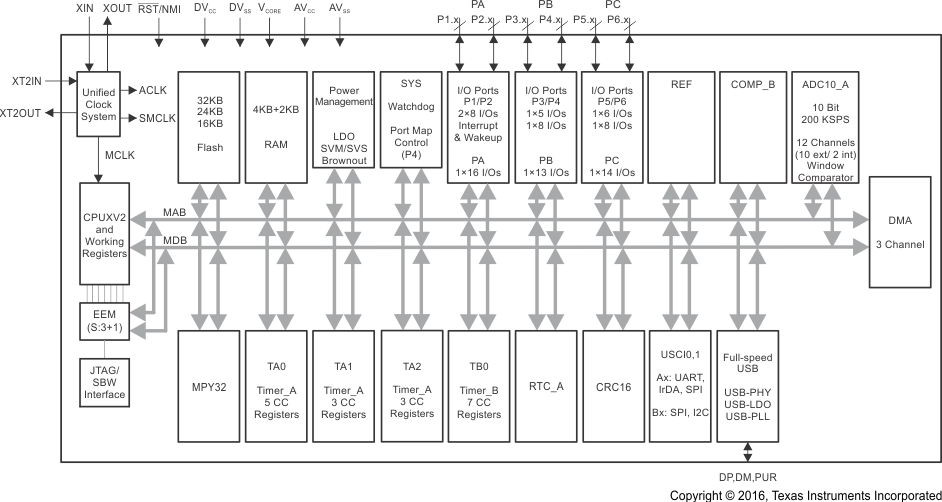
The MSP430F5510, MSP430F5509, and MSP430F5508 devices are microcontroller configurations with integrated USB and PHY supporting USB 2.0, four 16-bit timers, a high-performance 10-bit ADC, two USCIs(1), a hardware multiplier, DMA, an RTC module with alarm capabilities, and 31 or 47 I/O pins.
The MSP430F5507, MSP430F5506, MSP430F5505, and MSP430F5504 devices are microcontroller configurations with integrated USB and PHY supporting USB 2.0, four 16-bit timers, a high-performance 10-bit ADC, one USCI, a hardware multiplier, DMA, an RTC module with alarm capabilities, and 31 I/O pins.
The MSP430F5503, MSP430F5502, MSP430F5501, and MSP430F5500 devices include all of the MSP430F5507, MSP430F5506, MSP430F5505, and MSP430F5504 peripherals, except that they have a comparator instead of the 10-bit ADC.
Typical applications include analog and digital sensor systems and data loggers that require connectivity to various USB hosts.
For complete module descriptions, see theMSP430F5xx and MSP430F6xx Family User’s Guide.
(1)In the 48-pin packages, the USCI functions that are pinned out are limited to what the user configures on port 4 with the port mapping controller. It may not be possible to bring out all functions simultaneously.
The TI MSP family of ultra-low-power microcontrollers consists of several devices featuring different sets of peripherals targeted for various applications. The architecture, combined with extensive low-power modes, is optimized to achieve extended battery life in portable measurement applications. The device features a powerful 16-bit RISC CPU, 16-bit registers, and constant generators that contribute to maximum code efficiency. The digitally controlled oscillator (DCO) allows the device to wake up from low-power modes to active mode in less than 5 µs.
The MSP430F5510, MSP430F5509, and MSP430F5508 devices are microcontroller configurations with integrated USB and PHY supporting USB 2.0, four 16-bit timers, a high-performance 10-bit ADC, two USCIs(1), a hardware multiplier, DMA, an RTC module with alarm capabilities, and 31 or 47 I/O pins.
The MSP430F5507, MSP430F5506, MSP430F5505, and MSP430F5504 devices are microcontroller configurations with integrated USB and PHY supporting USB 2.0, four 16-bit timers, a high-performance 10-bit ADC, one USCI, a hardware multiplier, DMA, an RTC module with alarm capabilities, and 31 I/O pins.
The MSP430F5503, MSP430F5502, MSP430F5501, and MSP430F5500 devices include all of the MSP430F5507, MSP430F5506, MSP430F5505, and MSP430F5504 peripherals, except that they have a comparator instead of the 10-bit ADC.
Typical applications include analog and digital sensor systems and data loggers that require connectivity to various USB hosts.
For complete module descriptions, see theMSP430F5xx and MSP430F6xx Family User’s Guide.
(1)In the 48-pin packages, the USCI functions that are pinned out are limited to what the user configures on port 4 with the port mapping controller. It may not be possible to bring out all functions simultaneously. |
MSP430F550825 MHz MCU with 16KB Flash, 4KB SRAM, 10-bit ADC, comparator, DMA, UART/SPI/I2C, USB, HW multiplier | Integrated Circuits (ICs) | 6 | Active | The TI MSP family of ultra-low-power microcontrollers consists of several devices featuring different sets of peripherals targeted for various applications. The architecture, combined with extensive low-power modes, is optimized to achieve extended battery life in portable measurement applications. The device features a powerful 16-bit RISC CPU, 16-bit registers, and constant generators that contribute to maximum code efficiency. The digitally controlled oscillator (DCO) allows the device to wake up from low-power modes to active mode in less than 5 µs.
The MSP430F5510, MSP430F5509, and MSP430F5508 devices are microcontroller configurations with integrated USB and PHY supporting USB 2.0, four 16-bit timers, a high-performance 10-bit ADC, two USCIs(1), a hardware multiplier, DMA, an RTC module with alarm capabilities, and 31 or 47 I/O pins.
The MSP430F5507, MSP430F5506, MSP430F5505, and MSP430F5504 devices are microcontroller configurations with integrated USB and PHY supporting USB 2.0, four 16-bit timers, a high-performance 10-bit ADC, one USCI, a hardware multiplier, DMA, an RTC module with alarm capabilities, and 31 I/O pins.
The MSP430F5503, MSP430F5502, MSP430F5501, and MSP430F5500 devices include all of the MSP430F5507, MSP430F5506, MSP430F5505, and MSP430F5504 peripherals, except that they have a comparator instead of the 10-bit ADC.
Typical applications include analog and digital sensor systems and data loggers that require connectivity to various USB hosts.
For complete module descriptions, see theMSP430F5xx and MSP430F6xx Family User’s Guide.
(1)In the 48-pin packages, the USCI functions that are pinned out are limited to what the user configures on port 4 with the port mapping controller. It may not be possible to bring out all functions simultaneously.
The TI MSP family of ultra-low-power microcontrollers consists of several devices featuring different sets of peripherals targeted for various applications. The architecture, combined with extensive low-power modes, is optimized to achieve extended battery life in portable measurement applications. The device features a powerful 16-bit RISC CPU, 16-bit registers, and constant generators that contribute to maximum code efficiency. The digitally controlled oscillator (DCO) allows the device to wake up from low-power modes to active mode in less than 5 µs.
The MSP430F5510, MSP430F5509, and MSP430F5508 devices are microcontroller configurations with integrated USB and PHY supporting USB 2.0, four 16-bit timers, a high-performance 10-bit ADC, two USCIs(1), a hardware multiplier, DMA, an RTC module with alarm capabilities, and 31 or 47 I/O pins.
The MSP430F5507, MSP430F5506, MSP430F5505, and MSP430F5504 devices are microcontroller configurations with integrated USB and PHY supporting USB 2.0, four 16-bit timers, a high-performance 10-bit ADC, one USCI, a hardware multiplier, DMA, an RTC module with alarm capabilities, and 31 I/O pins.
The MSP430F5503, MSP430F5502, MSP430F5501, and MSP430F5500 devices include all of the MSP430F5507, MSP430F5506, MSP430F5505, and MSP430F5504 peripherals, except that they have a comparator instead of the 10-bit ADC.
Typical applications include analog and digital sensor systems and data loggers that require connectivity to various USB hosts.
For complete module descriptions, see theMSP430F5xx and MSP430F6xx Family User’s Guide.
(1)In the 48-pin packages, the USCI functions that are pinned out are limited to what the user configures on port 4 with the port mapping controller. It may not be possible to bring out all functions simultaneously. |
MSP430F550925 MHz MCU with 24KB Flash, 4KB SRAM, 10-bit ADC, comparator, DMA, UART/SPI/I2C, USB, HW multiplier | Integrated Circuits (ICs) | 5 | Active | The TI MSP family of ultra-low-power microcontrollers consists of several devices featuring different sets of peripherals targeted for various applications. The architecture, combined with extensive low-power modes, is optimized to achieve extended battery life in portable measurement applications. The device features a powerful 16-bit RISC CPU, 16-bit registers, and constant generators that contribute to maximum code efficiency. The digitally controlled oscillator (DCO) allows the device to wake up from low-power modes to active mode in less than 5 µs.
The MSP430F5510, MSP430F5509, and MSP430F5508 devices are microcontroller configurations with integrated USB and PHY supporting USB 2.0, four 16-bit timers, a high-performance 10-bit ADC, two USCIs(1), a hardware multiplier, DMA, an RTC module with alarm capabilities, and 31 or 47 I/O pins.
The MSP430F5507, MSP430F5506, MSP430F5505, and MSP430F5504 devices are microcontroller configurations with integrated USB and PHY supporting USB 2.0, four 16-bit timers, a high-performance 10-bit ADC, one USCI, a hardware multiplier, DMA, an RTC module with alarm capabilities, and 31 I/O pins.
The MSP430F5503, MSP430F5502, MSP430F5501, and MSP430F5500 devices include all of the MSP430F5507, MSP430F5506, MSP430F5505, and MSP430F5504 peripherals, except that they have a comparator instead of the 10-bit ADC.
Typical applications include analog and digital sensor systems and data loggers that require connectivity to various USB hosts.
For complete module descriptions, see theMSP430F5xx and MSP430F6xx Family User’s Guide.
(1)In the 48-pin packages, the USCI functions that are pinned out are limited to what the user configures on port 4 with the port mapping controller. It may not be possible to bring out all functions simultaneously.
The TI MSP family of ultra-low-power microcontrollers consists of several devices featuring different sets of peripherals targeted for various applications. The architecture, combined with extensive low-power modes, is optimized to achieve extended battery life in portable measurement applications. The device features a powerful 16-bit RISC CPU, 16-bit registers, and constant generators that contribute to maximum code efficiency. The digitally controlled oscillator (DCO) allows the device to wake up from low-power modes to active mode in less than 5 µs.
The MSP430F5510, MSP430F5509, and MSP430F5508 devices are microcontroller configurations with integrated USB and PHY supporting USB 2.0, four 16-bit timers, a high-performance 10-bit ADC, two USCIs(1), a hardware multiplier, DMA, an RTC module with alarm capabilities, and 31 or 47 I/O pins.
The MSP430F5507, MSP430F5506, MSP430F5505, and MSP430F5504 devices are microcontroller configurations with integrated USB and PHY supporting USB 2.0, four 16-bit timers, a high-performance 10-bit ADC, one USCI, a hardware multiplier, DMA, an RTC module with alarm capabilities, and 31 I/O pins.
The MSP430F5503, MSP430F5502, MSP430F5501, and MSP430F5500 devices include all of the MSP430F5507, MSP430F5506, MSP430F5505, and MSP430F5504 peripherals, except that they have a comparator instead of the 10-bit ADC.
Typical applications include analog and digital sensor systems and data loggers that require connectivity to various USB hosts.
For complete module descriptions, see theMSP430F5xx and MSP430F6xx Family User’s Guide.
(1)In the 48-pin packages, the USCI functions that are pinned out are limited to what the user configures on port 4 with the port mapping controller. It may not be possible to bring out all functions simultaneously. |
| Embedded | 7 | Active | |
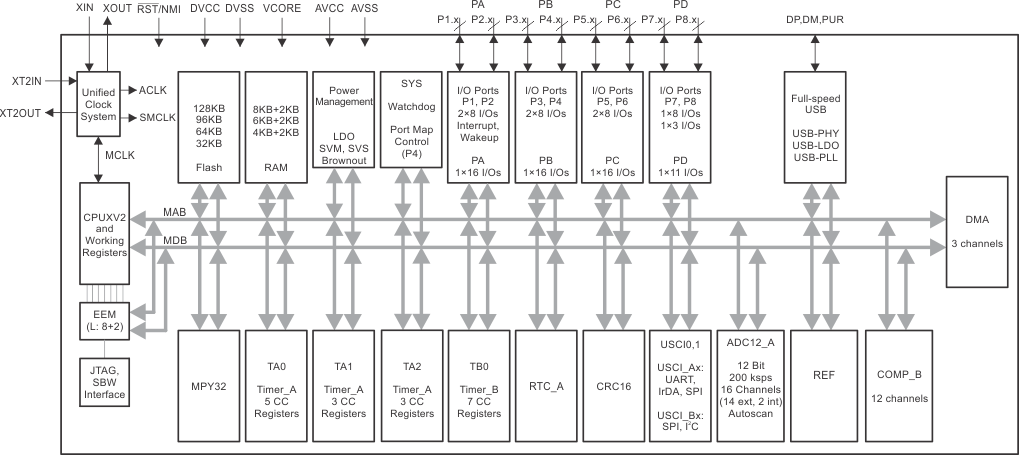
MSP430F551425 MHz MCU with 64KB Flash, 4KB SRAM, comparator, DMA, UART/SPI/I2C, USB, timer, HW multiplier | Embedded | 2 | Active | The Texas Instruments MSP430F55xx microcontrollers (MCUs) are part of the MSP430™ system control & communication family of ultra-low-power microcontrollers consists of several devices featuring peripheral sets targeted for a variety of applications. The architecture, combined with extensive low-power modes, is optimized to achieve extended battery life in portable measurement applications. The microcontroller features a powerful 16-bit RISC CPU, 16-bit registers, and constant generators that contribute to maximum code efficiency. The digitally controlled oscillator (DCO) allows the devices to wake up from low-power modes to active mode in 3.5 µs (typical).
The MSP430F5529, MSP430F5527, MSP430F5525, and MSP430F5521 microcontrollers have integrated USB and PHY supporting USB 2.0, four 16-bit timers, a high-performance 12-bit analog-to-digital converter (ADC), two USCIs, a hardware multiplier, DMA, an RTC module with alarm capabilities, and 63 I/O pins. The MSP430F5528, MSP430F5526, MSP430F5524, and MSP430F5522 microcontrollers include all of these peripherals but have 47 I/O pins.
The MSP430F5519, MSP430F5517, and MSP430F5515 microcontrollers have integrated USB and PHY supporting USB 2.0, four 16-bit timers, two USCIs, a hardware multiplier, DMA, an RTC module with alarm capabilities, and 63 I/O pins. The MSP430F5514 and MSP430FF5513 microcontrollers include all of these peripherals but have 47 I/O pins.
Typical applications include analog and digital sensor systems, data loggers, and others that require connectivity to various USB hosts.
The MSP430F55xx MCUs are supported by an extensive hardware and software ecosystem with reference designs and code examples to get your design started quickly. Development kits include theMSP430F5529 USB LaunchPad™ development kitand theMSP430F5529 experimenter’s boardas well as theMSP-TS430PN80USB80-pin target development board and theMSP-TS430RGC64USB64-pin target development board. TI also provides freeMSP430Ware™ software, which is available as a component ofCode Composer Studio™ IDEdesktop and cloud versions withinTI Resource Explorer. The MSP430 MCUs are also supported by extensive online collateral, training, and online support through theTI E2E™ support forum.
For complete module descriptions, see theMSP430F5xx and MSP430F6xx Family User’s Guide.
The Texas Instruments MSP430F55xx microcontrollers (MCUs) are part of the MSP430™ system control & communication family of ultra-low-power microcontrollers consists of several devices featuring peripheral sets targeted for a variety of applications. The architecture, combined with extensive low-power modes, is optimized to achieve extended battery life in portable measurement applications. The microcontroller features a powerful 16-bit RISC CPU, 16-bit registers, and constant generators that contribute to maximum code efficiency. The digitally controlled oscillator (DCO) allows the devices to wake up from low-power modes to active mode in 3.5 µs (typical).
The MSP430F5529, MSP430F5527, MSP430F5525, and MSP430F5521 microcontrollers have integrated USB and PHY supporting USB 2.0, four 16-bit timers, a high-performance 12-bit analog-to-digital converter (ADC), two USCIs, a hardware multiplier, DMA, an RTC module with alarm capabilities, and 63 I/O pins. The MSP430F5528, MSP430F5526, MSP430F5524, and MSP430F5522 microcontrollers include all of these peripherals but have 47 I/O pins.
The MSP430F5519, MSP430F5517, and MSP430F5515 microcontrollers have integrated USB and PHY supporting USB 2.0, four 16-bit timers, two USCIs, a hardware multiplier, DMA, an RTC module with alarm capabilities, and 63 I/O pins. The MSP430F5514 and MSP430FF5513 microcontrollers include all of these peripherals but have 47 I/O pins.
Typical applications include analog and digital sensor systems, data loggers, and others that require connectivity to various USB hosts.
The MSP430F55xx MCUs are supported by an extensive hardware and software ecosystem with reference designs and code examples to get your design started quickly. Development kits include theMSP430F5529 USB LaunchPad™ development kitand theMSP430F5529 experimenter’s boardas well as theMSP-TS430PN80USB80-pin target development board and theMSP-TS430RGC64USB64-pin target development board. TI also provides freeMSP430Ware™ software, which is available as a component ofCode Composer Studio™ IDEdesktop and cloud versions withinTI Resource Explorer. The MSP430 MCUs are also supported by extensive online collateral, training, and online support through theTI E2E™ support forum.
For complete module descriptions, see theMSP430F5xx and MSP430F6xx Family User’s Guide. |
MSP430F551525 MHz MCU with 64KB Flash, 4KB SRAM, comparator, DMA, UART/SPI/I2C, USB, timer, HW multiplier | Embedded | 1 | Active | The Texas Instruments MSP430F55xx microcontrollers (MCUs) are part of the MSP430™ system control & communication family of ultra-low-power microcontrollers consists of several devices featuring peripheral sets targeted for a variety of applications. The architecture, combined with extensive low-power modes, is optimized to achieve extended battery life in portable measurement applications. The microcontroller features a powerful 16-bit RISC CPU, 16-bit registers, and constant generators that contribute to maximum code efficiency. The digitally controlled oscillator (DCO) allows the devices to wake up from low-power modes to active mode in 3.5 µs (typical).
The MSP430F5529, MSP430F5527, MSP430F5525, and MSP430F5521 microcontrollers have integrated USB and PHY supporting USB 2.0, four 16-bit timers, a high-performance 12-bit analog-to-digital converter (ADC), two USCIs, a hardware multiplier, DMA, an RTC module with alarm capabilities, and 63 I/O pins. The MSP430F5528, MSP430F5526, MSP430F5524, and MSP430F5522 microcontrollers include all of these peripherals but have 47 I/O pins.
The MSP430F5519, MSP430F5517, and MSP430F5515 microcontrollers have integrated USB and PHY supporting USB 2.0, four 16-bit timers, two USCIs, a hardware multiplier, DMA, an RTC module with alarm capabilities, and 63 I/O pins. The MSP430F5514 and MSP430FF5513 microcontrollers include all of these peripherals but have 47 I/O pins.
Typical applications include analog and digital sensor systems, data loggers, and others that require connectivity to various USB hosts.
The MSP430F55xx MCUs are supported by an extensive hardware and software ecosystem with reference designs and code examples to get your design started quickly. Development kits include theMSP430F5529 USB LaunchPad™ development kitand theMSP430F5529 experimenter’s boardas well as theMSP-TS430PN80USB80-pin target development board and theMSP-TS430RGC64USB64-pin target development board. TI also provides freeMSP430Ware™ software, which is available as a component ofCode Composer Studio™ IDEdesktop and cloud versions withinTI Resource Explorer. The MSP430 MCUs are also supported by extensive online collateral, training, and online support through theTI E2E™ support forum.
For complete module descriptions, see theMSP430F5xx and MSP430F6xx Family User’s Guide.
The Texas Instruments MSP430F55xx microcontrollers (MCUs) are part of the MSP430™ system control & communication family of ultra-low-power microcontrollers consists of several devices featuring peripheral sets targeted for a variety of applications. The architecture, combined with extensive low-power modes, is optimized to achieve extended battery life in portable measurement applications. The microcontroller features a powerful 16-bit RISC CPU, 16-bit registers, and constant generators that contribute to maximum code efficiency. The digitally controlled oscillator (DCO) allows the devices to wake up from low-power modes to active mode in 3.5 µs (typical).
The MSP430F5529, MSP430F5527, MSP430F5525, and MSP430F5521 microcontrollers have integrated USB and PHY supporting USB 2.0, four 16-bit timers, a high-performance 12-bit analog-to-digital converter (ADC), two USCIs, a hardware multiplier, DMA, an RTC module with alarm capabilities, and 63 I/O pins. The MSP430F5528, MSP430F5526, MSP430F5524, and MSP430F5522 microcontrollers include all of these peripherals but have 47 I/O pins.
The MSP430F5519, MSP430F5517, and MSP430F5515 microcontrollers have integrated USB and PHY supporting USB 2.0, four 16-bit timers, two USCIs, a hardware multiplier, DMA, an RTC module with alarm capabilities, and 63 I/O pins. The MSP430F5514 and MSP430FF5513 microcontrollers include all of these peripherals but have 47 I/O pins.
Typical applications include analog and digital sensor systems, data loggers, and others that require connectivity to various USB hosts.
The MSP430F55xx MCUs are supported by an extensive hardware and software ecosystem with reference designs and code examples to get your design started quickly. Development kits include theMSP430F5529 USB LaunchPad™ development kitand theMSP430F5529 experimenter’s boardas well as theMSP-TS430PN80USB80-pin target development board and theMSP-TS430RGC64USB64-pin target development board. TI also provides freeMSP430Ware™ software, which is available as a component ofCode Composer Studio™ IDEdesktop and cloud versions withinTI Resource Explorer. The MSP430 MCUs are also supported by extensive online collateral, training, and online support through theTI E2E™ support forum.
For complete module descriptions, see theMSP430F5xx and MSP430F6xx Family User’s Guide. |
MSP430F551725 MHz MCU with 96KB Flash, 6KB SRAM, comparator, DMA, UART/SPI/I2C, USB, timer, HW multiplier | Microcontrollers | 1 | Active | The Texas Instruments MSP430F55xx microcontrollers (MCUs) are part of the MSP430™ system control & communication family of ultra-low-power microcontrollers consists of several devices featuring peripheral sets targeted for a variety of applications. The architecture, combined with extensive low-power modes, is optimized to achieve extended battery life in portable measurement applications. The microcontroller features a powerful 16-bit RISC CPU, 16-bit registers, and constant generators that contribute to maximum code efficiency. The digitally controlled oscillator (DCO) allows the devices to wake up from low-power modes to active mode in 3.5 µs (typical).
The MSP430F5529, MSP430F5527, MSP430F5525, and MSP430F5521 microcontrollers have integrated USB and PHY supporting USB 2.0, four 16-bit timers, a high-performance 12-bit analog-to-digital converter (ADC), two USCIs, a hardware multiplier, DMA, an RTC module with alarm capabilities, and 63 I/O pins. The MSP430F5528, MSP430F5526, MSP430F5524, and MSP430F5522 microcontrollers include all of these peripherals but have 47 I/O pins.
The MSP430F5519, MSP430F5517, and MSP430F5515 microcontrollers have integrated USB and PHY supporting USB 2.0, four 16-bit timers, two USCIs, a hardware multiplier, DMA, an RTC module with alarm capabilities, and 63 I/O pins. The MSP430F5514 and MSP430FF5513 microcontrollers include all of these peripherals but have 47 I/O pins.
Typical applications include analog and digital sensor systems, data loggers, and others that require connectivity to various USB hosts.
The MSP430F55xx MCUs are supported by an extensive hardware and software ecosystem with reference designs and code examples to get your design started quickly. Development kits include theMSP430F5529 USB LaunchPad™ development kitand theMSP430F5529 experimenter’s boardas well as theMSP-TS430PN80USB80-pin target development board and theMSP-TS430RGC64USB64-pin target development board. TI also provides freeMSP430Ware™ software, which is available as a component ofCode Composer Studio™ IDEdesktop and cloud versions withinTI Resource Explorer. The MSP430 MCUs are also supported by extensive online collateral, training, and online support through theTI E2E™ support forum.
For complete module descriptions, see theMSP430F5xx and MSP430F6xx Family User’s Guide.
The Texas Instruments MSP430F55xx microcontrollers (MCUs) are part of the MSP430™ system control & communication family of ultra-low-power microcontrollers consists of several devices featuring peripheral sets targeted for a variety of applications. The architecture, combined with extensive low-power modes, is optimized to achieve extended battery life in portable measurement applications. The microcontroller features a powerful 16-bit RISC CPU, 16-bit registers, and constant generators that contribute to maximum code efficiency. The digitally controlled oscillator (DCO) allows the devices to wake up from low-power modes to active mode in 3.5 µs (typical).
The MSP430F5529, MSP430F5527, MSP430F5525, and MSP430F5521 microcontrollers have integrated USB and PHY supporting USB 2.0, four 16-bit timers, a high-performance 12-bit analog-to-digital converter (ADC), two USCIs, a hardware multiplier, DMA, an RTC module with alarm capabilities, and 63 I/O pins. The MSP430F5528, MSP430F5526, MSP430F5524, and MSP430F5522 microcontrollers include all of these peripherals but have 47 I/O pins.
The MSP430F5519, MSP430F5517, and MSP430F5515 microcontrollers have integrated USB and PHY supporting USB 2.0, four 16-bit timers, two USCIs, a hardware multiplier, DMA, an RTC module with alarm capabilities, and 63 I/O pins. The MSP430F5514 and MSP430FF5513 microcontrollers include all of these peripherals but have 47 I/O pins.
Typical applications include analog and digital sensor systems, data loggers, and others that require connectivity to various USB hosts.
The MSP430F55xx MCUs are supported by an extensive hardware and software ecosystem with reference designs and code examples to get your design started quickly. Development kits include theMSP430F5529 USB LaunchPad™ development kitand theMSP430F5529 experimenter’s boardas well as theMSP-TS430PN80USB80-pin target development board and theMSP-TS430RGC64USB64-pin target development board. TI also provides freeMSP430Ware™ software, which is available as a component ofCode Composer Studio™ IDEdesktop and cloud versions withinTI Resource Explorer. The MSP430 MCUs are also supported by extensive online collateral, training, and online support through theTI E2E™ support forum.
For complete module descriptions, see theMSP430F5xx and MSP430F6xx Family User’s Guide. |
MSP430F551925 MHz MCU with 128KB Flash, 8KB SRAM, comparator, DMA, UART/SPI/I2C, USB, timer, HW multiplier | Embedded | 1 | Active | The Texas Instruments MSP430F55xx microcontrollers (MCUs) are part of the MSP430™ system control & communication family of ultra-low-power microcontrollers consists of several devices featuring peripheral sets targeted for a variety of applications. The architecture, combined with extensive low-power modes, is optimized to achieve extended battery life in portable measurement applications. The microcontroller features a powerful 16-bit RISC CPU, 16-bit registers, and constant generators that contribute to maximum code efficiency. The digitally controlled oscillator (DCO) allows the devices to wake up from low-power modes to active mode in 3.5 µs (typical).
The MSP430F5529, MSP430F5527, MSP430F5525, and MSP430F5521 microcontrollers have integrated USB and PHY supporting USB 2.0, four 16-bit timers, a high-performance 12-bit analog-to-digital converter (ADC), two USCIs, a hardware multiplier, DMA, an RTC module with alarm capabilities, and 63 I/O pins. The MSP430F5528, MSP430F5526, MSP430F5524, and MSP430F5522 microcontrollers include all of these peripherals but have 47 I/O pins.
The MSP430F5519, MSP430F5517, and MSP430F5515 microcontrollers have integrated USB and PHY supporting USB 2.0, four 16-bit timers, two USCIs, a hardware multiplier, DMA, an RTC module with alarm capabilities, and 63 I/O pins. The MSP430F5514 and MSP430FF5513 microcontrollers include all of these peripherals but have 47 I/O pins.
Typical applications include analog and digital sensor systems, data loggers, and others that require connectivity to various USB hosts.
The MSP430F55xx MCUs are supported by an extensive hardware and software ecosystem with reference designs and code examples to get your design started quickly. Development kits include theMSP430F5529 USB LaunchPad™ development kitand theMSP430F5529 experimenter’s boardas well as theMSP-TS430PN80USB80-pin target development board and theMSP-TS430RGC64USB64-pin target development board. TI also provides freeMSP430Ware™ software, which is available as a component ofCode Composer Studio™ IDEdesktop and cloud versions withinTI Resource Explorer. The MSP430 MCUs are also supported by extensive online collateral, training, and online support through theTI E2E™ support forum.
For complete module descriptions, see theMSP430F5xx and MSP430F6xx Family User’s Guide.
The Texas Instruments MSP430F55xx microcontrollers (MCUs) are part of the MSP430™ system control & communication family of ultra-low-power microcontrollers consists of several devices featuring peripheral sets targeted for a variety of applications. The architecture, combined with extensive low-power modes, is optimized to achieve extended battery life in portable measurement applications. The microcontroller features a powerful 16-bit RISC CPU, 16-bit registers, and constant generators that contribute to maximum code efficiency. The digitally controlled oscillator (DCO) allows the devices to wake up from low-power modes to active mode in 3.5 µs (typical).
The MSP430F5529, MSP430F5527, MSP430F5525, and MSP430F5521 microcontrollers have integrated USB and PHY supporting USB 2.0, four 16-bit timers, a high-performance 12-bit analog-to-digital converter (ADC), two USCIs, a hardware multiplier, DMA, an RTC module with alarm capabilities, and 63 I/O pins. The MSP430F5528, MSP430F5526, MSP430F5524, and MSP430F5522 microcontrollers include all of these peripherals but have 47 I/O pins.
The MSP430F5519, MSP430F5517, and MSP430F5515 microcontrollers have integrated USB and PHY supporting USB 2.0, four 16-bit timers, two USCIs, a hardware multiplier, DMA, an RTC module with alarm capabilities, and 63 I/O pins. The MSP430F5514 and MSP430FF5513 microcontrollers include all of these peripherals but have 47 I/O pins.
Typical applications include analog and digital sensor systems, data loggers, and others that require connectivity to various USB hosts.
The MSP430F55xx MCUs are supported by an extensive hardware and software ecosystem with reference designs and code examples to get your design started quickly. Development kits include theMSP430F5529 USB LaunchPad™ development kitand theMSP430F5529 experimenter’s boardas well as theMSP-TS430PN80USB80-pin target development board and theMSP-TS430RGC64USB64-pin target development board. TI also provides freeMSP430Ware™ software, which is available as a component ofCode Composer Studio™ IDEdesktop and cloud versions withinTI Resource Explorer. The MSP430 MCUs are also supported by extensive online collateral, training, and online support through theTI E2E™ support forum.
For complete module descriptions, see theMSP430F5xx and MSP430F6xx Family User’s Guide. |
MSP430F552125 MHz MCU with 32KB Flash, 6KB SRAM, 12-bit ADC, comparator, DMA, UART/SPI/I2C, USB, HW multiplier | Microcontrollers | 2 | Active | The Texas Instruments MSP430F55xx microcontrollers (MCUs) are part of the MSP430™ system control & communication family of ultra-low-power microcontrollers consists of several devices featuring peripheral sets targeted for a variety of applications. The architecture, combined with extensive low-power modes, is optimized to achieve extended battery life in portable measurement applications. The microcontroller features a powerful 16-bit RISC CPU, 16-bit registers, and constant generators that contribute to maximum code efficiency. The digitally controlled oscillator (DCO) allows the devices to wake up from low-power modes to active mode in 3.5 µs (typical).
The MSP430F5529, MSP430F5527, MSP430F5525, and MSP430F5521 microcontrollers have integrated USB and PHY supporting USB 2.0, four 16-bit timers, a high-performance 12-bit analog-to-digital converter (ADC), two USCIs, a hardware multiplier, DMA, an RTC module with alarm capabilities, and 63 I/O pins. The MSP430F5528, MSP430F5526, MSP430F5524, and MSP430F5522 microcontrollers include all of these peripherals but have 47 I/O pins.
The MSP430F5519, MSP430F5517, and MSP430F5515 microcontrollers have integrated USB and PHY supporting USB 2.0, four 16-bit timers, two USCIs, a hardware multiplier, DMA, an RTC module with alarm capabilities, and 63 I/O pins. The MSP430F5514 and MSP430FF5513 microcontrollers include all of these peripherals but have 47 I/O pins.
Typical applications include analog and digital sensor systems, data loggers, and others that require connectivity to various USB hosts.
The MSP430F55xx MCUs are supported by an extensive hardware and software ecosystem with reference designs and code examples to get your design started quickly. Development kits include theMSP430F5529 USB LaunchPad™ development kitand theMSP430F5529 experimenter’s boardas well as theMSP-TS430PN80USB80-pin target development board and theMSP-TS430RGC64USB64-pin target development board. TI also provides freeMSP430Ware™ software, which is available as a component ofCode Composer Studio™ IDEdesktop and cloud versions withinTI Resource Explorer. The MSP430 MCUs are also supported by extensive online collateral, training, and online support through theTI E2E™ support forum.
For complete module descriptions, see theMSP430F5xx and MSP430F6xx Family User’s Guide.
The Texas Instruments MSP430F55xx microcontrollers (MCUs) are part of the MSP430™ system control & communication family of ultra-low-power microcontrollers consists of several devices featuring peripheral sets targeted for a variety of applications. The architecture, combined with extensive low-power modes, is optimized to achieve extended battery life in portable measurement applications. The microcontroller features a powerful 16-bit RISC CPU, 16-bit registers, and constant generators that contribute to maximum code efficiency. The digitally controlled oscillator (DCO) allows the devices to wake up from low-power modes to active mode in 3.5 µs (typical).
The MSP430F5529, MSP430F5527, MSP430F5525, and MSP430F5521 microcontrollers have integrated USB and PHY supporting USB 2.0, four 16-bit timers, a high-performance 12-bit analog-to-digital converter (ADC), two USCIs, a hardware multiplier, DMA, an RTC module with alarm capabilities, and 63 I/O pins. The MSP430F5528, MSP430F5526, MSP430F5524, and MSP430F5522 microcontrollers include all of these peripherals but have 47 I/O pins.
The MSP430F5519, MSP430F5517, and MSP430F5515 microcontrollers have integrated USB and PHY supporting USB 2.0, four 16-bit timers, two USCIs, a hardware multiplier, DMA, an RTC module with alarm capabilities, and 63 I/O pins. The MSP430F5514 and MSP430FF5513 microcontrollers include all of these peripherals but have 47 I/O pins.
Typical applications include analog and digital sensor systems, data loggers, and others that require connectivity to various USB hosts.
The MSP430F55xx MCUs are supported by an extensive hardware and software ecosystem with reference designs and code examples to get your design started quickly. Development kits include theMSP430F5529 USB LaunchPad™ development kitand theMSP430F5529 experimenter’s boardas well as theMSP-TS430PN80USB80-pin target development board and theMSP-TS430RGC64USB64-pin target development board. TI also provides freeMSP430Ware™ software, which is available as a component ofCode Composer Studio™ IDEdesktop and cloud versions withinTI Resource Explorer. The MSP430 MCUs are also supported by extensive online collateral, training, and online support through theTI E2E™ support forum.
For complete module descriptions, see theMSP430F5xx and MSP430F6xx Family User’s Guide. |
MSP430F552225 MHz MCU with 32KB Flash, 8KB SRAM, 12-bit ADC, comparator, DMA, UART/SPI/I2C, USB, HW multiplier | Integrated Circuits (ICs) | 6 | Active | The Texas Instruments MSP430F55xx microcontrollers (MCUs) are part of the MSP430™ system control & communication family of ultra-low-power microcontrollers consists of several devices featuring peripheral sets targeted for a variety of applications. The architecture, combined with extensive low-power modes, is optimized to achieve extended battery life in portable measurement applications. The microcontroller features a powerful 16-bit RISC CPU, 16-bit registers, and constant generators that contribute to maximum code efficiency. The digitally controlled oscillator (DCO) allows the devices to wake up from low-power modes to active mode in 3.5 µs (typical).
The MSP430F5529, MSP430F5527, MSP430F5525, and MSP430F5521 microcontrollers have integrated USB and PHY supporting USB 2.0, four 16-bit timers, a high-performance 12-bit analog-to-digital converter (ADC), two USCIs, a hardware multiplier, DMA, an RTC module with alarm capabilities, and 63 I/O pins. The MSP430F5528, MSP430F5526, MSP430F5524, and MSP430F5522 microcontrollers include all of these peripherals but have 47 I/O pins.
The MSP430F5519, MSP430F5517, and MSP430F5515 microcontrollers have integrated USB and PHY supporting USB 2.0, four 16-bit timers, two USCIs, a hardware multiplier, DMA, an RTC module with alarm capabilities, and 63 I/O pins. The MSP430F5514 and MSP430FF5513 microcontrollers include all of these peripherals but have 47 I/O pins.
Typical applications include analog and digital sensor systems, data loggers, and others that require connectivity to various USB hosts.
The MSP430F55xx MCUs are supported by an extensive hardware and software ecosystem with reference designs and code examples to get your design started quickly. Development kits include theMSP430F5529 USB LaunchPad™ development kitand theMSP430F5529 experimenter’s boardas well as theMSP-TS430PN80USB80-pin target development board and theMSP-TS430RGC64USB64-pin target development board. TI also provides freeMSP430Ware™ software, which is available as a component ofCode Composer Studio™ IDEdesktop and cloud versions withinTI Resource Explorer. The MSP430 MCUs are also supported by extensive online collateral, training, and online support through theTI E2E™ support forum.
For complete module descriptions, see theMSP430F5xx and MSP430F6xx Family User’s Guide.
The Texas Instruments MSP430F55xx microcontrollers (MCUs) are part of the MSP430™ system control & communication family of ultra-low-power microcontrollers consists of several devices featuring peripheral sets targeted for a variety of applications. The architecture, combined with extensive low-power modes, is optimized to achieve extended battery life in portable measurement applications. The microcontroller features a powerful 16-bit RISC CPU, 16-bit registers, and constant generators that contribute to maximum code efficiency. The digitally controlled oscillator (DCO) allows the devices to wake up from low-power modes to active mode in 3.5 µs (typical).
The MSP430F5529, MSP430F5527, MSP430F5525, and MSP430F5521 microcontrollers have integrated USB and PHY supporting USB 2.0, four 16-bit timers, a high-performance 12-bit analog-to-digital converter (ADC), two USCIs, a hardware multiplier, DMA, an RTC module with alarm capabilities, and 63 I/O pins. The MSP430F5528, MSP430F5526, MSP430F5524, and MSP430F5522 microcontrollers include all of these peripherals but have 47 I/O pins.
The MSP430F5519, MSP430F5517, and MSP430F5515 microcontrollers have integrated USB and PHY supporting USB 2.0, four 16-bit timers, two USCIs, a hardware multiplier, DMA, an RTC module with alarm capabilities, and 63 I/O pins. The MSP430F5514 and MSP430FF5513 microcontrollers include all of these peripherals but have 47 I/O pins.
Typical applications include analog and digital sensor systems, data loggers, and others that require connectivity to various USB hosts.
The MSP430F55xx MCUs are supported by an extensive hardware and software ecosystem with reference designs and code examples to get your design started quickly. Development kits include theMSP430F5529 USB LaunchPad™ development kitand theMSP430F5529 experimenter’s boardas well as theMSP-TS430PN80USB80-pin target development board and theMSP-TS430RGC64USB64-pin target development board. TI also provides freeMSP430Ware™ software, which is available as a component ofCode Composer Studio™ IDEdesktop and cloud versions withinTI Resource Explorer. The MSP430 MCUs are also supported by extensive online collateral, training, and online support through theTI E2E™ support forum.
For complete module descriptions, see theMSP430F5xx and MSP430F6xx Family User’s Guide. |