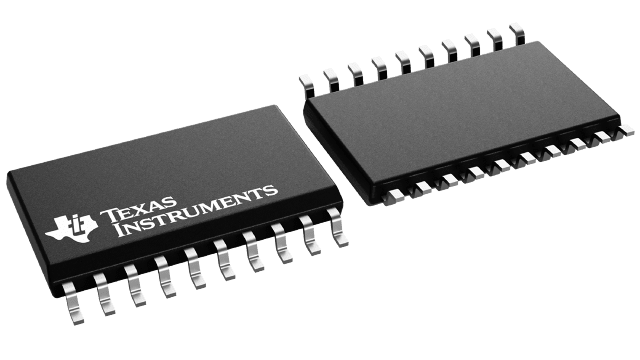
T
Texas Instruments
| Series | Category | # Parts | Status | Description |
|---|---|---|---|---|
| Part | Spec A | Spec B | Spec C | Spec D | Description |
|---|---|---|---|---|---|



| Series | Category | # Parts | Status | Description |
|---|---|---|---|---|
| Part | Spec A | Spec B | Spec C | Spec D | Description |
|---|---|---|---|---|---|
| Series | Category | # Parts | Status | Description |
|---|---|---|---|---|
CD74HCT253High Speed CMOS Logic Dual 4-Input Multiplexers | Integrated Circuits (ICs) | 1 | Obsolete | The CD74HC253 and CD74HCT253 are dual 4-to-1 line selector/multiplexers having three-state outputs. One of four sources for each section is selected by the common select inputs, S0 and S1. When the output enable (1OE\, 2OE\) is HIGH, the output is in the high-impedance state.
The CD74HC253 and CD74HCT253 are dual 4-to-1 line selector/multiplexers having three-state outputs. One of four sources for each section is selected by the common select inputs, S0 and S1. When the output enable (1OE\, 2OE\) is HIGH, the output is in the high-impedance state. |
CD74HCT257High Speed CMOS Logic Quad 2-Input Multiplexers with Non-Inverting 3-State Outputs | Logic | 6 | Active | The ’HC257 and ’HCT257 are quad 2-input multiplexers which select four bits of data from two sources under the control of a common Select Input (S). The Output Enable input (OE\) is active LOW. When OE\ is HIGH, all of the outputs (1Y-4Y) are in the high impedance state regardless of all other input conditions.
Moving data from two groups of registers to four common output buses is a common use of the 257. The state of the Select input determines the particular register from which the data comes. It can also be used as a function generator.
The ’HC257 and ’HCT257 are quad 2-input multiplexers which select four bits of data from two sources under the control of a common Select Input (S). The Output Enable input (OE\) is active LOW. When OE\ is HIGH, all of the outputs (1Y-4Y) are in the high impedance state regardless of all other input conditions.
Moving data from two groups of registers to four common output buses is a common use of the 257. The state of the Select input determines the particular register from which the data comes. It can also be used as a function generator. |
CD74HCT258High Speed CMOS Logic Quad 2-Input Multiplexers with Inverting 3-State Outputs | Signal Switches, Multiplexers, Decoders | 1 | Active | These devices are designed to multiplex signals from 4-bit data sources to 4-output data lines in bus-organized systems. The 3-state outputs do not load the data lines when the output-enable (G)\ input is at a high logic level.
To ensure the high-impedance state during power up or power down, G\ should be tied to VCCthrough a pullup resistor; the minimum value of the resistor is determined by the current-sinking capability of the driver.
These devices are designed to multiplex signals from 4-bit data sources to 4-output data lines in bus-organized systems. The 3-state outputs do not load the data lines when the output-enable (G)\ input is at a high logic level.
To ensure the high-impedance state during power up or power down, G\ should be tied to VCCthrough a pullup resistor; the minimum value of the resistor is determined by the current-sinking capability of the driver. |
CD74HCT259High Speed CMOS Logic 8-Bit Addressable Latch | Logic | 3 | Active | High Speed CMOS Logic 8-Bit Addressable Latch |
CD74HCT273-ch, 3-input, 4.5-V to 5.5-V NOR gates with TTL-compatible CMOS inputs | Logic | 3 | Active | This device contains three independent 3-input NOR gates. Each gate performs the Boolean function Y =A + B + Cin positive logic.
This device contains three independent 3-input NOR gates. Each gate performs the Boolean function Y =A + B + Cin positive logic. |
CD74HCT280High Speed CMOS Logic 9-Bit Odd/Even Parity Generator/Checker | Integrated Circuits (ICs) | 1 | Active | The ’HC280 and ’HCT280 are 9-bit odd/even parity, generator checker devices. Both even and odd parity outputs are available for checking or generating parity for words up to nine bits long. Even parity is indicated (E output to any input of an additional HC/HCT280 parity checker.
The ’HC280 and ’HCT280 are 9-bit odd/even parity, generator checker devices. Both even and odd parity outputs are available for checking or generating parity for words up to nine bits long. Even parity is indicated (E output to any input of an additional HC/HCT280 parity checker. |
CD74HCT283High Speed CMOS Logic 4-Bit Binary Full Adder with Fast Carry | Specialty Logic | 4 | Active | High Speed CMOS Logic 4-Bit Binary Full Adder with Fast Carry |
CD74HCT297High Speed CMOS Logic Digital Phase-Locked-Loop | Integrated Circuits (ICs) | 1 | Active | The ’HC297 and CD74HCT297 are high-speed silicon gate CMOS devices that are pin-compatible with low power Schottky TTL (LSTTL).
These devices are designed to provide a simple, cost-effective solution to high-accuracy, digital, phase-locked-loop applications. They contain all the necessary circuits, with the exception of the divide-by-N counter, to build first-order phase-locked-loops.
Both EXCLUSIVE-OR (XORPD) and edge-controlled phase detectors (ECPD) are provided for maximum flexibility. The input signals for the EXCLUSIVE-OR phase detector must have a 50% duty factor to obtain the maximum lock-range.
Proper partitioning of the loop function, with many of the building blocks external to the package, makes it easy for the designer to incorporate ripple cancellation (see Figure 2) or to cascade to higher order phase-locked-loops.
The length of the up/down K-counter is digitally programmable according to the K-counter function table. With A, B, C and D all LOW, the K-counter is disabled. With A HIGH and B, C and D LOW, the K-counter is only three stages long, which widens the bandwidth or capture range and shortens the lock time of the loop. When A, B, C and D are all programmed HIGH, the K-counter becomes seventeen stages long, which narrows the bandwidth or capture range and lengthens the lock time. Real-time control of loop bandwidth by manipulating the A to D inputs can maximize the overall performance of the digital phase-locked-loop.
The ’HC297 and CD74HCT297 can perform the classic first order phase-locked-loop function without using analog components. The accuracy of the digital phase-locked-loop (DPLL) is not affected by VCCand temperature variations but depends solely on accuracies of the K-clock and loop propagation delays.
The ’HC297 and CD74HCT297 are high-speed silicon gate CMOS devices that are pin-compatible with low power Schottky TTL (LSTTL).
These devices are designed to provide a simple, cost-effective solution to high-accuracy, digital, phase-locked-loop applications. They contain all the necessary circuits, with the exception of the divide-by-N counter, to build first-order phase-locked-loops.
Both EXCLUSIVE-OR (XORPD) and edge-controlled phase detectors (ECPD) are provided for maximum flexibility. The input signals for the EXCLUSIVE-OR phase detector must have a 50% duty factor to obtain the maximum lock-range.
Proper partitioning of the loop function, with many of the building blocks external to the package, makes it easy for the designer to incorporate ripple cancellation (see Figure 2) or to cascade to higher order phase-locked-loops.
The length of the up/down K-counter is digitally programmable according to the K-counter function table. With A, B, C and D all LOW, the K-counter is disabled. With A HIGH and B, C and D LOW, the K-counter is only three stages long, which widens the bandwidth or capture range and shortens the lock time of the loop. When A, B, C and D are all programmed HIGH, the K-counter becomes seventeen stages long, which narrows the bandwidth or capture range and lengthens the lock time. Real-time control of loop bandwidth by manipulating the A to D inputs can maximize the overall performance of the digital phase-locked-loop.
The ’HC297 and CD74HCT297 can perform the classic first order phase-locked-loop function without using analog components. The accuracy of the digital phase-locked-loop (DPLL) is not affected by VCCand temperature variations but depends solely on accuracies of the K-clock and loop propagation delays. |
CD74HCT299High Speed CMOS Logic 8-Bit Universal Shift Register with 3-State Outputs | Logic | 4 | Active | The ’HC259 and ’HCT299 are 8-bit shift/storage registers with three-state bus interface capability. The register has four synchronous-operating modes controlled by the two select inputs as shown in the mode select (S0, S1) table. The mode select, the serial data (DS0, DS7) and the parallel data (I/O0– I/O7) respond only to the low-to-high transition of the clock (CP) pulse. S0, S1 and data inputs must be one set-up time prior to the clock positive transition.
The Master Reset (MR)\ is an asynchronous active low input. When MR\ output is low, the register is cleared regardless of the status of all other inputs. The register can be expanded by cascading same units by tying the serial output (Q0) to the serial data (DS7) input of the preceding register, and tying the serial output (Q7) to the serial data (DS0) input of the following register. Recirculating the (n x 8) bits is accomplished by tying the Q7 of the last stage to the DS0 of the first stage.
The three-state input/output I(/O) port has three modes of operation:
1. Both output enable (OE1\ and OE2\) inputs are low and S0 or S1 or both are low, the data in the register is presented at the eight outputs.
2. When both S0 and S1 are high, I/O terminals are in the high impedance state but being input ports, ready for par-allel data to be loaded into eight registers with one clock transition regardless of the status of OE1\ and OE2\.
3. Either one of the two output enable inputs being high will force I/O terminals to be in the off-state. It is noted that each I/O terminal is a three-state output and a CMOS buffer input.
The ’HC259 and ’HCT299 are 8-bit shift/storage registers with three-state bus interface capability. The register has four synchronous-operating modes controlled by the two select inputs as shown in the mode select (S0, S1) table. The mode select, the serial data (DS0, DS7) and the parallel data (I/O0– I/O7) respond only to the low-to-high transition of the clock (CP) pulse. S0, S1 and data inputs must be one set-up time prior to the clock positive transition.
The Master Reset (MR)\ is an asynchronous active low input. When MR\ output is low, the register is cleared regardless of the status of all other inputs. The register can be expanded by cascading same units by tying the serial output (Q0) to the serial data (DS7) input of the preceding register, and tying the serial output (Q7) to the serial data (DS0) input of the following register. Recirculating the (n x 8) bits is accomplished by tying the Q7 of the last stage to the DS0 of the first stage.
The three-state input/output I(/O) port has three modes of operation:
1. Both output enable (OE1\ and OE2\) inputs are low and S0 or S1 or both are low, the data in the register is presented at the eight outputs.
2. When both S0 and S1 are high, I/O terminals are in the high impedance state but being input ports, ready for par-allel data to be loaded into eight registers with one clock transition regardless of the status of OE1\ and OE2\.
3. Either one of the two output enable inputs being high will force I/O terminals to be in the off-state. It is noted that each I/O terminal is a three-state output and a CMOS buffer input. |
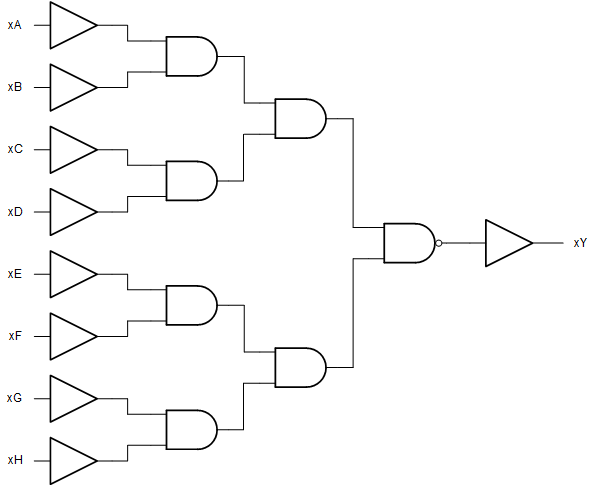
CD74HCT30Single 8-input, 4.5-V to 5.5-V NAND gate with TTL-compatible CMOS inputs | Logic | 3 | Active | This device contains one independent 8-input NAND gate. Each gate performs the Boolean function Y =A ● B ● C ● D ● E ● F ● G ● Hin positive logic.
This device contains one independent 8-input NAND gate. Each gate performs the Boolean function Y =A ● B ● C ● D ● E ● F ● G ● Hin positive logic. |
| Part | Category | Description |
|---|---|---|
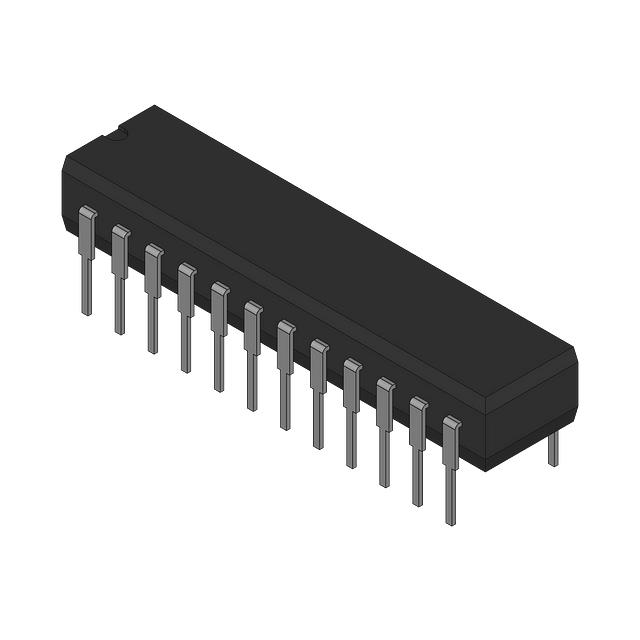 Texas Instruments | Integrated Circuits (ICs) | BUS DRIVER, BCT/FBT SERIES |
 Texas Instruments | Integrated Circuits (ICs) | 12BIT 3.3V~3.6V 210MHZ PARALLEL VQFN-48-EP(7X7) ANALOG TO DIGITAL CONVERTERS (ADC) ROHS |
Texas Instruments | Integrated Circuits (ICs) | TMX320DRE311 179PIN UBGA 200MHZ |
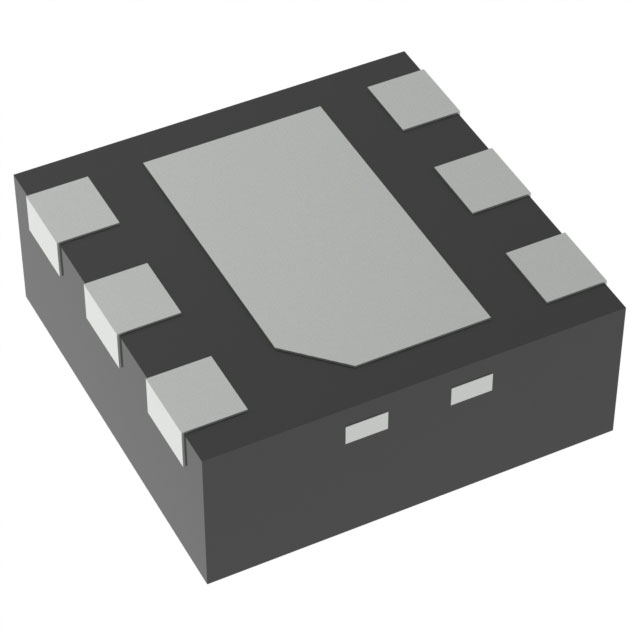 Texas Instruments TPS61040DRVTG4Unknown | Integrated Circuits (ICs) | IC LED DRV RGLTR PWM 350MA 6WSON |
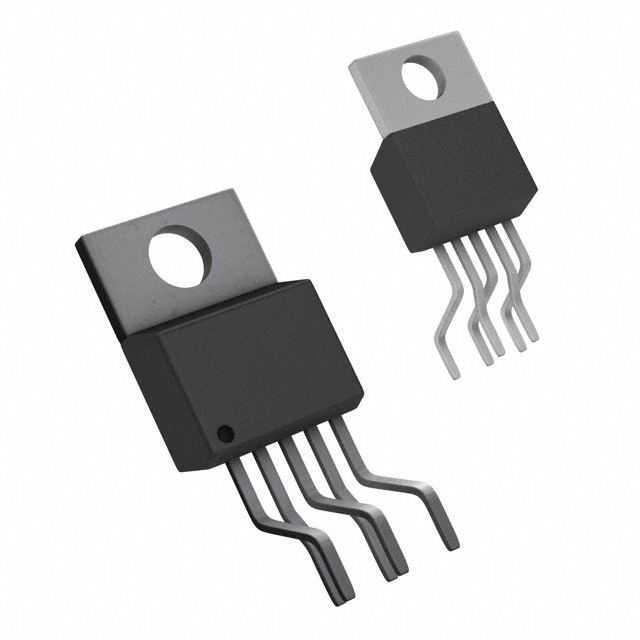 Texas Instruments LP3876ET-2.5Obsolete | Integrated Circuits (ICs) | IC REG LINEAR 2.5V 3A TO220-5 |
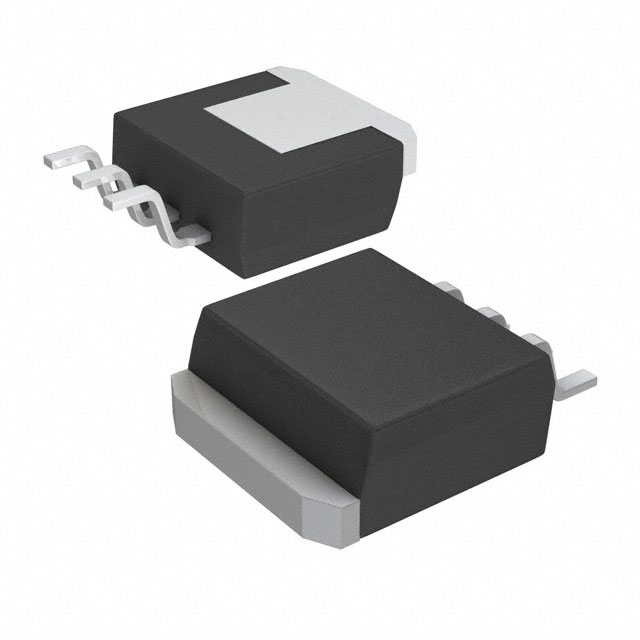 Texas Instruments LMS1585ACSX-ADJObsolete | Integrated Circuits (ICs) | IC REG LIN POS ADJ 5A DDPAK |
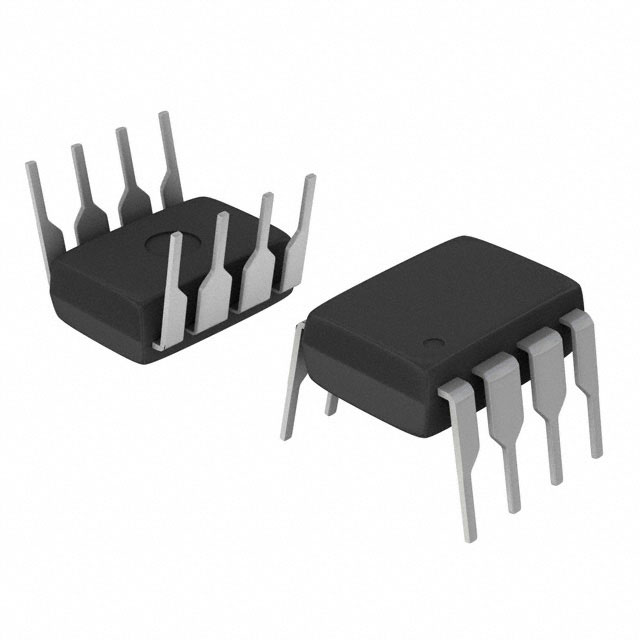 Texas Instruments INA111APG4Obsolete | Integrated Circuits (ICs) | IC INST AMP 1 CIRCUIT 8DIP |
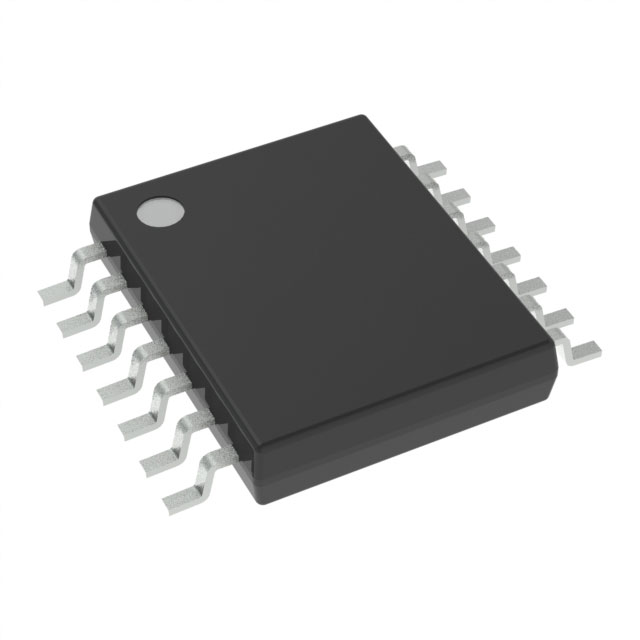 Texas Instruments | Integrated Circuits (ICs) | AUTOMOTIVE, QUAD 36V 1.2MHZ OPERATIONAL AMPLIFIER |
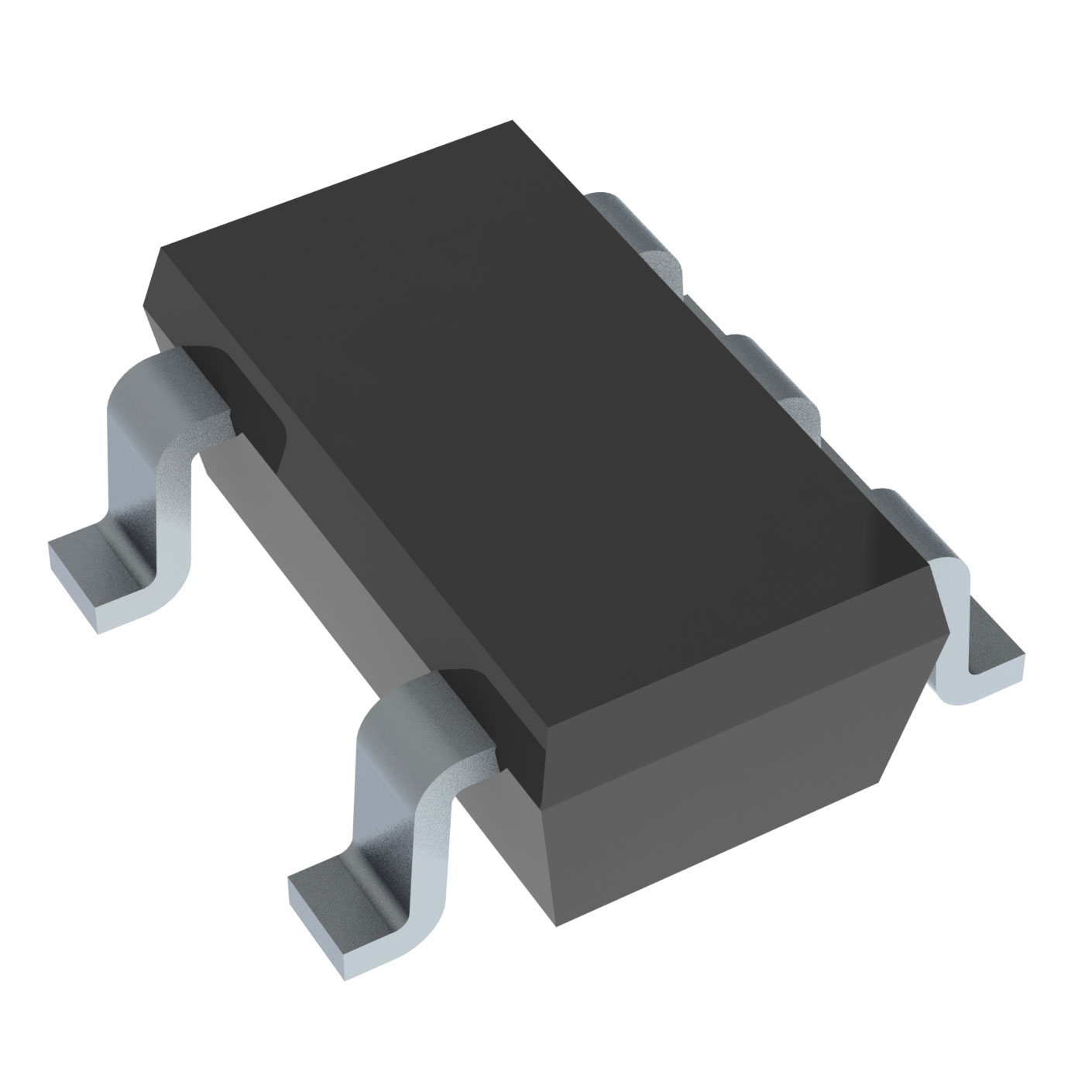 Texas Instruments OPA340NA/3KG4Unknown | Integrated Circuits (ICs) | IC OPAMP GP 1 CIRCUIT SOT23-5 |
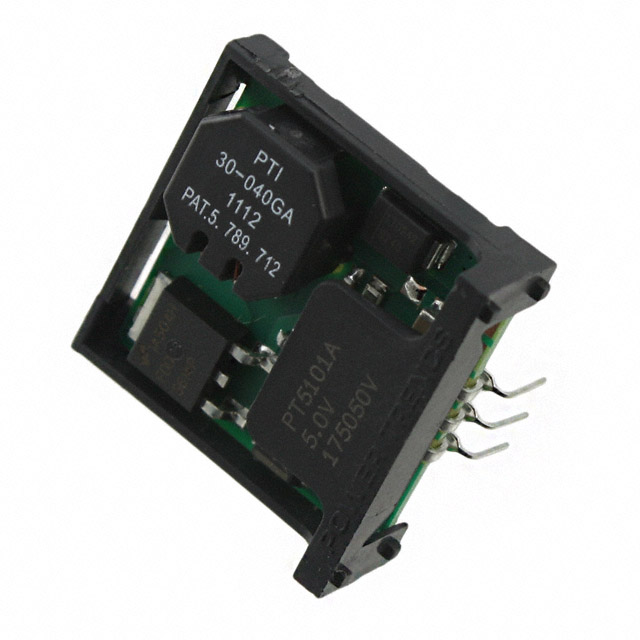 Texas Instruments PT5112AObsolete | Power Supplies - Board Mount | DC DC CONVERTER 8V 8W |