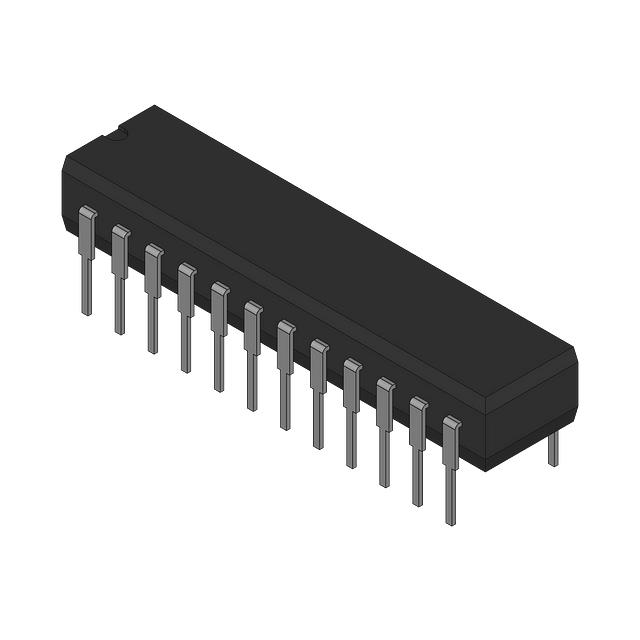
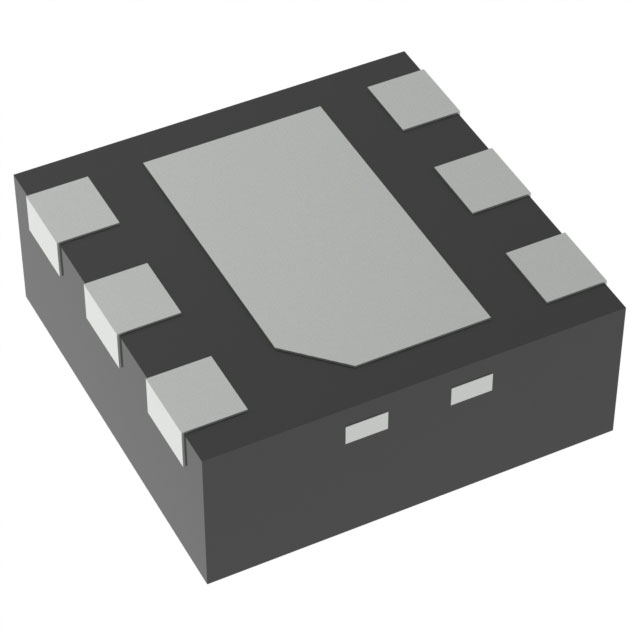
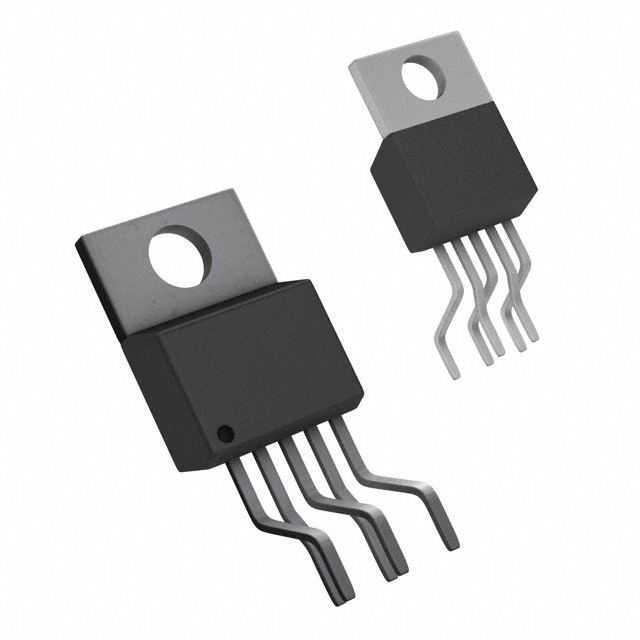
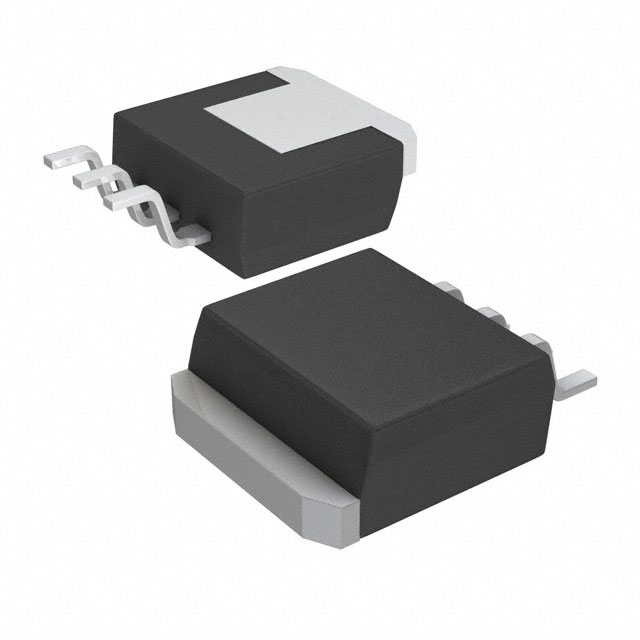
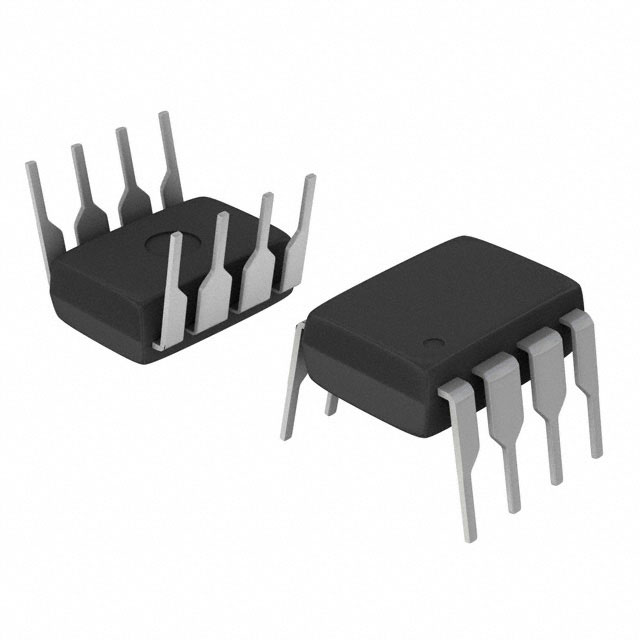
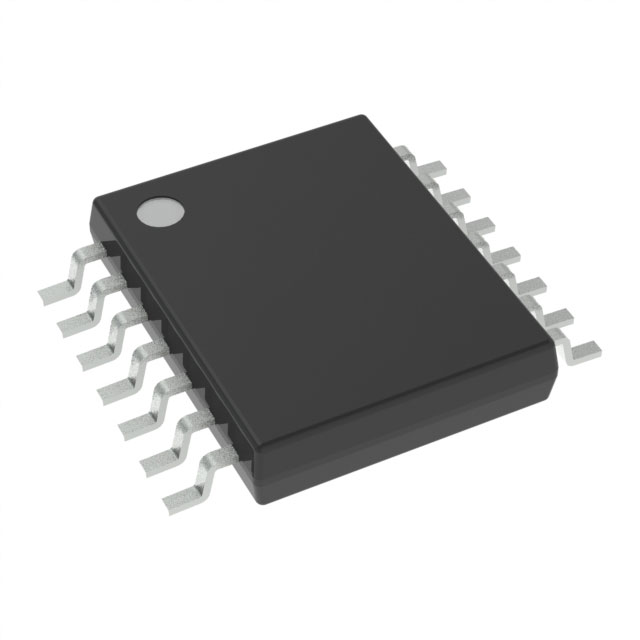
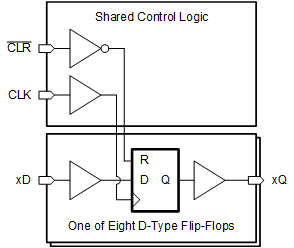
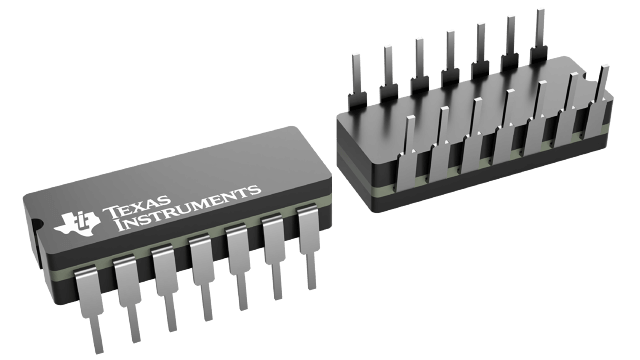
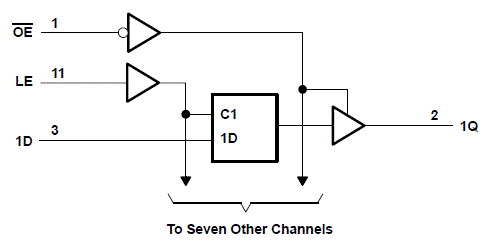
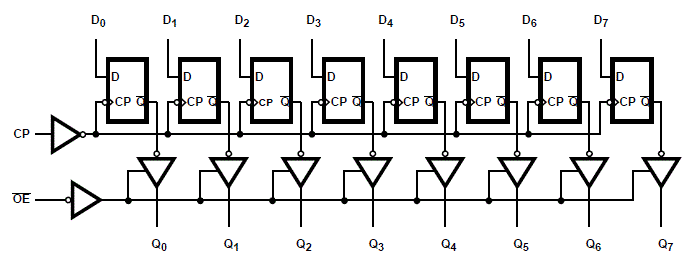
CD54HC273High Speed CMOS Logic Octal D-Type Flip-Flops with Reset | Flip Flops | 1 | Active | High Speed CMOS Logic Octal D-Type Flip-Flops with Reset |
CD54HC280High Speed CMOS Logic 9-Bit Odd/Even Parity Generator/Checker | Integrated Circuits (ICs) | 1 | Active | The ’HC280 and ’HCT280 are 9-bit odd/even parity, generator checker devices. Both even and odd parity outputs are available for checking or generating parity for words up to nine bits long. Even parity is indicated (E output to any input of an additional HC/HCT280 parity checker.
The ’HC280 and ’HCT280 are 9-bit odd/even parity, generator checker devices. Both even and odd parity outputs are available for checking or generating parity for words up to nine bits long. Even parity is indicated (E output to any input of an additional HC/HCT280 parity checker. |
CD54HC297High Speed CMOS Logic Digital Phase-Locked-Loop | Integrated Circuits (ICs) | 1 | Active | The ’HC297 and CD74HCT297 are high-speed silicon gate CMOS devices that are pin-compatible with low power Schottky TTL (LSTTL).
These devices are designed to provide a simple, cost-effective solution to high-accuracy, digital, phase-locked-loop applications. They contain all the necessary circuits, with the exception of the divide-by-N counter, to build first-order phase-locked-loops.
Both EXCLUSIVE-OR (XORPD) and edge-controlled phase detectors (ECPD) are provided for maximum flexibility. The input signals for the EXCLUSIVE-OR phase detector must have a 50% duty factor to obtain the maximum lock-range.
Proper partitioning of the loop function, with many of the building blocks external to the package, makes it easy for the designer to incorporate ripple cancellation (see Figure 2) or to cascade to higher order phase-locked-loops.
The length of the up/down K-counter is digitally programmable according to the K-counter function table. With A, B, C and D all LOW, the K-counter is disabled. With A HIGH and B, C and D LOW, the K-counter is only three stages long, which widens the bandwidth or capture range and shortens the lock time of the loop. When A, B, C and D are all programmed HIGH, the K-counter becomes seventeen stages long, which narrows the bandwidth or capture range and lengthens the lock time. Real-time control of loop bandwidth by manipulating the A to D inputs can maximize the overall performance of the digital phase-locked-loop.
The ’HC297 and CD74HCT297 can perform the classic first order phase-locked-loop function without using analog components. The accuracy of the digital phase-locked-loop (DPLL) is not affected by VCCand temperature variations but depends solely on accuracies of the K-clock and loop propagation delays.
The ’HC297 and CD74HCT297 are high-speed silicon gate CMOS devices that are pin-compatible with low power Schottky TTL (LSTTL).
These devices are designed to provide a simple, cost-effective solution to high-accuracy, digital, phase-locked-loop applications. They contain all the necessary circuits, with the exception of the divide-by-N counter, to build first-order phase-locked-loops.
Both EXCLUSIVE-OR (XORPD) and edge-controlled phase detectors (ECPD) are provided for maximum flexibility. The input signals for the EXCLUSIVE-OR phase detector must have a 50% duty factor to obtain the maximum lock-range.
Proper partitioning of the loop function, with many of the building blocks external to the package, makes it easy for the designer to incorporate ripple cancellation (see Figure 2) or to cascade to higher order phase-locked-loops.
The length of the up/down K-counter is digitally programmable according to the K-counter function table. With A, B, C and D all LOW, the K-counter is disabled. With A HIGH and B, C and D LOW, the K-counter is only three stages long, which widens the bandwidth or capture range and shortens the lock time of the loop. When A, B, C and D are all programmed HIGH, the K-counter becomes seventeen stages long, which narrows the bandwidth or capture range and lengthens the lock time. Real-time control of loop bandwidth by manipulating the A to D inputs can maximize the overall performance of the digital phase-locked-loop.
The ’HC297 and CD74HCT297 can perform the classic first order phase-locked-loop function without using analog components. The accuracy of the digital phase-locked-loop (DPLL) is not affected by VCCand temperature variations but depends solely on accuracies of the K-clock and loop propagation delays. |
CD54HC30Military single 8-input, 2-V to 6-V NAND gate | Gates and Inverters | 1 | Active | This device contains one independent 8-input NAND gate. Each gate performs the Boolean function Y =A ● B ● C ● D ● E ● F ● G ● Hin positive logic.
This device contains one independent 8-input NAND gate. Each gate performs the Boolean function Y =A ● B ● C ● D ● E ● F ● G ● Hin positive logic. |
CD54HC354High Speed CMOS Logic 8-Input Multiplexer/Register with 3-State Outputs | Logic | 1 | Active | The CD54HC354, CD74HC354, and CD74HCT354 are data selectors/multiplexers that select one of eight sources. In both types, the data select bits S0, S1 and S2 are stored in transparent latches that are enabled by a low latch enable input, LE\.
In the HC/HCT354 the data enable input, E\, controls transparent latches that pass data to the outputs when E\ is high and latches in new data when E\ is low.
In both types the three-state outputs are controlled by three output-enable inputs OE1\, OE2\, and OE3.
The CD54HC354, CD74HC354, and CD74HCT354 are data selectors/multiplexers that select one of eight sources. In both types, the data select bits S0, S1 and S2 are stored in transparent latches that are enabled by a low latch enable input, LE\.
In the HC/HCT354 the data enable input, E\, controls transparent latches that pass data to the outputs when E\ is high and latches in new data when E\ is low.
In both types the three-state outputs are controlled by three output-enable inputs OE1\, OE2\, and OE3. |
CD54HC373High Speed CMOS Logic Octal Transparent Latches with 3-State Output | Latches | 1 | Active | High Speed CMOS Logic Octal Transparent Latches with 3-State Output |
CD54HC374High Speed CMOS Logic Octal Positive-Edge Triggered D-Type Flip-Flops with 3-State Output | Integrated Circuits (ICs) | 1 | Active | High Speed CMOS Logic Octal Positive-Edge Triggered D-Type Flip-Flops with 3-State Output |
CD54HC393High Speed CMOS Logic Dual 4-Stage Binary Counter | Integrated Circuits (ICs) | 1 | Active | High Speed CMOS Logic Dual 4-Stage Binary Counter |
CD54HC40103High Speed CMOS Logic 8-Stage Synchronous Down Counters | Counters, Dividers | 2 | Active | The ’HC40103 and CD74HCT40103 are manufactured with high speed silicon gate technology and consist of an 8-stage synchronous down counter with a single output which is active when the internal count is zero. The 40103 contains a single 8-bit binary counter. Each has control inputs for enabling or disabling the clock, for clearing the counter to its maximum count, and for presetting the counter either synchronously or asynchronously. All control inputs and the TC\ output are active-low logic.
In normal operation, the counter is decremented by one count on each positive transition of the CLOCK (CP). Counting is inhibited when the TE\ input is high. The TC\ output goes low when the count reaches zero if the TE\ input is low, and remains low for one full clock period.
When the PE\ input is low, data at the P0-P7 inputs are clocked into the counter on the next positive clock transition regardless of the state of the TE\ input. When the PL\ input is low, data at the P0-P7 inputs are asynchronously forced into the counter regardless of the state of the PE\, TE\, or CLOCK inputs. Input P0-P7 represent a single 8-bit binary word for the 40103. When the MR input is low, the counter is asynchronously cleared to its maximum count of 25510, regardless of the state of any other input. The precedence relationship between control inputs is indicated in the truth table.
If all control inputs except TE\ are high at the time of zero count, the counters will jump to the maximum count, giving a counting sequence of 10016or 25610clock pulses long.
The 40103 may be cascaded using the TE\ input and the TC\ output, in either a synchronous or ripple mode. These circuits possess the low power consumption usually associated with CMOS circuitry, yet have speeds comparable to low power Schottky TTL circuits and can drive up to 10 LSTTL loads.
The ’HC40103 and CD74HCT40103 are manufactured with high speed silicon gate technology and consist of an 8-stage synchronous down counter with a single output which is active when the internal count is zero. The 40103 contains a single 8-bit binary counter. Each has control inputs for enabling or disabling the clock, for clearing the counter to its maximum count, and for presetting the counter either synchronously or asynchronously. All control inputs and the TC\ output are active-low logic.
In normal operation, the counter is decremented by one count on each positive transition of the CLOCK (CP). Counting is inhibited when the TE\ input is high. The TC\ output goes low when the count reaches zero if the TE\ input is low, and remains low for one full clock period.
When the PE\ input is low, data at the P0-P7 inputs are clocked into the counter on the next positive clock transition regardless of the state of the TE\ input. When the PL\ input is low, data at the P0-P7 inputs are asynchronously forced into the counter regardless of the state of the PE\, TE\, or CLOCK inputs. Input P0-P7 represent a single 8-bit binary word for the 40103. When the MR input is low, the counter is asynchronously cleared to its maximum count of 25510, regardless of the state of any other input. The precedence relationship between control inputs is indicated in the truth table.
If all control inputs except TE\ are high at the time of zero count, the counters will jump to the maximum count, giving a counting sequence of 10016or 25610clock pulses long.
The 40103 may be cascaded using the TE\ input and the TC\ output, in either a synchronous or ripple mode. These circuits possess the low power consumption usually associated with CMOS circuitry, yet have speeds comparable to low power Schottky TTL circuits and can drive up to 10 LSTTL loads. |
CD54HC40105High Speed CMOS Logic 4-Bit by 16-Word FIFO Register | Logic | 1 | Active | The ’HC40105 and ’HCT40105 are high-speed silicon-gate CMOS devices that are compatible, except for "shift-out" circuitry, with the CD40105B. They are low-power first-in-out (FIFO) "elastic" storage registers that can store 16 four-bit words. The 40105 is capable of handling input and output data at different shifting rates. This feature makes particularly useful as a buffer between asynchronous systems.
Each work position in the register is clocked by a control flip-flop, which stores a marker bit. A "1" signifies that the position’s data is filled and a "0" denotes a vacancy in that position. The control flip-flop detects the state of the preceding flip-flop and communicates its own status to the succeeding flip-flop. When a control flip-flop is in the "0" state and sees a "1" in the preceeding flip-flop, it generates a clock pulse that transfers data from the preceding four data latches into its own four data latches and resets the preceding flip-flop to "0". The first and last control flip-flops have buffered outputs. Since all empty locations "bubble" automatically to the input end, and all valid data ripple through to the output end, the status of the first control flip-flop (DATA-IN READY) indicates if the FIFO is full, and the status of the last flip-flop (DATA-OUT READY) indicates if the FIFO contains data. As the earliest data are removed from the bottom of the data stack (the output end), all data entered later will automatically propagate (ripple) toward the output.
The ’HC40105 and ’HCT40105 are high-speed silicon-gate CMOS devices that are compatible, except for "shift-out" circuitry, with the CD40105B. They are low-power first-in-out (FIFO) "elastic" storage registers that can store 16 four-bit words. The 40105 is capable of handling input and output data at different shifting rates. This feature makes particularly useful as a buffer between asynchronous systems.
Each work position in the register is clocked by a control flip-flop, which stores a marker bit. A "1" signifies that the position’s data is filled and a "0" denotes a vacancy in that position. The control flip-flop detects the state of the preceding flip-flop and communicates its own status to the succeeding flip-flop. When a control flip-flop is in the "0" state and sees a "1" in the preceeding flip-flop, it generates a clock pulse that transfers data from the preceding four data latches into its own four data latches and resets the preceding flip-flop to "0". The first and last control flip-flops have buffered outputs. Since all empty locations "bubble" automatically to the input end, and all valid data ripple through to the output end, the status of the first control flip-flop (DATA-IN READY) indicates if the FIFO is full, and the status of the last flip-flop (DATA-OUT READY) indicates if the FIFO contains data. As the earliest data are removed from the bottom of the data stack (the output end), all data entered later will automatically propagate (ripple) toward the output. |