| Instrumentation, OP Amps, Buffer Amps | 3 | Obsolete | |
| Special Purpose Amplifiers | 2 | Active | |
| Integrated Circuits (ICs) | 1 | Obsolete | |
VCA810High-Gain Adjustable Range, Wideband, Voltage-Controlled Amplifier | Integrated Circuits (ICs) | 5 | Active | The VCA810 is a DC-coupled, wideband, continuously variable, voltage-controlled gain amplifier. The device provides a differential input to single-ended output conversion with a high-impedance gain control input used to vary the gain over a –40-dB to 40-dB range linear in dB/V.
Operating from ±5-V supplies, the device gain control voltage adjusts the gain from –40 dB at a 0-V input to 40 dB at a –2-V input. Increasing the control voltage above ground attenuates the signal path to greater than 80 dB. Signal bandwidth and slew rate remain constant over the entire gain adjust range. This 40-dB/V gain control is accurate within ±1.5 dB (±0.9 dB for high grade), allowing the gain control voltage in an AGC application to be used as a received signal strength indicator (RSSI) with ±1.5-dB accuracy.
Excellent common-mode rejection and common-mode input range at the two high-impedance inputs allow the device to provide a differential receiver operation with gain adjust. The output signal is referenced to ground. Zero differential input voltage gives a 0-V output with a small DC offset error. Low input noise voltage ensures good output SNR at the highest gain settings.
In applications where pulse edge information is critical, and the device is being used to equalize varying channel loss, minimal change in group delay over gain setting retains excellent pulse edge information.
An improved output stage provides adequate output current to drive the most demanding loads. Although principally intended to drive analog-to-digital converters (ADCs) or second-stage amplifiers, the ±60-mA output current easily drives doubly-terminated 50-Ω lines or a passive post-filter stage over the ±1.7-V output voltage range.
The VCA810 is a DC-coupled, wideband, continuously variable, voltage-controlled gain amplifier. The device provides a differential input to single-ended output conversion with a high-impedance gain control input used to vary the gain over a –40-dB to 40-dB range linear in dB/V.
Operating from ±5-V supplies, the device gain control voltage adjusts the gain from –40 dB at a 0-V input to 40 dB at a –2-V input. Increasing the control voltage above ground attenuates the signal path to greater than 80 dB. Signal bandwidth and slew rate remain constant over the entire gain adjust range. This 40-dB/V gain control is accurate within ±1.5 dB (±0.9 dB for high grade), allowing the gain control voltage in an AGC application to be used as a received signal strength indicator (RSSI) with ±1.5-dB accuracy.
Excellent common-mode rejection and common-mode input range at the two high-impedance inputs allow the device to provide a differential receiver operation with gain adjust. The output signal is referenced to ground. Zero differential input voltage gives a 0-V output with a small DC offset error. Low input noise voltage ensures good output SNR at the highest gain settings.
In applications where pulse edge information is critical, and the device is being used to equalize varying channel loss, minimal change in group delay over gain setting retains excellent pulse edge information.
An improved output stage provides adequate output current to drive the most demanding loads. Although principally intended to drive analog-to-digital converters (ADCs) or second-stage amplifiers, the ±60-mA output current easily drives doubly-terminated 50-Ω lines or a passive post-filter stage over the ±1.7-V output voltage range. |
VCA820150MHz BW with linear in dB gain control variable gain amplifier | Amplifiers | 4 | Active | The VCA820 is a dc-coupled, wideband, linear in dB, continuously variable, voltage-controlled gain amplifier. The VCA820 provides a differential input to single-ended conversion with a high-impedance gain control input, used to vary the gain down 40 dB from the nominal maximum gain set by the gain resistor (RG) and feedback resistor (RF).
The VCA820 internal architecture consists of two input buffers and an output current feedback amplifier stage, integrated with a multiplier core to provide a complete variable gain amplifier (VGA) system that does not require external buffering. The maximum gain is set externally with two resistors, providing flexibility in designs. The maximum gain is intended to be set between +2 V/V and +100 V/V. Operating from ±5-V supplies, the gain control voltage for the VCA820 adjusts the gain linearly in dB as the control voltage varies from 0 V to +2 V. For example, set for a maximum gain of +10 V/V, the VCA820 provides 20 dB, at +2-V input, to –20 dB at 0-V input of gain control range. The VCA820 offers excellent gain linearity. For a 20-dB maximum gain, and a gain-control input voltage varying between 1 V and 2 V, the gain does not deviate by more than ±0.4dB (maximum at +25°C).
The VCA820 is a dc-coupled, wideband, linear in dB, continuously variable, voltage-controlled gain amplifier. The VCA820 provides a differential input to single-ended conversion with a high-impedance gain control input, used to vary the gain down 40 dB from the nominal maximum gain set by the gain resistor (RG) and feedback resistor (RF).
The VCA820 internal architecture consists of two input buffers and an output current feedback amplifier stage, integrated with a multiplier core to provide a complete variable gain amplifier (VGA) system that does not require external buffering. The maximum gain is set externally with two resistors, providing flexibility in designs. The maximum gain is intended to be set between +2 V/V and +100 V/V. Operating from ±5-V supplies, the gain control voltage for the VCA820 adjusts the gain linearly in dB as the control voltage varies from 0 V to +2 V. For example, set for a maximum gain of +10 V/V, the VCA820 provides 20 dB, at +2-V input, to –20 dB at 0-V input of gain control range. The VCA820 offers excellent gain linearity. For a 20-dB maximum gain, and a gain-control input voltage varying between 1 V and 2 V, the gain does not deviate by more than ±0.4dB (maximum at +25°C). |
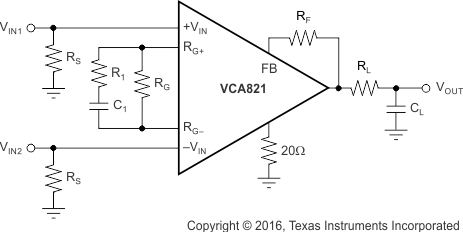
VCA821Wideband, > 40dB Adjust Range, Linear in dB Variable Gain Amplifier | Integrated Circuits (ICs) | 4 | Active | The VCA821 device is a DC-coupled, wideband, linear in dB, continuously variable, voltage-controlled gain amplifier. It provides a differential input to single-ended conversion with a high-impedance gain control input used to vary the gain down 40 dB from the nominal maximum gain set by the gain resistor (RG) and feedback resistor (RF).
The VCA821 device internal architecture consists of two input buffers and an output current feedback amplifier stage integrated with a multiplier core to provide a complete variable gain amplifier (VGA) system that does not require external buffering. The maximum gain is set externally with two resistors, providing flexibility in designs. The maximum gain is intended to be set between 6 dB and 32 dB. Operating from ±5-V supplies, the gain control voltage for the VCA821 device adjusts the gain linearly in dB as the control voltage varies from 0V to +2 V. For example, set at a maximum gain of 20 dB, the VCA821 device provides 20 dB, at VG= +2 V, to less than –20 dB at VG= 0 V. The VCA821 device offers excellent gain linearity. For a 20-dB maximum gain, and a gain-control input voltage varying between +1 V and +2 V, the gain does not deviate by more than ±0.3 dB (maximum at +25°C).
The VCA821 device is a DC-coupled, wideband, linear in dB, continuously variable, voltage-controlled gain amplifier. It provides a differential input to single-ended conversion with a high-impedance gain control input used to vary the gain down 40 dB from the nominal maximum gain set by the gain resistor (RG) and feedback resistor (RF).
The VCA821 device internal architecture consists of two input buffers and an output current feedback amplifier stage integrated with a multiplier core to provide a complete variable gain amplifier (VGA) system that does not require external buffering. The maximum gain is set externally with two resistors, providing flexibility in designs. The maximum gain is intended to be set between 6 dB and 32 dB. Operating from ±5-V supplies, the gain control voltage for the VCA821 device adjusts the gain linearly in dB as the control voltage varies from 0V to +2 V. For example, set at a maximum gain of 20 dB, the VCA821 device provides 20 dB, at VG= +2 V, to less than –20 dB at VG= 0 V. The VCA821 device offers excellent gain linearity. For a 20-dB maximum gain, and a gain-control input voltage varying between +1 V and +2 V, the gain does not deviate by more than ±0.3 dB (maximum at +25°C). |
| Instrumentation, Op Amps, Buffer Amps | 6 | Active | |
VCA824Wideband 420MHz, >40dB Gain Adjust Range, Linear in V/V Variable Gain Amplifier | Integrated Circuits (ICs) | 4 | Active | The VCA824 is a DC-coupled, wideband, linear-in V/V, continuously variable, voltage-controlled gain amplifier. The device provides a differential input to single-ended conversion with a high-impedance gain control input used to vary the gain down 40 dB from the nominal maximum gain set by the gain resistor (RG) and feedback resistor (RF).
The VCA824 internal architecture consists of two input buffers and an output current feedback amplifier stage integrated with a multiplier core to provide a complete variable gain amplifier (VGA) system that does not require external buffering. The maximum gain is set externally with two resistors, providing flexibility in designs. The maximum gain is intended to be set between 2 V/V and 40 V/V. Operating from ±5-V supplies, the gain control voltage for the VCA824 adjusts the gain linearly in V/V as the control voltage varies from 1 V to –1 V. For example, set for a maximum gain of 10 V/V, the VCA824 provides 10 V/V, at 1-V input, to 0.1 V/V at –1-V input of gain control range. The VCA824 offers excellent gain linearity. For a 20-dB maximum gain, and a gain-control input voltage varying between 0 V and 1 V, the gain does not deviate by more than ±0.3-dB (maximum at 25°C).
The VCA824 is a DC-coupled, wideband, linear-in V/V, continuously variable, voltage-controlled gain amplifier. The device provides a differential input to single-ended conversion with a high-impedance gain control input used to vary the gain down 40 dB from the nominal maximum gain set by the gain resistor (RG) and feedback resistor (RF).
The VCA824 internal architecture consists of two input buffers and an output current feedback amplifier stage integrated with a multiplier core to provide a complete variable gain amplifier (VGA) system that does not require external buffering. The maximum gain is set externally with two resistors, providing flexibility in designs. The maximum gain is intended to be set between 2 V/V and 40 V/V. Operating from ±5-V supplies, the gain control voltage for the VCA824 adjusts the gain linearly in V/V as the control voltage varies from 1 V to –1 V. For example, set for a maximum gain of 10 V/V, the VCA824 provides 10 V/V, at 1-V input, to 0.1 V/V at –1-V input of gain control range. The VCA824 offers excellent gain linearity. For a 20-dB maximum gain, and a gain-control input voltage varying between 0 V and 1 V, the gain does not deviate by more than ±0.3-dB (maximum at 25°C). |
VCA85008-Channel, Ultra-Low Power Variable Gain Amplifier With Low-Noise Pre-Amp | Instrumentation, OP Amps, Buffer Amps | 4 | Active | The VCA8500 is an 8-channel variable gain amplifier consisting of a low-noise pre-amplifier (LNP) and a variable-gain amplifier (VGA). This combination, along with the device features, makes it ideal for a variety of ultrasound systems.
The LNP gain is fixed at 20dB, and has excellent noise and signal handling characteristics. The gain of the voltage-controlled attenuator can vary over a 46dB range with a 0V to 1.2V control voltage common to all channels of the VCA8500.
The post-gain amplifier (PGA) can be programmed for four gain settings: 20dB, 25dB, 27dB, or 30dB gain. As a means to improve system overload recovery time, the VCA8500 provides an internal clamping function. The PGA settings as well the clamp levels are controlled through the serial interface.
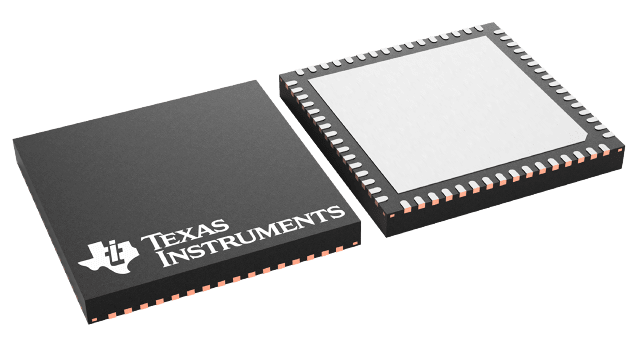
The VCA8500 is built on TI's BiCOM process and is available in a small QFN-64 PowerPAD package.
The VCA8500 is an 8-channel variable gain amplifier consisting of a low-noise pre-amplifier (LNP) and a variable-gain amplifier (VGA). This combination, along with the device features, makes it ideal for a variety of ultrasound systems.
The LNP gain is fixed at 20dB, and has excellent noise and signal handling characteristics. The gain of the voltage-controlled attenuator can vary over a 46dB range with a 0V to 1.2V control voltage common to all channels of the VCA8500.
The post-gain amplifier (PGA) can be programmed for four gain settings: 20dB, 25dB, 27dB, or 30dB gain. As a means to improve system overload recovery time, the VCA8500 provides an internal clamping function. The PGA settings as well the clamp levels are controlled through the serial interface.
The VCA8500 is built on TI's BiCOM process and is available in a small QFN-64 PowerPAD package. |
| Linear | 2 | Obsolete | |