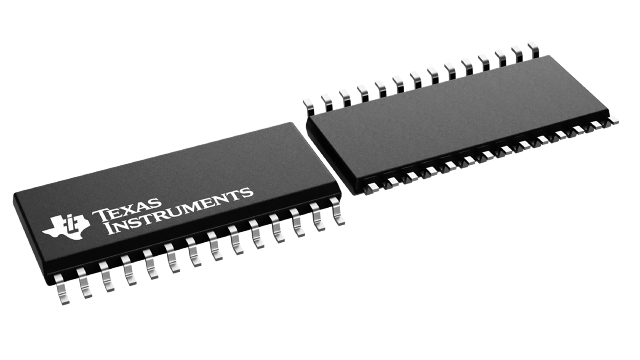
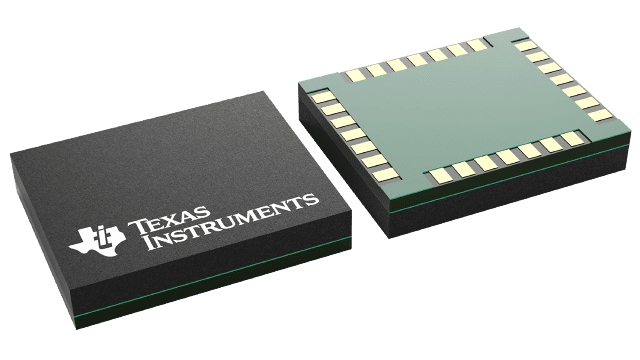
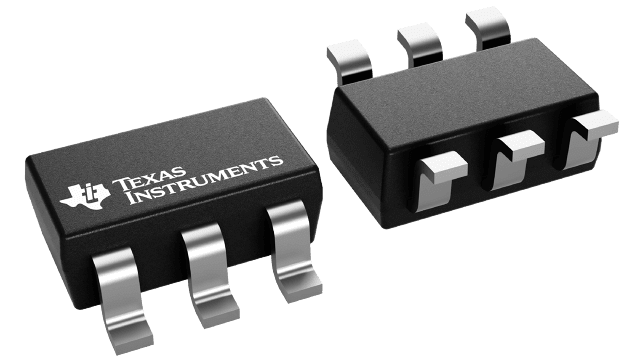
T
Texas Instruments
| Series | Category | # Parts | Status | Description |
|---|---|---|---|---|
| Part | Spec A | Spec B | Spec C | Spec D | Description |
|---|---|---|---|---|---|



| Series | Category | # Parts | Status | Description |
|---|---|---|---|---|
| Part | Spec A | Spec B | Spec C | Spec D | Description |
|---|---|---|---|---|---|
| Part | Category | Description |
|---|---|---|
 Texas Instruments BQ2002CSNTRG4Unknown | Integrated Circuits (ICs) | LINEAR BATTERY CHARGER NICD/NIMH 2000MA 0V TO 6V 8-PIN SOIC T/R |
 Texas Instruments LM3676SDX-3.3Obsolete | Integrated Circuits (ICs) | IC REG BUCK 3.3V 600MA 8WSON |
 Texas Instruments | Integrated Circuits (ICs) | TMX320DRE311 179PIN UBGA 200MHZ |
 Texas Instruments UCC3580N-1G4Obsolete | Integrated Circuits (ICs) | IC REG CTRLR FWRD CONV 16DIP |
 Texas Instruments LM2831YMF EVALObsolete | Development Boards Kits Programmers | EVAL BOARD FOR LM2831 |
 Texas Instruments | Integrated Circuits (ICs) | BUFFER/LINE DRIVER 8-CH NON-INVERTING 3-ST CMOS 20-PIN SSOP T/R |
 Texas Instruments | Integrated Circuits (ICs) | ANALOG OTHER PERIPHERALS |
Texas Instruments | Integrated Circuits (ICs) | RADIATION-HARDENED, QMLP 60V HAL |
 Texas Instruments SN75LVDS051DRObsolete | Integrated Circuits (ICs) | IC TRANSCEIVER FULL 2/2 16SOIC |
 Texas Instruments | Integrated Circuits (ICs) | AUTOMOTIVE OCTAL D-TYPE FLIP-FLO |
| Series | Category | # Parts | Status | Description |
|---|---|---|---|---|
| Evaluation and Demonstration Boards and Kits | 1 | Active | ||
| Accessories | 2 | Active | ||
| Evaluation and Demonstration Boards and Kits | 8 | Active | ||
USBN9603Universal Serial Bus Full Speed Node Controller withEnhanced DMA Support Universal Serial Bus Full | Integrated Circuits (ICs) | 2 | NRND | The USBN9603/4 are integrated, USB Node controllers. Other than the reset mechanism for the clock generation circuit, these two devices are identical. All references to \x93the device\x94 in this document refer to both devices, unless otherwise noted.
The device provides enhanced DMA support with many automatic data handling features. It is compatible with USB specification versions 1.0 and 1.1, and is an advanced version of the USBN9602.
The device integrates the required USB transceiver with a 3.3V regulator, a Serial Interface Engine (SIE), USB endpoint (EP) FIFOs, a versatile 8-bit parallel interface, a clock generator and a MICROWIRE/PLUS\x99 interface. Seven endpoint pipes are supported: one for the mandatory control endpoint and six to support interrupt, bulk and isochronous endpoints. Each endpoint pipe has a dedicated FIFO, 8 bytes for the control endpoint and 64 bytes for the other endpoints. The 8-bit parallel interface supports multiplexed and non-multiplexed style CPU address/data buses. A programmable interrupt output scheme allows device configuration for different interrupt signaling requirements.
The USBN9603/4 are integrated, USB Node controllers. Other than the reset mechanism for the clock generation circuit, these two devices are identical. All references to \x93the device\x94 in this document refer to both devices, unless otherwise noted.
The device provides enhanced DMA support with many automatic data handling features. It is compatible with USB specification versions 1.0 and 1.1, and is an advanced version of the USBN9602.
The device integrates the required USB transceiver with a 3.3V regulator, a Serial Interface Engine (SIE), USB endpoint (EP) FIFOs, a versatile 8-bit parallel interface, a clock generator and a MICROWIRE/PLUS\x99 interface. Seven endpoint pipes are supported: one for the mandatory control endpoint and six to support interrupt, bulk and isochronous endpoints. Each endpoint pipe has a dedicated FIFO, 8 bytes for the control endpoint and 64 bytes for the other endpoints. The 8-bit parallel interface supports multiplexed and non-multiplexed style CPU address/data buses. A programmable interrupt output scheme allows device configuration for different interrupt signaling requirements. |
USBN9604USBN9604 | Interface | 5 | Active | The USBN9603/4 are integrated, USB Node controllers. Other than the reset mechanism for the clock generation circuit, these two devices are identical. All references to \x93the device\x94 in this document refer to both devices, unless otherwise noted.
The device provides enhanced DMA support with many automatic data handling features. It is compatible with USB specification versions 1.0 and 1.1, and is an advanced version of the USBN9602.
The device integrates the required USB transceiver with a 3.3V regulator, a Serial Interface Engine (SIE), USB endpoint (EP) FIFOs, a versatile 8-bit parallel interface, a clock generator and a MICROWIRE/PLUS\x99 interface. Seven endpoint pipes are supported: one for the mandatory control endpoint and six to support interrupt, bulk and isochronous endpoints. Each endpoint pipe has a dedicated FIFO, 8 bytes for the control endpoint and 64 bytes for the other endpoints. The 8-bit parallel interface supports multiplexed and non-multiplexed style CPU address/data buses. A programmable interrupt output scheme allows device configuration for different interrupt signaling requirements.
The USBN9603/4 are integrated, USB Node controllers. Other than the reset mechanism for the clock generation circuit, these two devices are identical. All references to \x93the device\x94 in this document refer to both devices, unless otherwise noted.
The device provides enhanced DMA support with many automatic data handling features. It is compatible with USB specification versions 1.0 and 1.1, and is an advanced version of the USBN9602.
The device integrates the required USB transceiver with a 3.3V regulator, a Serial Interface Engine (SIE), USB endpoint (EP) FIFOs, a versatile 8-bit parallel interface, a clock generator and a MICROWIRE/PLUS\x99 interface. Seven endpoint pipes are supported: one for the mandatory control endpoint and six to support interrupt, bulk and isochronous endpoints. Each endpoint pipe has a dedicated FIFO, 8 bytes for the control endpoint and 64 bytes for the other endpoints. The 8-bit parallel interface supports multiplexed and non-multiplexed style CPU address/data buses. A programmable interrupt output scheme allows device configuration for different interrupt signaling requirements. |
| Voltage Regulators - DC DC Switching Regulators | 2 | Obsolete | ||
| Logic | 1 | Obsolete | ||
| Integrated Circuits (ICs) | 1 | Obsolete | ||
| Power Management (PMIC) | 1 | Active | ||
| Isolators | 1 | Active | ||