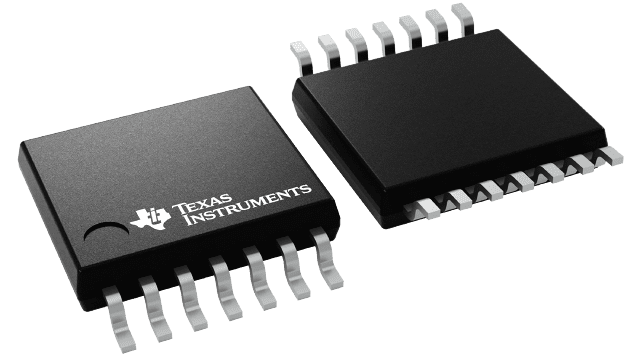
UCC2960Primary side startup controller , -40C to 85C | Integrated Circuits (ICs) | 4 | Active | The UCC3960 primary-side startup controller is a unique solution that provides all the primary-side functions required for a single-ended, isolated offline, switch-mode power converter that uses secondary-side PWM control. It is usable with a wide range of secondary circuits and is especially well suitable for systems where sophisticated handling of overload conditions is required.
Secondary-side control assumes that output voltage and current measurements are interfaced directly to an output ground-referenced PWM stage that develops the power switch command for the supply. This digital PWM command can then be transmitted to the primary-side power switch through a simple and low-cost isolating pulse transformer. With secondary-side control, it is much easier to monitor and control the system load with tightly coupled analog control loops. Load-oriented features such as output current sharing and synchronous rectification are implemented more easily.
The UCC3960 provides all the circuitry required on the primary side of a secondary-side controlled power supply. It features a free running 60-kHz to 360-kHz oscillator that is synchronizable to the secondary-side PWM signal and also has the ability to accept start/stop PWM commands from the isolating pulse edge transformer. The use of an extremely small and low-cost pulse transformer allows for higher converter bandwidth. This also eliminates the loop-gain variations due to initial accuracy and aging of an opto-coupler feedback element or the size penalty of a gate transformer. It also includes an undervoltage lockout circuit with 2-V hysteresis, a low current startup with active low during UVLO, a soft-start capability, a 5-V reference and a high current power output.
In a non-typical use, the UCC3960 can accommodate an analog feedback signal through an opto-isolator where it can operate in voltage-mode control mode with primary-side peak current limiting.
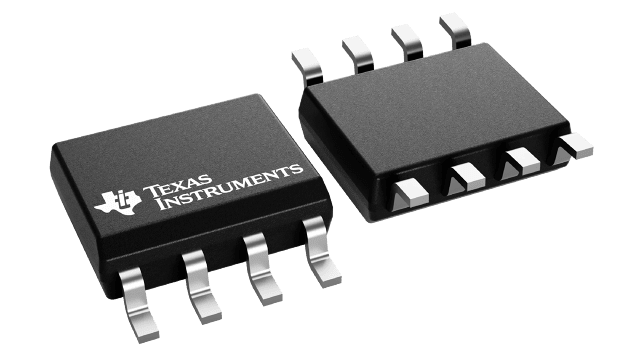
The UCC3960 and the UCC2960 are available in the 8-pin SOIC (D) and PDIP (P) packages. A 14-pin package version is available as UCC2961 and UCC3961 that includes additional protection features such as multimode overcurrent protection, volt-second clamp, programmable overvoltage and undervoltage sense lines, and the self-bias regulator.
The UCC3960 primary-side startup controller is a unique solution that provides all the primary-side functions required for a single-ended, isolated offline, switch-mode power converter that uses secondary-side PWM control. It is usable with a wide range of secondary circuits and is especially well suitable for systems where sophisticated handling of overload conditions is required.
Secondary-side control assumes that output voltage and current measurements are interfaced directly to an output ground-referenced PWM stage that develops the power switch command for the supply. This digital PWM command can then be transmitted to the primary-side power switch through a simple and low-cost isolating pulse transformer. With secondary-side control, it is much easier to monitor and control the system load with tightly coupled analog control loops. Load-oriented features such as output current sharing and synchronous rectification are implemented more easily.
The UCC3960 provides all the circuitry required on the primary side of a secondary-side controlled power supply. It features a free running 60-kHz to 360-kHz oscillator that is synchronizable to the secondary-side PWM signal and also has the ability to accept start/stop PWM commands from the isolating pulse edge transformer. The use of an extremely small and low-cost pulse transformer allows for higher converter bandwidth. This also eliminates the loop-gain variations due to initial accuracy and aging of an opto-coupler feedback element or the size penalty of a gate transformer. It also includes an undervoltage lockout circuit with 2-V hysteresis, a low current startup with active low during UVLO, a soft-start capability, a 5-V reference and a high current power output.
In a non-typical use, the UCC3960 can accommodate an analog feedback signal through an opto-isolator where it can operate in voltage-mode control mode with primary-side peak current limiting.
The UCC3960 and the UCC2960 are available in the 8-pin SOIC (D) and PDIP (P) packages. A 14-pin package version is available as UCC2961 and UCC3961 that includes additional protection features such as multimode overcurrent protection, volt-second clamp, programmable overvoltage and undervoltage sense lines, and the self-bias regulator. |
| DC DC Switching Controllers | 2 | LTB | |
UCC2972BiCMOS push-pull cold cathode fluorescent lamp driver controller | Integrated Circuits (ICs) | 4 | Active | Design goals for a Cold Cathode Fluorescent Lamp (CCFL) converter used in a notebook computer or portable application include small size, high efficiency, and low cost. The UCC3972/3 CCFL controllers provide the necessary circuit blocks to implement a highly efficient CCFL backlight power supply in a small footprint 8 pin TSSOP package. The BiCMOS controllers typically consume less than 1mA of operating current, improving overall system efficiency when compared to bipolar controllers requiring 5mA to 10mA of operating current.
External parts count is minimized and system cost is reduced by integrating such features as a feedback controlled PWM driver stage, open lamp protection, startup delay and synchronization circuitry between the buck and push-pull stages. The UCC3972/3 include an internal shunt regulator, allowing the part to operate with input voltages from 4.5V up to 25V. The part supports both analog and externally generated low frequency dimming modes of operation.
The UCC3973 adds a programmable voltage clamp at the BUCK pin. This feature can be used to protect the transformer from overvoltage during startup or when an open lamp occurs. Transformer voltage is controlled by reducing duty cycle when an over-voltage is detected.
Design goals for a Cold Cathode Fluorescent Lamp (CCFL) converter used in a notebook computer or portable application include small size, high efficiency, and low cost. The UCC3972/3 CCFL controllers provide the necessary circuit blocks to implement a highly efficient CCFL backlight power supply in a small footprint 8 pin TSSOP package. The BiCMOS controllers typically consume less than 1mA of operating current, improving overall system efficiency when compared to bipolar controllers requiring 5mA to 10mA of operating current.
External parts count is minimized and system cost is reduced by integrating such features as a feedback controlled PWM driver stage, open lamp protection, startup delay and synchronization circuitry between the buck and push-pull stages. The UCC3972/3 include an internal shunt regulator, allowing the part to operate with input voltages from 4.5V up to 25V. The part supports both analog and externally generated low frequency dimming modes of operation.
The UCC3973 adds a programmable voltage clamp at the BUCK pin. This feature can be used to protect the transformer from overvoltage during startup or when an open lamp occurs. Transformer voltage is controlled by reducing duty cycle when an over-voltage is detected. |
UCC2973BiCMOS cold cathode fluorescent lamp driver controller with external sync | Lighting, Ballast Controllers | 4 | Active | Design goals for a Cold Cathode Fluorescent Lamp (CCFL) converter used in a notebook computer or portable application include small size, high efficiency, and low cost. The UCC3972/3 CCFL controllers provide the necessary circuit blocks to implement a highly efficient CCFL backlight power supply in a small footprint 8 pin TSSOP package. The BiCMOS controllers typically consume less than 1mA of operating current, improving overall system efficiency when compared to bipolar controllers requiring 5mA to 10mA of operating current.
External parts count is minimized and system cost is reduced by integrating such features as a feedback controlled PWM driver stage, open lamp protection, startup delay and synchronization circuitry between the buck and push-pull stages. The UCC3972/3 include an internal shunt regulator, allowing the part to operate with input voltages from 4.5V up to 25V. The part supports both analog and externally generated low frequency dimming modes of operation.
The UCC3973 adds a programmable voltage clamp at the BUCK pin. This feature can be used to protect the transformer from overvoltage during startup or when an open lamp occurs. Transformer voltage is controlled by reducing duty cycle when an over-voltage is detected.
Design goals for a Cold Cathode Fluorescent Lamp (CCFL) converter used in a notebook computer or portable application include small size, high efficiency, and low cost. The UCC3972/3 CCFL controllers provide the necessary circuit blocks to implement a highly efficient CCFL backlight power supply in a small footprint 8 pin TSSOP package. The BiCMOS controllers typically consume less than 1mA of operating current, improving overall system efficiency when compared to bipolar controllers requiring 5mA to 10mA of operating current.
External parts count is minimized and system cost is reduced by integrating such features as a feedback controlled PWM driver stage, open lamp protection, startup delay and synchronization circuitry between the buck and push-pull stages. The UCC3972/3 include an internal shunt regulator, allowing the part to operate with input voltages from 4.5V up to 25V. The part supports both analog and externally generated low frequency dimming modes of operation.
The UCC3973 adds a programmable voltage clamp at the BUCK pin. This feature can be used to protect the transformer from overvoltage during startup or when an open lamp occurs. Transformer voltage is controlled by reducing duty cycle when an over-voltage is detected. |
| Lighting, Ballast Controllers | 1 | Obsolete | |
| Power Management - Specialized | 1 | Obsolete | |
| Integrated Circuits (ICs) | 2 | Obsolete | |
| Power Management (PMIC) | 3 | Obsolete | |
| DC/DC & AC/DC (Off-Line) SMPS Evaluation Boards | 2 | Obsolete | |
| Integrated Circuits (ICs) | 2 | Active | The UCC29910A Buck Power Factor Correction (PFC) controller provides a relatively flat high-efficiency performance across universal line for designers requiring a high power factor (>0.9) and wishing to meet the requirements of IEC 61000-3-2. Based on a buck topology, inherent inrush current limiting eliminates the need for additional components. With a typical bus voltage of 84 V, the topology is ideally suited for use with low voltage stress downstream regulation/isolation power trains, such as half-bridge stages controlled by the UCC29900, (Texas Instruments Literature Number, SLUS923). This combination offers low common-mode noise generation allowing reduced filtering and exceptionally high conversion efficiency.
The UCC29910A incorporates AC line UVLO and controlled soft start for fast start-up. Enhanced light-load efficiency is achieved through advanced management algorithms for best-in-class no-load and light-load performance.
The UCC29910A Buck Power Factor Correction (PFC) controller provides a relatively flat high-efficiency performance across universal line for designers requiring a high power factor (>0.9) and wishing to meet the requirements of IEC 61000-3-2. Based on a buck topology, inherent inrush current limiting eliminates the need for additional components. With a typical bus voltage of 84 V, the topology is ideally suited for use with low voltage stress downstream regulation/isolation power trains, such as half-bridge stages controlled by the UCC29900, (Texas Instruments Literature Number, SLUS923). This combination offers low common-mode noise generation allowing reduced filtering and exceptionally high conversion efficiency.
The UCC29910A incorporates AC line UVLO and controlled soft start for fast start-up. Enhanced light-load efficiency is achieved through advanced management algorithms for best-in-class no-load and light-load performance. |