| Integrated Circuits (ICs) | 1 | Active | |
TS3DV4161.65-Gbps 4-channel differential 8-to-16 and 16-to-8 mux for DVI 1.0/HDMI 1.2a applications | Interface | 2 | Active | The TS3DV416 is a 16-bit to 8-bit multiplexer/demultiplexer digital video switch with a single select (SEL) input. SEL controls the data path of the multiplexer/demultiplexer.
The device provides a low and flat ON-state resistance (ron) and an excellent ON-state resistance match. Low input/output capacitance, high bandwidth, low skew, and low crosstalk among channels make this device suitable for various digital video applications, such as DVI and HDMI.
The TS3DV416 is a 16-bit to 8-bit multiplexer/demultiplexer digital video switch with a single select (SEL) input. SEL controls the data path of the multiplexer/demultiplexer.
The device provides a low and flat ON-state resistance (ron) and an excellent ON-state resistance match. Low input/output capacitance, high bandwidth, low skew, and low crosstalk among channels make this device suitable for various digital video applications, such as DVI and HDMI. |
TS3DV4213.8-Gbps 4-channel differential 8-to-16 and 16-to-8 mux for DVI 1.0/HDMI 1.3 applications | Video Processing | 2 | Active | The TS3DV421 is a 4-channel differential 2:1 multiplexer/demultiplexer digital video switch controlled with one select input (SEL). SEL controls the data path of the multiplexer/demultiplexer and can be connected to any GPIO in the system, using an external voltage divider system. The device provides high bandwidth necessary for DVI and HDMI applications. This device expands the high-speed physical link interface from a single HDMI port to two HDMI ports (A or B port). The unselected channel is set to a high-impedance state.
The most common application for the TS3DV421 is in the sink application. In this case, there are two sources (i.e., DVD, set-top box, or game console) that must be routed to one HDMI receiver. The TS3DV421 can route the signals where one HDMI receiver (in a DLP, LCD TV, PDP, or other high-definition display) can be expanded to three ports.
The HDMI application calls for a 100-differential impedance between the differential lines (TMDSn+ and TMDSn–). Additionally, because the TS3DV421 is a high-bandwidth, low-rONpass transistor-type switch, a properly designed board retains a 100-differential impedance through the switch. The unselected port is in the high-impedance mode, such that the receiver receives information from only one source. HDCP encryption is passed through the switch for the HDMI receiver to decode.
The TS3DV421 is a 4-channel differential 2:1 multiplexer/demultiplexer digital video switch controlled with one select input (SEL). SEL controls the data path of the multiplexer/demultiplexer and can be connected to any GPIO in the system, using an external voltage divider system. The device provides high bandwidth necessary for DVI and HDMI applications. This device expands the high-speed physical link interface from a single HDMI port to two HDMI ports (A or B port). The unselected channel is set to a high-impedance state.
The most common application for the TS3DV421 is in the sink application. In this case, there are two sources (i.e., DVD, set-top box, or game console) that must be routed to one HDMI receiver. The TS3DV421 can route the signals where one HDMI receiver (in a DLP, LCD TV, PDP, or other high-definition display) can be expanded to three ports.
The HDMI application calls for a 100-differential impedance between the differential lines (TMDSn+ and TMDSn–). Additionally, because the TS3DV421 is a high-bandwidth, low-rONpass transistor-type switch, a properly designed board retains a 100-differential impedance through the switch. The unselected port is in the high-impedance mode, such that the receiver receives information from only one source. HDCP encryption is passed through the switch for the HDMI receiver to decode. |
TS3DV5201.65-Gbps 5-channel differential 10-to-20 and 20-to-10 mux for DVI 1.0/HDMI 1.2a applications | Video Processing | 4 | Active | The TS3DV520E is a 20-bit to 10-bit multiplexer/demultiplexer digital video switch with a single select (SEL) input. SEL controls the data path of the multiplexer/demultiplexer. The device provides five differential channels for digital video signal switching.
This device provides low and flat ON-state resistance (ron) and excellent ON-state resistance match. Low input/output capacitance, high bandwidth, low skew, and low crosstalk among channels make this device suitable for various digital video applications, such as DVI and HDMI.
Voltage on the SEL pin should be less or equal to VCC, even in the power-down mode(VCC= 0 V).
The TS3DV520E is a 20-bit to 10-bit multiplexer/demultiplexer digital video switch with a single select (SEL) input. SEL controls the data path of the multiplexer/demultiplexer. The device provides five differential channels for digital video signal switching.
This device provides low and flat ON-state resistance (ron) and excellent ON-state resistance match. Low input/output capacitance, high bandwidth, low skew, and low crosstalk among channels make this device suitable for various digital video applications, such as DVI and HDMI.
Voltage on the SEL pin should be less or equal to VCC, even in the power-down mode(VCC= 0 V). |
TS3DV6213.4-Gbps 12-channel differential 1-to-2 and 2-to-1 mux for DVI 1.0 /HDMI 1.4 applications | Linear | 1 | Active | The TS3DV621 is a 1:2 or 2:1 bi-directional multiplexer/demultiplexer with a integrated 4 side-band control channel (DDC, AUX, CEC, or HPD) signal switcher. Operating from a 3 to 3.6V supply, the TS3DV621 offers low and flat ON-state resistance as well as low I/O capacitance, which allows the TS3DV621 to achieve a typical bandwidth of 2.2 GHz. The device provides the high bandwidth necessary for HDMI, DVI, and DisplayPort applications. The TS3DV621 expands the high-speed physical link interface from a single HDMI port to two HDMI ports (A or B port) or vise-versa. It can also be used for DisplayPort (DP) source/sink applications. The integrated side-band control channels allow 5V signals to pass through, making the TS3DV621 suitable for HDMI applications.
The most common application for the TS3DV621 is the sink application. In this case, there are two possible sources (DVD, set-top box, or game console) that are routed to one receiver. The unselected port is in the high-impedance mode, such that the receiver receives information from only one source. HDCP encryption is passed through the switch for the receiver to decode.
The TS3DV621 is a 1:2 or 2:1 bi-directional multiplexer/demultiplexer with a integrated 4 side-band control channel (DDC, AUX, CEC, or HPD) signal switcher. Operating from a 3 to 3.6V supply, the TS3DV621 offers low and flat ON-state resistance as well as low I/O capacitance, which allows the TS3DV621 to achieve a typical bandwidth of 2.2 GHz. The device provides the high bandwidth necessary for HDMI, DVI, and DisplayPort applications. The TS3DV621 expands the high-speed physical link interface from a single HDMI port to two HDMI ports (A or B port) or vise-versa. It can also be used for DisplayPort (DP) source/sink applications. The integrated side-band control channels allow 5V signals to pass through, making the TS3DV621 suitable for HDMI applications.
The most common application for the TS3DV621 is the sink application. In this case, there are two possible sources (DVD, set-top box, or game console) that are routed to one receiver. The unselected port is in the high-impedance mode, such that the receiver receives information from only one source. HDCP encryption is passed through the switch for the receiver to decode. |
| Logic | 4 | Active | |
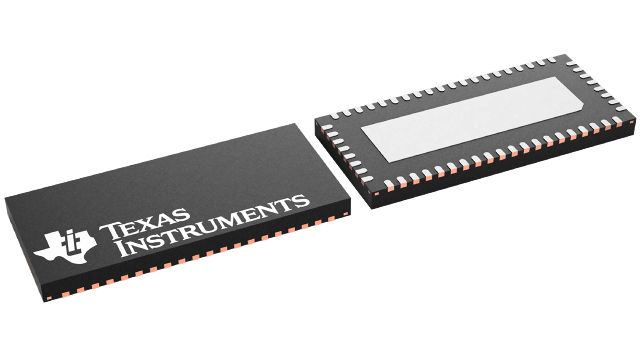
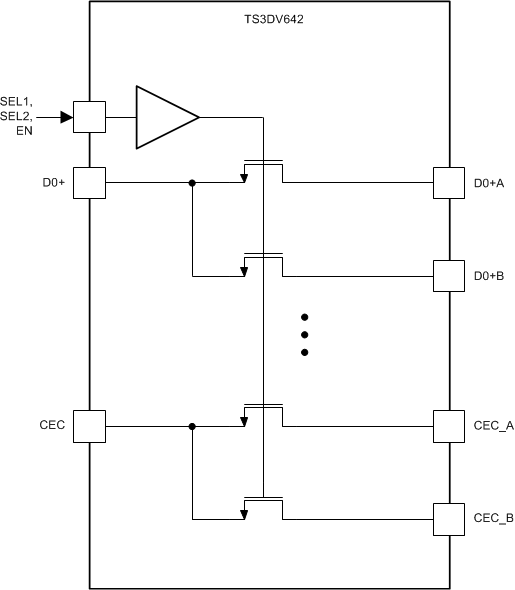
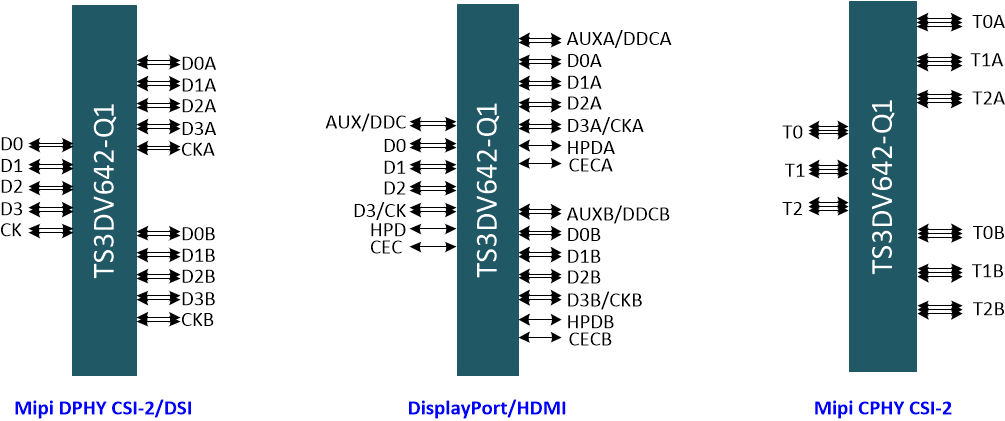
TS3DV642-Q16 Gbps 12-Channel differential 1-to-2 and 2-to-1 mux | Logic | 1 | Active | The TS3DV642-Q1 is an analog high-speed bidirectional passive switch in mux or demux configurations that works for many high-speed differential interfaces with data rates up to 6 Gbps. It is suited for many applications including HDMI 1.4 / 2.0, DisplayPort 1.4 and Mipi DPHY / CPHY DSI / CSI-2. The TS3DV642-Q1 supports both differential and single-ended signaling - virtually compatible to most standard and non standard interfaces. The dynamic characteristics of the TS3DV642-Q1 allows high-speed switching with minimal attenuation to the signal eye diagram, and with very little added jitter. The device’s silicon design is optimized for excellent frequency response at higher frequency spectrum of the signals. The device supports differential signaling with common mode voltage range (CMV) of 0 to 3.6 V. The device also supports 0 - 5.5 V single-ended CMOS signals.
The TS3DV642-Q1 consumes very low active power of 45 µA. The device also offers a power-down mode, in which all channels become Hi-Z and the device operates with minimal power.
The TS3DV642-Q1 is an analog high-speed bidirectional passive switch in mux or demux configurations that works for many high-speed differential interfaces with data rates up to 6 Gbps. It is suited for many applications including HDMI 1.4 / 2.0, DisplayPort 1.4 and Mipi DPHY / CPHY DSI / CSI-2. The TS3DV642-Q1 supports both differential and single-ended signaling - virtually compatible to most standard and non standard interfaces. The dynamic characteristics of the TS3DV642-Q1 allows high-speed switching with minimal attenuation to the signal eye diagram, and with very little added jitter. The device’s silicon design is optimized for excellent frequency response at higher frequency spectrum of the signals. The device supports differential signaling with common mode voltage range (CMV) of 0 to 3.6 V. The device also supports 0 - 5.5 V single-ended CMOS signals.
The TS3DV642-Q1 consumes very low active power of 45 µA. The device also offers a power-down mode, in which all channels become Hi-Z and the device operates with minimal power. |
| Analog Switches - Special Purpose | 8 | Active | |
| Integrated Circuits (ICs) | 12 | Active | |
| Analog Switches - Special Purpose | 4 | Active | |