UC2879Enhanced bipolar phase shifted full bridge controller with selectable UVLO, -40°C to 85°C | Power Management (PMIC) | 6 | Active | The UC3879 controls a bridge power stage by phase shifting the switching of one half-bridge with respect to the other. This allows constant frequency pulse width modulation in combination with resonant, zero-voltage switching for high efficiency performance. The UC3879 can be configured to provide control in either voltage mode or current mode operation, with overcurrent shutdown for fast fault protection.
Independently programmable time delays provide dead-time at the turn-on of each output stage, allowing time for each resonant switching interval.
With the oscillator capable of operating in excess of 600 kHz, overall output switching frequencies to 300 kHz are practical. In addition to the standard free running mode, with the CLKSYNC pin, the user may configure the UC3879 to accept an external clock synchronization signal. Alternatively, up to three units can be locked together with the operational frequency determined by the fastest device.
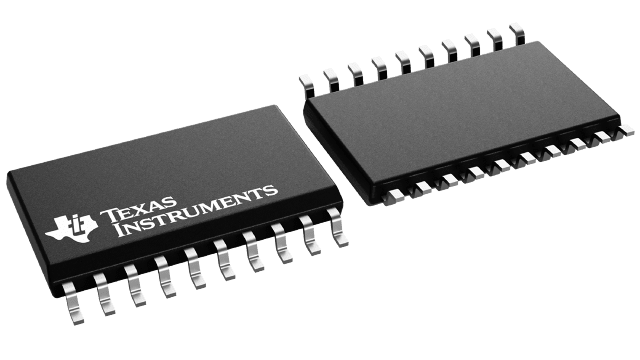
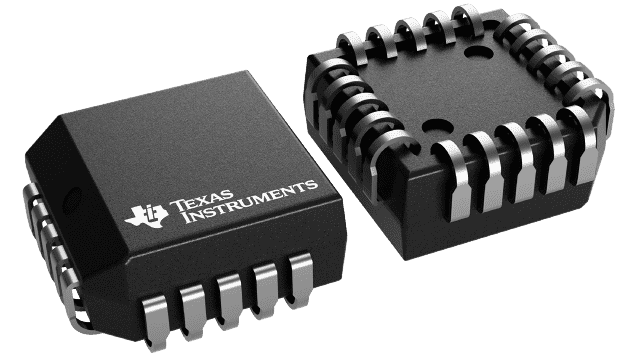
Protective features include an undervoltage lockout and overcurrent protection. Additional features include a 10-MHz error amplifier, a 5-V precision reference, and soft start. The UC3879 is available in 20 pin N, J, DW, and Q and 28 pin L packages.
The UC3879 controls a bridge power stage by phase shifting the switching of one half-bridge with respect to the other. This allows constant frequency pulse width modulation in combination with resonant, zero-voltage switching for high efficiency performance. The UC3879 can be configured to provide control in either voltage mode or current mode operation, with overcurrent shutdown for fast fault protection.
Independently programmable time delays provide dead-time at the turn-on of each output stage, allowing time for each resonant switching interval.
With the oscillator capable of operating in excess of 600 kHz, overall output switching frequencies to 300 kHz are practical. In addition to the standard free running mode, with the CLKSYNC pin, the user may configure the UC3879 to accept an external clock synchronization signal. Alternatively, up to three units can be locked together with the operational frequency determined by the fastest device.
Protective features include an undervoltage lockout and overcurrent protection. Additional features include a 10-MHz error amplifier, a 5-V precision reference, and soft start. The UC3879 is available in 20 pin N, J, DW, and Q and 28 pin L packages. |
| Integrated Circuits (ICs) | 1 | Obsolete | |
UC2901-EPEnhanced Product Isolated Feedback Generator | Power Management - Specialized | 6 | Active | The UC2901 is designed to solve many of the problems associated with closing a feedback control loop across a voltage isolation boundary. As a stable and reliable alternative to an optical coupler, UC2901 features an amplitude modulation system that allows a loop error signal to be coupled with a small RF transformer or capacitor.
The programmable, high-frequency oscillator within the UC2901 permits the use of smaller, less-expensive transformers, which can readily be built to meet the isolation requirements of today’s line-operated power systems. As an alternative to RF operation, the external clock input to these devices allows synchronization to a system clock or to the switching frequency of an SMPS.
An additional feature is a status monitoring circuit that provides an active low output when the sensed error voltage is within ±10% of the reference. The DRIVERA output, DRIVERB output, and STATUS output are disabled until the input supply has reached a sufficient level to allow proper operation of the device.
Because these devices also can be used as a DC driver for optical couplers, the benefits of 4.5 V to 40 V supply operation, a 1% accurate reference, and a high-gain general-purpose amplifier offer advantages, even though an AC system may not be desired.
The UC2901 is designed to solve many of the problems associated with closing a feedback control loop across a voltage isolation boundary. As a stable and reliable alternative to an optical coupler, UC2901 features an amplitude modulation system that allows a loop error signal to be coupled with a small RF transformer or capacitor.
The programmable, high-frequency oscillator within the UC2901 permits the use of smaller, less-expensive transformers, which can readily be built to meet the isolation requirements of today’s line-operated power systems. As an alternative to RF operation, the external clock input to these devices allows synchronization to a system clock or to the switching frequency of an SMPS.
An additional feature is a status monitoring circuit that provides an active low output when the sensed error voltage is within ±10% of the reference. The DRIVERA output, DRIVERB output, and STATUS output are disabled until the input supply has reached a sufficient level to allow proper operation of the device.
Because these devices also can be used as a DC driver for optical couplers, the benefits of 4.5 V to 40 V supply operation, a 1% accurate reference, and a high-gain general-purpose amplifier offer advantages, even though an AC system may not be desired. |
| Power Management (PMIC) | 2 | LTB | |
| Integrated Circuits (ICs) | 6 | Obsolete | |
UC2906Linear Lead-Acid Battery Charger | Power Management (PMIC) | 5 | Active | The UC2906 series of battery charger controllers contains all of the necessary circuitry to optimally control the charge and hold cycle for sealed lead-acid batteries. These integrated circuits monitor and control both the output voltage and current of the charger through three separate charge states; a high current bulk-charge state, a controlled over-charge, and a precision float-charge, or standby, state.
Optimum charging conditions are maintained over an extended temperature range with an internal reference that tracks the nominal temperature characteristics of the lead-acid cell. A typical standby supply current requirement of only 1.6mA allows these ICs to predictably monitor ambient temperatures.
Separate voltage loop and current limit amplifiers regulate the output voltage and current levels in the charger by controlling the onboard driver. The driver will supply up to 25mA of base drive to an external pass device. Voltage and current sense comparators are used to sense the battery condition and respond with logic inputs to the charge state logic. A charge enable comparator with a trickle bias output can be used to implement a low current turn-on mode of the charger, preventing high current charging during abnormal conditions such as a shorted battery cell.
Other features include a supply under-voltage sense circuit with a logic output to indicate when input power is present. In addition the over-charge state of the charger can be externally monitored and terminated using the over-charge indicate output and over-charge terminate input.
The UC2906 series of battery charger controllers contains all of the necessary circuitry to optimally control the charge and hold cycle for sealed lead-acid batteries. These integrated circuits monitor and control both the output voltage and current of the charger through three separate charge states; a high current bulk-charge state, a controlled over-charge, and a precision float-charge, or standby, state.
Optimum charging conditions are maintained over an extended temperature range with an internal reference that tracks the nominal temperature characteristics of the lead-acid cell. A typical standby supply current requirement of only 1.6mA allows these ICs to predictably monitor ambient temperatures.
Separate voltage loop and current limit amplifiers regulate the output voltage and current levels in the charger by controlling the onboard driver. The driver will supply up to 25mA of base drive to an external pass device. Voltage and current sense comparators are used to sense the battery condition and respond with logic inputs to the charge state logic. A charge enable comparator with a trickle bias output can be used to implement a low current turn-on mode of the charger, preventing high current charging during abnormal conditions such as a shorted battery cell.
Other features include a supply under-voltage sense circuit with a logic output to indicate when input power is present. In addition the over-charge state of the charger can be externally monitored and terminated using the over-charge indicate output and over-charge terminate input. |
UC290735V load share controller, -40°C to 85°C | Power Management - Specialized | 4 | Active | The UCx907 family of load share controller ICs provides all the necessary features to allow multiple-independent-power modules to be paralleled such that each module supplies only its proportionate share to total-load current.
This sharing is accomplished by controlling each module’s power stage with a command generated from a voltage-feedback amplifier whose reference can be independently adjusted in response to a common-share-bus voltage. By monitoring the current from each module, the current share bus circuitry determines which paralleled module would normally have the highest output current and, with the designation of this unit as the master, adjusts all the other modules to increase their output current to within 2.5% of that of the master.
The current share bus signal interconnecting all the paralleled modules is a low-impedance, noise-insensitive line which will not interfere with allowing each module to act independently should the bus become open or shorted to ground. The UC3907 controller will reside on the output side of each power module and its overall function is to supply a voltage feedback loop. The specific architecture of the power stage is unimportant. Either switching or linear designs may be utilized and the control signal may be either directly coupled or isolated though the use of an optocoupler or other isolated medium.
Other features of the UC3907 include 1.25% accurate reference: a low-loss, fixed-gain current-sense amplifier, a fully differential, high-impedance voltage sensing capability, and a status indicator to designate which module is performing as master.
The UCx907 family of load share controller ICs provides all the necessary features to allow multiple-independent-power modules to be paralleled such that each module supplies only its proportionate share to total-load current.
This sharing is accomplished by controlling each module’s power stage with a command generated from a voltage-feedback amplifier whose reference can be independently adjusted in response to a common-share-bus voltage. By monitoring the current from each module, the current share bus circuitry determines which paralleled module would normally have the highest output current and, with the designation of this unit as the master, adjusts all the other modules to increase their output current to within 2.5% of that of the master.
The current share bus signal interconnecting all the paralleled modules is a low-impedance, noise-insensitive line which will not interfere with allowing each module to act independently should the bus become open or shorted to ground. The UC3907 controller will reside on the output side of each power module and its overall function is to supply a voltage feedback loop. The specific architecture of the power stage is unimportant. Either switching or linear designs may be utilized and the control signal may be either directly coupled or isolated though the use of an optocoupler or other isolated medium.
Other features of the UC3907 include 1.25% accurate reference: a low-loss, fixed-gain current-sense amplifier, a fully differential, high-impedance voltage sensing capability, and a status indicator to designate which module is performing as master. |
UC2909-EPEnhanced Product Switch-mode Lead-Acid Battery Charger with Differential Current Sense | Battery Chargers | 5 | Active | The UC2909 controls lead acid battery charging with a highly efficient average current mode control loop. This chip combines charge state logic with average current PWM control circuitry. Charge state logic commands current or voltage control depending on the charge state. The chip includes undervoltage lockout circuitry to insure sufficient supply voltage is present before output switching starts. Additional circuit blocks include a differential current sense amplifier, a 1.5% voltage reference, a –3.9-mV/°C thermistor linearization circuit, voltage and current error amplifiers, a PWM oscillator, a PWM comparator, a PWM latch, charge state decode bits, and a 100-mA open collector output driver.
The UC2909 controls lead acid battery charging with a highly efficient average current mode control loop. This chip combines charge state logic with average current PWM control circuitry. Charge state logic commands current or voltage control depending on the charge state. The chip includes undervoltage lockout circuitry to insure sufficient supply voltage is present before output switching starts. Additional circuit blocks include a differential current sense amplifier, a 1.5% voltage reference, a –3.9-mV/°C thermistor linearization circuit, voltage and current error amplifiers, a PWM oscillator, a PWM comparator, a PWM latch, charge state decode bits, and a 100-mA open collector output driver. |
| Integrated Circuits (ICs) | 2 | Obsolete | |
UC29432MPrecision analog controller, -25C to 85C | Power Management - Specialized | 5 | Active | The UC39432 is an adjustable precision analog controller with 100mA sink capability if the ISET pin is grounded. A resistor between ISET and ground will modify the transconductance while decreasing the maximum current sink. This will add further control in the optocoupler configuration. The trimmed precision reference along with the non-inverting error amplifier inputs are accessible for custom configuration. A sister device, the UC39431 adjustable shunt regulator, has an on-board resistor network providing six preprogrammed voltage levels, as well as external programming capability.
The UC39432 is an adjustable precision analog controller with 100mA sink capability if the ISET pin is grounded. A resistor between ISET and ground will modify the transconductance while decreasing the maximum current sink. This will add further control in the optocoupler configuration. The trimmed precision reference along with the non-inverting error amplifier inputs are accessible for custom configuration. A sister device, the UC39431 adjustable shunt regulator, has an on-board resistor network providing six preprogrammed voltage levels, as well as external programming capability. |