T
Texas Instruments
| Series | Category | # Parts | Status | Description |
|---|---|---|---|---|
| Part | Spec A | Spec B | Spec C | Spec D | Description |
|---|---|---|---|---|---|



| Series | Category | # Parts | Status | Description |
|---|---|---|---|---|
| Part | Spec A | Spec B | Spec C | Spec D | Description |
|---|---|---|---|---|---|
| Part | Category | Description |
|---|---|---|
 Texas Instruments | Integrated Circuits (ICs) | BUS DRIVER, BCT/FBT SERIES |
 Texas Instruments | Integrated Circuits (ICs) | 12BIT 3.3V~3.6V 210MHZ PARALLEL VQFN-48-EP(7X7) ANALOG TO DIGITAL CONVERTERS (ADC) ROHS |
Texas Instruments | Integrated Circuits (ICs) | TMX320DRE311 179PIN UBGA 200MHZ |
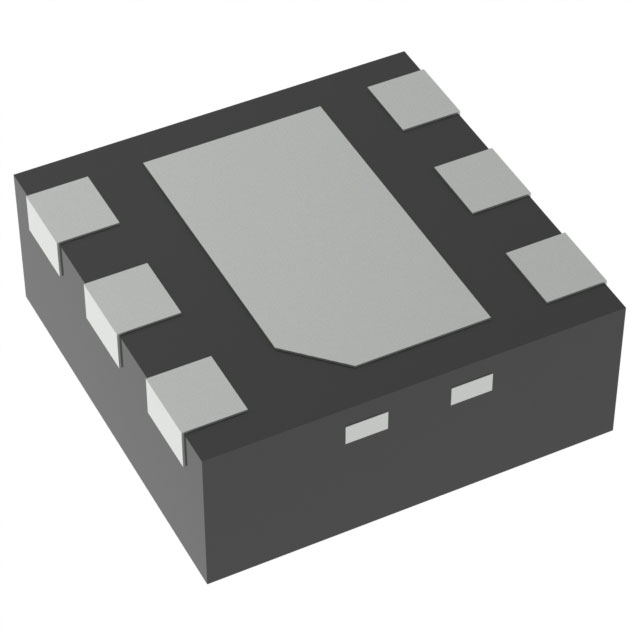 Texas Instruments TPS61040DRVTG4Unknown | Integrated Circuits (ICs) | IC LED DRV RGLTR PWM 350MA 6WSON |
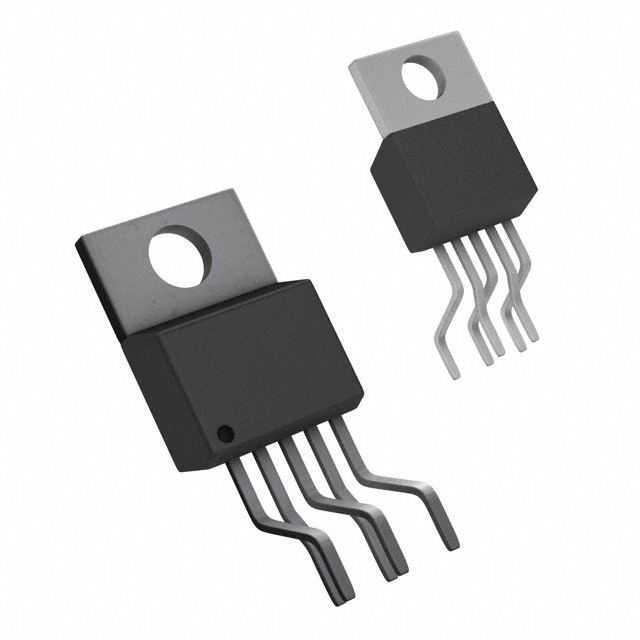 Texas Instruments LP3876ET-2.5Obsolete | Integrated Circuits (ICs) | IC REG LINEAR 2.5V 3A TO220-5 |
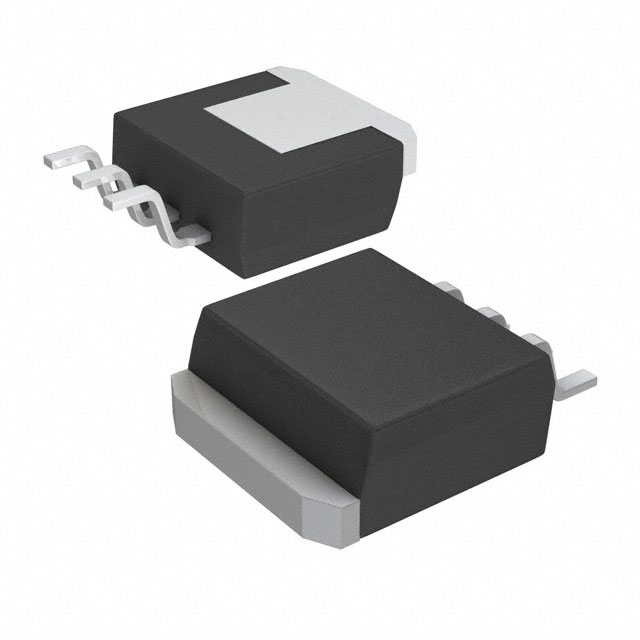 Texas Instruments LMS1585ACSX-ADJObsolete | Integrated Circuits (ICs) | IC REG LIN POS ADJ 5A DDPAK |
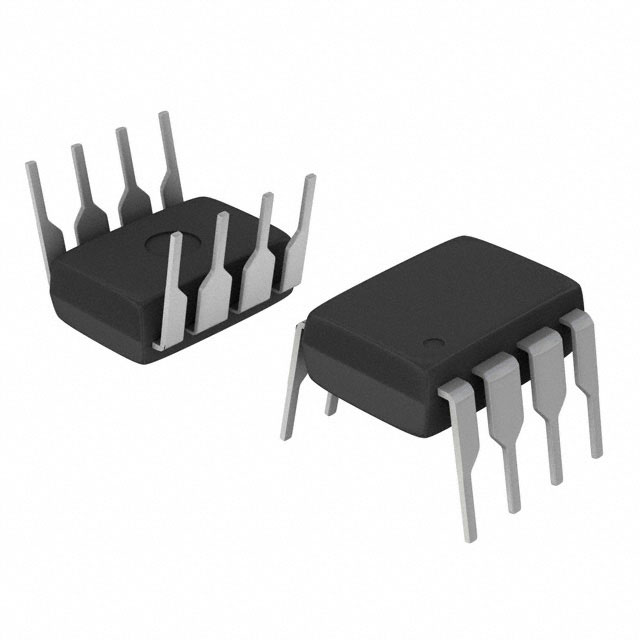 Texas Instruments INA111APG4Obsolete | Integrated Circuits (ICs) | IC INST AMP 1 CIRCUIT 8DIP |
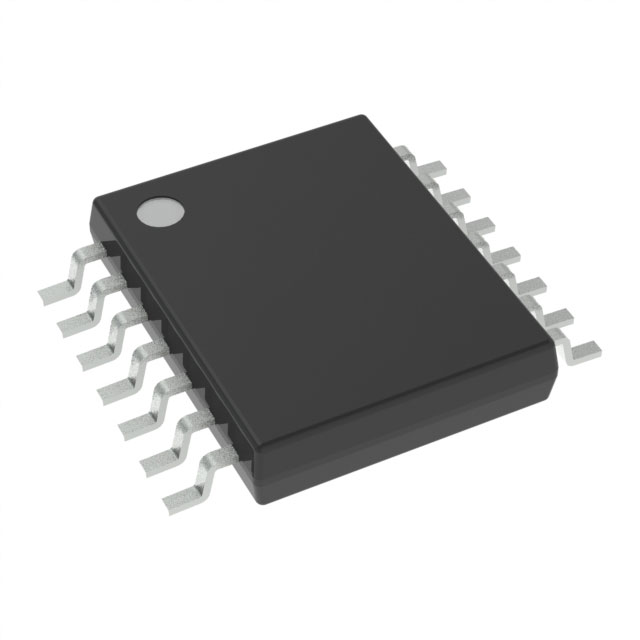 Texas Instruments | Integrated Circuits (ICs) | AUTOMOTIVE, QUAD 36V 1.2MHZ OPERATIONAL AMPLIFIER |
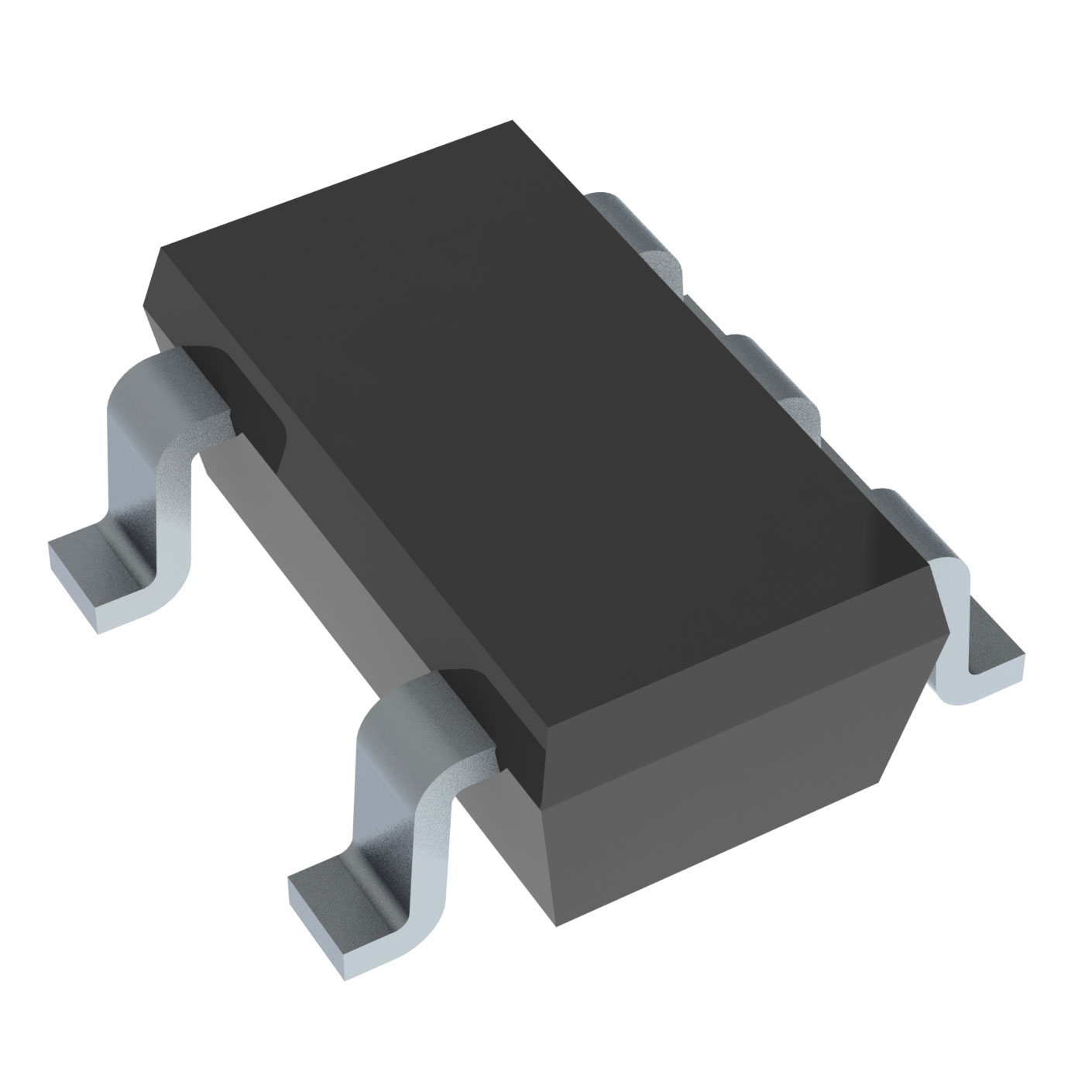 Texas Instruments OPA340NA/3KG4Unknown | Integrated Circuits (ICs) | IC OPAMP GP 1 CIRCUIT SOT23-5 |
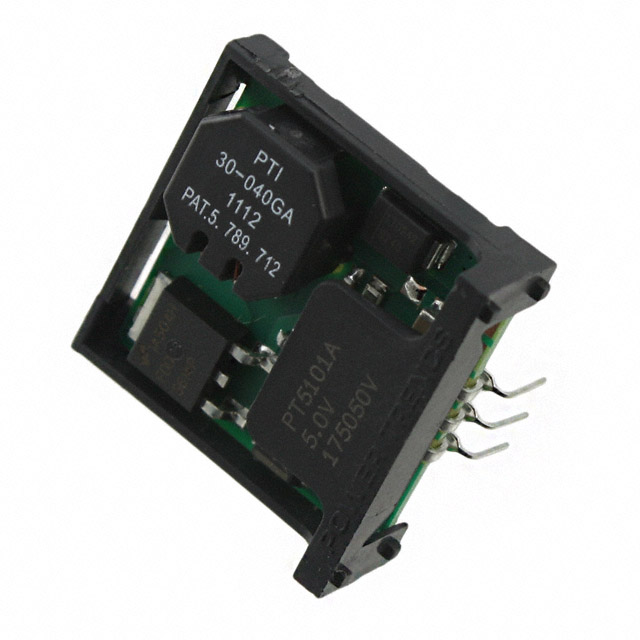 Texas Instruments PT5112AObsolete | Power Supplies - Board Mount | DC DC CONVERTER 8V 8W |
| Series | Category | # Parts | Status | Description |
|---|---|---|---|---|
TL4581Single, 30-V, 10-MHz, low noise (5-nV/√Hz) operational amplifier | Instrumentation, Op Amps, Buffer Amps | 2 | Active | The TL4581 is a dual operational amplifier that has been designed optimally for audio applications, such as improving tone control. It offers low noise, high-gain bandwidth, good slew, and high output current drive for driving capacitive loads. These features make the TL4581 ideally suited for audio applications, such as audio preamps and active filters. When high output current is required, the TL4581 also can be used as a headphone amplifier.
The TL4581 is a dual operational amplifier that has been designed optimally for audio applications, such as improving tone control. It offers low noise, high-gain bandwidth, good slew, and high output current drive for driving capacitive loads. These features make the TL4581 ideally suited for audio applications, such as audio preamps and active filters. When high output current is required, the TL4581 also can be used as a headphone amplifier. |
| PMIC | 15 | Active | ||
TL497A500-mA Peak Step-Up, Step-Down, Inverting Switching Voltage Regulator | Power Management (PMIC) | 7 | Active | The TL497A incorporates all the active functions required in the construction of switching voltage regulators. It also can be used as the control element to drive external components for high-power-output applications. The TL497A was designed for ease of use in step-up, step-down, or voltage-inversion applications requiring high efficiency.
The TL497A is a fixed-on-time variable-frequency switching-voltage-regulator control circuit. The switch-on time is programmed by a single external capacitor connected between FREQ CONTROL and GND. This capacitor, CT, is charged by an internal constant-current generator to a predetermined threshold. The charging current and the threshold vary proportionally with VCC. Thus, the switch-on time remains constant over the specified range of input voltage (4.5 V to 12 V). Typical on times for various values of CTare as follows:
The output voltage is controlled by an external resistor ladder network (R1 and R2 in Figures 1, 2, and 3) that provides a feedback voltage to the comparator input. This feedback voltage is compared to the reference voltage of 1.2 V (relative to SUBSTRATE) by the high-gain comparator. When the output voltage decays below the value required to maintain 1.2 V at the comparator input, the comparator enables the oscillator circuit, which charges and discharges CTas described above. The internal pass transistor is driven on during the charging of CT. The internal transistor can be used directly for switching currents up to 500 mA. Its collector and emitter are uncommitted, and it is current driven to allow operation from the positive supply voltage or ground. An internal Schottky diode matched to the current characteristics of the internal transistor also is available for blocking or commutating purposes. The TL497A also has on-chip current-limit circuitry that senses the peak currents in the switching regulator and protects the inductor against saturation and the pass transistor against overstress. The current limit is adjustable and is programmed by a single sense resistor, RCL, connected between VCCand CUR LIM SENS. The current-limit circuitry is activated when 0.7 V is developed across RCL. External gating is provided by the INHIBIT input. When the INHIBIT input is high, the output is turned off.
Simplicity of design is a primary feature of the TL497A. With only six external components (three resistors, two capacitors, and one inductor), the TL497A operates in numerous voltage-conversion applications (step-up, step-down, invert) with as much as 85% of the source power delivered to the load. The TL497A replaces the TL497 in all applications.
The TL497AC is characterized for operation from 0°C to 70°C. The TL497AI is characterized for operation from -40°C to 85°C.
The TL497A incorporates all the active functions required in the construction of switching voltage regulators. It also can be used as the control element to drive external components for high-power-output applications. The TL497A was designed for ease of use in step-up, step-down, or voltage-inversion applications requiring high efficiency.
The TL497A is a fixed-on-time variable-frequency switching-voltage-regulator control circuit. The switch-on time is programmed by a single external capacitor connected between FREQ CONTROL and GND. This capacitor, CT, is charged by an internal constant-current generator to a predetermined threshold. The charging current and the threshold vary proportionally with VCC. Thus, the switch-on time remains constant over the specified range of input voltage (4.5 V to 12 V). Typical on times for various values of CTare as follows:
The output voltage is controlled by an external resistor ladder network (R1 and R2 in Figures 1, 2, and 3) that provides a feedback voltage to the comparator input. This feedback voltage is compared to the reference voltage of 1.2 V (relative to SUBSTRATE) by the high-gain comparator. When the output voltage decays below the value required to maintain 1.2 V at the comparator input, the comparator enables the oscillator circuit, which charges and discharges CTas described above. The internal pass transistor is driven on during the charging of CT. The internal transistor can be used directly for switching currents up to 500 mA. Its collector and emitter are uncommitted, and it is current driven to allow operation from the positive supply voltage or ground. An internal Schottky diode matched to the current characteristics of the internal transistor also is available for blocking or commutating purposes. The TL497A also has on-chip current-limit circuitry that senses the peak currents in the switching regulator and protects the inductor against saturation and the pass transistor against overstress. The current limit is adjustable and is programmed by a single sense resistor, RCL, connected between VCCand CUR LIM SENS. The current-limit circuitry is activated when 0.7 V is developed across RCL. External gating is provided by the INHIBIT input. When the INHIBIT input is high, the output is turned off.
Simplicity of design is a primary feature of the TL497A. With only six external components (three resistors, two capacitors, and one inductor), the TL497A operates in numerous voltage-conversion applications (step-up, step-down, invert) with as much as 85% of the source power delivered to the load. The TL497A replaces the TL497 in all applications.
The TL497AC is characterized for operation from 0°C to 70°C. The TL497AI is characterized for operation from -40°C to 85°C. |
TL499AWide-Range Power-Supply Controller | Power Management (PMIC) | 2 | Active | The TL499A device is an integrated circuit designed to provide a wide range of adjustable regulated supply voltages. The regulated output voltage can be varied from 2.9 V to 30 V by adjusting two external resistors. When the TL499A is ac-coupled to line power through a step-down transformer, it operates as a series DC voltage regulator to maintain the regulated output voltage. With the addition of a battery from 1.1 V to 10 V, an inductor, a filter capacitor, and two resistors, the TL499A operates as a step-up switching regulator during an AC-line failure. The adjustable regulated output voltage makes the TL499A useful for a wide range of applications. Providing backup power during an AC-line failure makes the TL499A extremely useful in microprocessor memory applications. The TL499AC is characterized for operation from –20°C to +85°C.
The TL499A device is an integrated circuit designed to provide a wide range of adjustable regulated supply voltages. The regulated output voltage can be varied from 2.9 V to 30 V by adjusting two external resistors. When the TL499A is ac-coupled to line power through a step-down transformer, it operates as a series DC voltage regulator to maintain the regulated output voltage. With the addition of a battery from 1.1 V to 10 V, an inductor, a filter capacitor, and two resistors, the TL499A operates as a step-up switching regulator during an AC-line failure. The adjustable regulated output voltage makes the TL499A useful for a wide range of applications. Providing backup power during an AC-line failure makes the TL499A extremely useful in microprocessor memory applications. The TL499AC is characterized for operation from –20°C to +85°C. |
| DC/DC & AC/DC (Off-Line) SMPS Evaluation Boards | 2 | Obsolete | ||
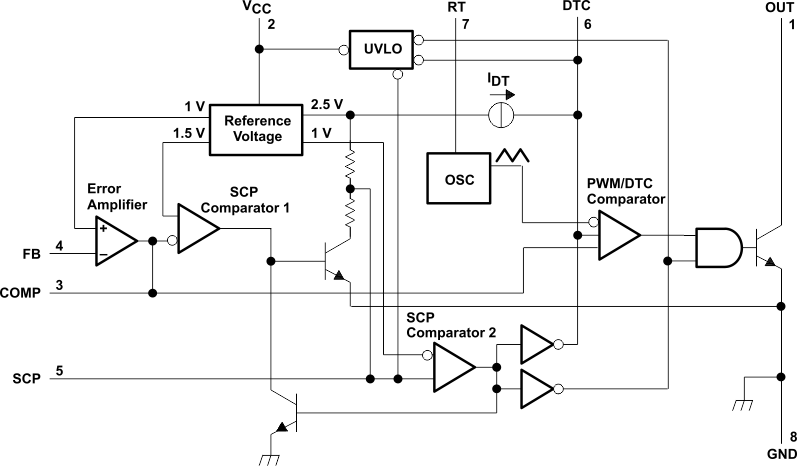
TL5001A-Q1PWM Controller with wide input range, with ±3% tolerance on reference, operation –20°C to 85°C | DC/DC & AC/DC (Off-Line) SMPS Evaluation Boards | 27 | Active | The TL5001 and TL5001A incorporate on a single monolithic chip all the functions required for a pulse-width-modulation (PWM) control circuit. Designed primarily for power-supply control, the TL5001/A contains an error amplifier, a regulator, an oscillator, a PWM comparator with a dead-time-control input, undervoltage lockout (UVLO), short-circuit protection (SCP), and an open-collector output transistor. The TL5001A has a typical reference voltage tolerance of ±3% compared to ±5% for the TL5001.
The error-amplifier common-mode voltage ranges from 0 V to 1.5 V. The noninverting input of the error amplifier is connected to a 1-V reference. Dead-time control (DTC) can be set to provide 0% to 100% dead time by connecting an external resistor between DTC and GND. The oscillator frequency is set by terminating RT with an external resistor to GND. During low VCCconditions, the UVLO circuit turns the output off until VCCrecovers to its normal operating range.
The TL5001C and TL5001AC are characterized for operation from –20°C to 85°C. The TL5001I and TL5001AI are characterized for operation from –40°C to 85°C. The TL5001Q and TL5001AQ are characterized for operation from –40°C to 125°C. The TL5001M and TL5001AM are characterized for operation from –55°C to 125°C.
The TL5001 and TL5001A incorporate on a single monolithic chip all the functions required for a pulse-width-modulation (PWM) control circuit. Designed primarily for power-supply control, the TL5001/A contains an error amplifier, a regulator, an oscillator, a PWM comparator with a dead-time-control input, undervoltage lockout (UVLO), short-circuit protection (SCP), and an open-collector output transistor. The TL5001A has a typical reference voltage tolerance of ±3% compared to ±5% for the TL5001.
The error-amplifier common-mode voltage ranges from 0 V to 1.5 V. The noninverting input of the error amplifier is connected to a 1-V reference. Dead-time control (DTC) can be set to provide 0% to 100% dead time by connecting an external resistor between DTC and GND. The oscillator frequency is set by terminating RT with an external resistor to GND. During low VCCconditions, the UVLO circuit turns the output off until VCCrecovers to its normal operating range.
The TL5001C and TL5001AC are characterized for operation from –20°C to 85°C. The TL5001I and TL5001AI are characterized for operation from –40°C to 85°C. The TL5001Q and TL5001AQ are characterized for operation from –40°C to 125°C. The TL5001M and TL5001AM are characterized for operation from –55°C to 125°C. |
TL5001AMPWM Controller with wide input range, with ±3% tolerance on reference, operation –55°C to 125°C | DC DC Switching Controllers | 2 | Active | The TL5001 and TL5001A incorporate on a single monolithic chip all the functions required for a pulse-width-modulation (PWM) control circuit. Designed primarily for power-supply control, the TL5001/A contains an error amplifier, a regulator, an oscillator, a PWM comparator with a dead-time-control input, undervoltage lockout (UVLO), short-circuit protection (SCP), and an open-collector output transistor. The TL5001A has a typical reference voltage tolerance of ±3% compared to ±5% for the TL5001.
The error-amplifier common-mode voltage ranges from 0 V to 1.5 V. The noninverting input of the error amplifier is connected to a 1-V reference. Dead-time control (DTC) can be set to provide 0% to 100% dead time by connecting an external resistor between DTC and GND. The oscillator frequency is set by terminating RT with an external resistor to GND. During low VCCconditions, the UVLO circuit turns the output off until VCCrecovers to its normal operating range.
The TL5001C and TL5001AC are characterized for operation from –20°C to 85°C. The TL5001I and TL5001AI are characterized for operation from –40°C to 85°C. The TL5001Q and TL5001AQ are characterized for operation from –40°C to 125°C. The TL5001M and TL5001AM are characterized for operation from –55°C to 125°C.
The TL5001 and TL5001A incorporate on a single monolithic chip all the functions required for a pulse-width-modulation (PWM) control circuit. Designed primarily for power-supply control, the TL5001/A contains an error amplifier, a regulator, an oscillator, a PWM comparator with a dead-time-control input, undervoltage lockout (UVLO), short-circuit protection (SCP), and an open-collector output transistor. The TL5001A has a typical reference voltage tolerance of ±3% compared to ±5% for the TL5001.
The error-amplifier common-mode voltage ranges from 0 V to 1.5 V. The noninverting input of the error amplifier is connected to a 1-V reference. Dead-time control (DTC) can be set to provide 0% to 100% dead time by connecting an external resistor between DTC and GND. The oscillator frequency is set by terminating RT with an external resistor to GND. During low VCCconditions, the UVLO circuit turns the output off until VCCrecovers to its normal operating range.
The TL5001C and TL5001AC are characterized for operation from –20°C to 85°C. The TL5001I and TL5001AI are characterized for operation from –40°C to 85°C. The TL5001Q and TL5001AQ are characterized for operation from –40°C to 125°C. The TL5001M and TL5001AM are characterized for operation from –55°C to 125°C. |
TL5001MPWM Controller with wide input range, with ±5% tolerance on reference, operation –55°C to 125°C | Power Management (PMIC) | 1 | Active | The TL5001 and TL5001A incorporate on a single monolithic chip all the functions required for a pulse-width-modulation (PWM) control circuit. Designed primarily for power-supply control, the TL5001/A contains an error amplifier, a regulator, an oscillator, a PWM comparator with a dead-time-control input, undervoltage lockout (UVLO), short-circuit protection (SCP), and an open-collector output transistor. The TL5001A has a typical reference voltage tolerance of ±3% compared to ±5% for the TL5001.
The error-amplifier common-mode voltage ranges from 0 V to 1.5 V. The noninverting input of the error amplifier is connected to a 1-V reference. Dead-time control (DTC) can be set to provide 0% to 100% dead time by connecting an external resistor between DTC and GND. The oscillator frequency is set by terminating RT with an external resistor to GND. During low VCCconditions, the UVLO circuit turns the output off until VCCrecovers to its normal operating range.
The TL5001C and TL5001AC are characterized for operation from –20°C to 85°C. The TL5001I and TL5001AI are characterized for operation from –40°C to 85°C. The TL5001Q and TL5001AQ are characterized for operation from –40°C to 125°C. The TL5001M and TL5001AM are characterized for operation from –55°C to 125°C.
The TL5001 and TL5001A incorporate on a single monolithic chip all the functions required for a pulse-width-modulation (PWM) control circuit. Designed primarily for power-supply control, the TL5001/A contains an error amplifier, a regulator, an oscillator, a PWM comparator with a dead-time-control input, undervoltage lockout (UVLO), short-circuit protection (SCP), and an open-collector output transistor. The TL5001A has a typical reference voltage tolerance of ±3% compared to ±5% for the TL5001.
The error-amplifier common-mode voltage ranges from 0 V to 1.5 V. The noninverting input of the error amplifier is connected to a 1-V reference. Dead-time control (DTC) can be set to provide 0% to 100% dead time by connecting an external resistor between DTC and GND. The oscillator frequency is set by terminating RT with an external resistor to GND. During low VCCconditions, the UVLO circuit turns the output off until VCCrecovers to its normal operating range.
The TL5001C and TL5001AC are characterized for operation from –20°C to 85°C. The TL5001I and TL5001AI are characterized for operation from –40°C to 85°C. The TL5001Q and TL5001AQ are characterized for operation from –40°C to 125°C. The TL5001M and TL5001AM are characterized for operation from –55°C to 125°C. |
TL5002Voltage Tracking Termination Regulator | DC DC Switching Controllers | 3 | Active | The TL5002 incorporates on a single monolithic chip all the functions required for a pulse-width-modulation (PWM) control circuit. Designed primarily for power-supply control, the TL5002 contains an error amplifier, a regulator, an oscillator, a PWM comparator with a dead-time-control input, undervoltage lockout (UVLO), and an open-collector output transistor.
The error-amplifier input common-mode voltage ranges from 0.9 V to 1.5 V. Dead-time control (DTC) can be set to provide 0% to 100% dead time by connecting an external resistor between DTC and GND. The oscillator frequency is set by terminating RT with an external resistor to GND. During low VCCconditions, the UVLO circuit turns the output off until VCCrecovers to its normal operating range.
The TL5002 is characterized for operation from –40°C to 85°C
The TL5002 incorporates on a single monolithic chip all the functions required for a pulse-width-modulation (PWM) control circuit. Designed primarily for power-supply control, the TL5002 contains an error amplifier, a regulator, an oscillator, a PWM comparator with a dead-time-control input, undervoltage lockout (UVLO), and an open-collector output transistor.
The error-amplifier input common-mode voltage ranges from 0.9 V to 1.5 V. Dead-time control (DTC) can be set to provide 0% to 100% dead time by connecting an external resistor between DTC and GND. The oscillator frequency is set by terminating RT with an external resistor to GND. During low VCCconditions, the UVLO circuit turns the output off until VCCrecovers to its normal operating range.
The TL5002 is characterized for operation from –40°C to 85°C |
| Comparators | 1 | Active | ||