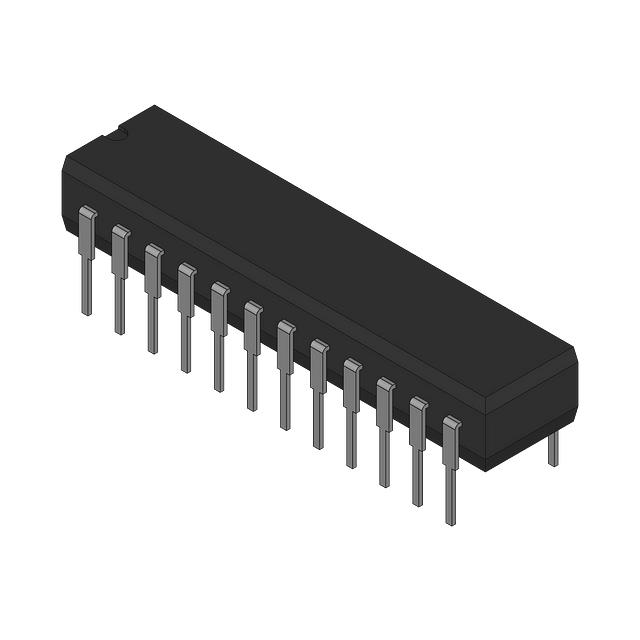
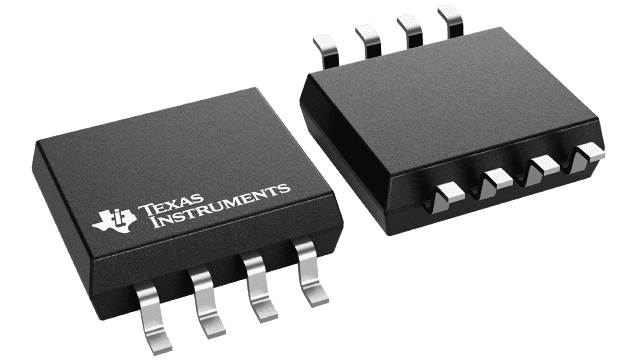
TL092Dual, 36-V, 1-MHz, In to V- operational amplifier | Instrumentation, Op Amps, Buffer Amps | 1 | Obsolete | The TL092 JFET-input operational amplifier is similar in performance to the MC3403 family, but with much higher input impedance derived from a FET input stage. The N-channel-JFET input stage allows a common-mode input voltage range that includes the negative supply voltage and offers a typical input impedance of 1012, a typical input offset current of 50 pA, and a typical input bias current of 200 pA. This device is designed to operate from a single supply over a range of 3 V to 36 V. Operation from split supplies also is possible, provided the difference between the two supplies is 3 V to 36 V. Output voltage range is from VCC–to VCC+– 1.3 V, with a load resistor to VCC–.
The TL092 is characterized for operation from 0°C to 70°C.
The TL092 JFET-input operational amplifier is similar in performance to the MC3403 family, but with much higher input impedance derived from a FET input stage. The N-channel-JFET input stage allows a common-mode input voltage range that includes the negative supply voltage and offers a typical input impedance of 1012, a typical input offset current of 50 pA, and a typical input bias current of 200 pA. This device is designed to operate from a single supply over a range of 3 V to 36 V. Operation from split supplies also is possible, provided the difference between the two supplies is 3 V to 36 V. Output voltage range is from VCC–to VCC+– 1.3 V, with a load resistor to VCC–.
The TL092 is characterized for operation from 0°C to 70°C. |
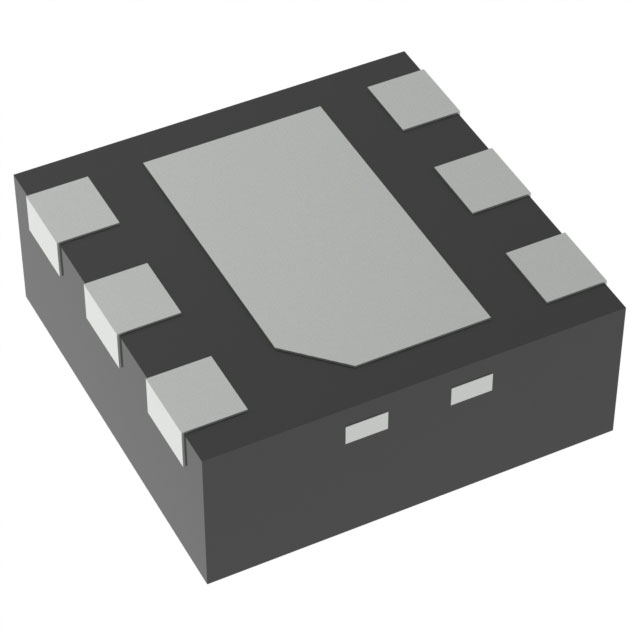
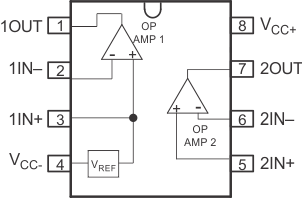
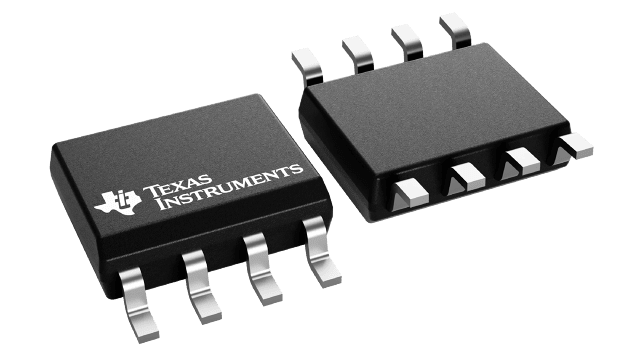
TL103WADual, 32-V, 900-kHz, 3-mV offset voltage operational amplifier with internal reference | Integrated Circuits (ICs) | 6 | Active | The TL103Wx devices combine the building blocks of a dual operational amplifier and a fixed voltage reference – both of which are often used in the control circuitry of switch-mode and linear power supplies. OP AMP1 has the noninverting input internally tied to a fixed 2.5V reference, while OP AMP2 is independent, with both inputs uncommitted.
The upgraded TL103WB features improvements such as a wider supply range (up to 36V), lower supply current (275µA/amp) and tighter voltage regulation. This regulation can be achieved through low offset voltages for both operational amplifiers (0.3mV typical) and tight tolerances for the voltage reference (0.44% at 25°C and 1.04% over operating temperature range).
The TL103WB has a widened temperature range of –40°C to 125°C.
The TL103Wx devices combine the building blocks of a dual operational amplifier and a fixed voltage reference – both of which are often used in the control circuitry of switch-mode and linear power supplies. OP AMP1 has the noninverting input internally tied to a fixed 2.5V reference, while OP AMP2 is independent, with both inputs uncommitted.
The upgraded TL103WB features improvements such as a wider supply range (up to 36V), lower supply current (275µA/amp) and tighter voltage regulation. This regulation can be achieved through low offset voltages for both operational amplifiers (0.3mV typical) and tight tolerances for the voltage reference (0.44% at 25°C and 1.04% over operating temperature range).
The TL103WB has a widened temperature range of –40°C to 125°C. |
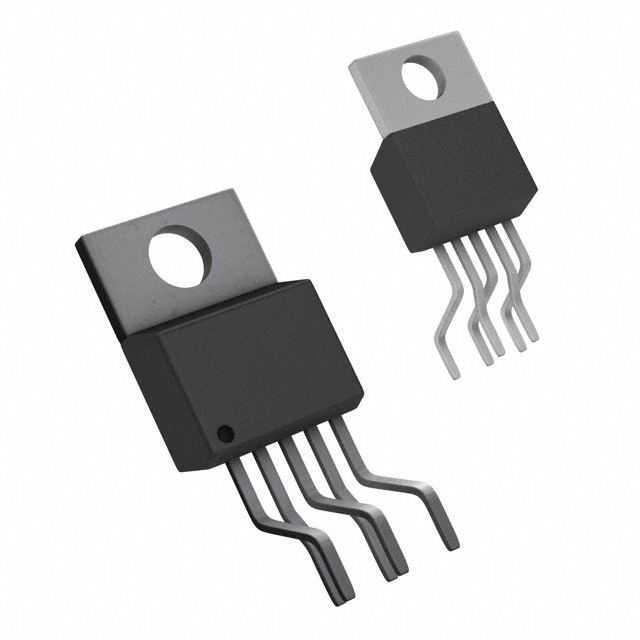
TL103WBDual, 36-V 1.2-MHz low-offset-voltage operational amplifier with internal reference | Uncategorized | 2 | Active | The TL103Wx devices combine the building blocks of a dual operational amplifier and a fixed voltage reference – both of which are often used in the control circuitry of switch-mode and linear power supplies. OP AMP1 has the noninverting input internally tied to a fixed 2.5V reference, while OP AMP2 is independent, with both inputs uncommitted.
The upgraded TL103WB features improvements such as a wider supply range (up to 36V), lower supply current (275µA/amp) and tighter voltage regulation. This regulation can be achieved through low offset voltages for both operational amplifiers (0.3mV typical) and tight tolerances for the voltage reference (0.44% at 25°C and 1.04% over operating temperature range).
The TL103WB has a widened temperature range of –40°C to 125°C.
The TL103Wx devices combine the building blocks of a dual operational amplifier and a fixed voltage reference – both of which are often used in the control circuitry of switch-mode and linear power supplies. OP AMP1 has the noninverting input internally tied to a fixed 2.5V reference, while OP AMP2 is independent, with both inputs uncommitted.
The upgraded TL103WB features improvements such as a wider supply range (up to 36V), lower supply current (275µA/amp) and tighter voltage regulation. This regulation can be achieved through low offset voltages for both operational amplifiers (0.3mV typical) and tight tolerances for the voltage reference (0.44% at 25°C and 1.04% over operating temperature range).
The TL103WB has a widened temperature range of –40°C to 125°C. |
TL1431-DIEPrecision adjustable (programmable) shunt reference for military temperature range | Power Management (PMIC) | 20 | Active | The TL1431 device is a precision programmable reference with specified thermal stability over automotive, commercial, and military temperature ranges. The output voltage can be set to any value between VI(ref)(approximately 2.5 V) and 36 V with two external resistors. This device has a typical output impedance of 0.2 Ω. Active output circuitry provides a sharp turnon characteristic, making the device an excellent replacement for Zener diodes and other types of references in applications such as onboard regulation, adjustable power supplies, and switching power supplies.
The TL1431C is characterized for operation over the commercial temperature range of 0°C to 70°C. The TL1431Q is characterized for operation over the full automotive temperature range of –40°C to 125°C. The TL1431M is characterized for operation over the full military temperature range of –55°C to 125°C.
The TL1431 device is a precision programmable reference with specified thermal stability over automotive, commercial, and military temperature ranges. The output voltage can be set to any value between VI(ref)(approximately 2.5 V) and 36 V with two external resistors. This device has a typical output impedance of 0.2 Ω. Active output circuitry provides a sharp turnon characteristic, making the device an excellent replacement for Zener diodes and other types of references in applications such as onboard regulation, adjustable power supplies, and switching power supplies.
The TL1431C is characterized for operation over the commercial temperature range of 0°C to 70°C. The TL1431Q is characterized for operation over the full automotive temperature range of –40°C to 125°C. The TL1431M is characterized for operation over the full military temperature range of –55°C to 125°C. |
| Evaluation Boards | 3 | Active | |
TL1451A-Q13.6V to 50V dual channel controller with Wide input voltage range | Voltage Reference | 23 | Active | The TL1451A incorporates on a single monolithic chip all the functions required in the construction of two pulse-width-modulation (PWM) control circuits. Designed primarily for power-supply control, the TL1451A contains an on-chip 2.5-V regulator, two error amplifiers, an adjustable oscillator, two dead-time comparators, undervoltage lockout circuitry, and dual common-emitter output transistor circuits.
The uncommitted output transistors provide common-emitter output capability for each controller. The internal amplifiers exhibit a common-mode voltage range from 1.04 V to 1.45 V. The dead-time control (DTC) comparator has no offset unless externally altered and can provide 0% to 100% dead time. The on-chip oscillator can be operated by terminating RT and CT. During low VCCconditions, the undervoltage lockout control circuit feature locks the outputs off until the internal circuitry is operational.
The TL1451AC is characterized for operation from -20°C to 85°C. The TL1451AQ is characterized for operation from -40°C to 125°C. The TL1451AM is characterized for operation from -55°C to 125°C.
The TL1451A incorporates on a single monolithic chip all the functions required in the construction of two pulse-width-modulation (PWM) control circuits. Designed primarily for power-supply control, the TL1451A contains an on-chip 2.5-V regulator, two error amplifiers, an adjustable oscillator, two dead-time comparators, undervoltage lockout circuitry, and dual common-emitter output transistor circuits.
The uncommitted output transistors provide common-emitter output capability for each controller. The internal amplifiers exhibit a common-mode voltage range from 1.04 V to 1.45 V. The dead-time control (DTC) comparator has no offset unless externally altered and can provide 0% to 100% dead time. The on-chip oscillator can be operated by terminating RT and CT. During low VCCconditions, the undervoltage lockout control circuit feature locks the outputs off until the internal circuitry is operational.
The TL1451AC is characterized for operation from -20°C to 85°C. The TL1451AQ is characterized for operation from -40°C to 125°C. The TL1451AM is characterized for operation from -55°C to 125°C. |
| DC DC Switching Controllers | 6 | Active | |
| Interface | 2 | Active | The TL145406 is a bipolar device containing three independent drivers and receivers that are used to interface data terminal equipment (DTE) with data circuit-terminating equipment (DCE). The drivers and receivers of the TL145406 are similar to those of the SN75188 quadruple driver and SN75189A quadruple receiver, respectively. The pinout matches the flow-through design of the SN75C1406 to reduce the board space required and to allow easy interconnection. The bipolar circuits and processing of the TL145406 provide a rugged low-cost solution for this function at the expense of quiescent power and external passive components relative to the SN75C1406.
The TL145406 complies with the requirements of TIA/EIA-232-F and ITU (formerly CCITT) V.28 standards. These standards are for data interchange between a host computer and peripheral at signaling rates up to 20 kbit/s. The switching speeds of the TL145406 are fast enough to support rates up to 120 kbit/s with lower capacitive loads (shorter cables). Interoperability at the higher signaling rates cannot be assured unless the designer has design control of the cable and of the interface circuits at both ends. For interoperability at signaling rates to 120 kbit/s, use of TIA/EIA-423-B (ITU V.10) and TIA/EIA-422-B (ITU V.11) standards is recommended.
The TL145406 is characterized for operation from 0°C to 70°C.
The TL145406 is a bipolar device containing three independent drivers and receivers that are used to interface data terminal equipment (DTE) with data circuit-terminating equipment (DCE). The drivers and receivers of the TL145406 are similar to those of the SN75188 quadruple driver and SN75189A quadruple receiver, respectively. The pinout matches the flow-through design of the SN75C1406 to reduce the board space required and to allow easy interconnection. The bipolar circuits and processing of the TL145406 provide a rugged low-cost solution for this function at the expense of quiescent power and external passive components relative to the SN75C1406.
The TL145406 complies with the requirements of TIA/EIA-232-F and ITU (formerly CCITT) V.28 standards. These standards are for data interchange between a host computer and peripheral at signaling rates up to 20 kbit/s. The switching speeds of the TL145406 are fast enough to support rates up to 120 kbit/s with lower capacitive loads (shorter cables). Interoperability at the higher signaling rates cannot be assured unless the designer has design control of the cable and of the interface circuits at both ends. For interoperability at signaling rates to 120 kbit/s, use of TIA/EIA-423-B (ITU V.10) and TIA/EIA-422-B (ITU V.11) standards is recommended.
The TL145406 is characterized for operation from 0°C to 70°C. |
TL1454ADual-Channel Pulse-Width-Modulation (PWM) Control Circuit | DC DC Switching Controllers | 8 | Active | The TL1454A is a dual-channel pulse-width-modulation (PWM) control circuit, primarily intended for low-power, dc/dc converters. Applications include LCD displays, backlight inverters, notebook computers, and other products requiring small, high-frequency, dc/dc converters.
Each PWM channel has its own error amplifier, PWM comparator, dead-time control comparator, and MOSFET driver. The voltage reference, oscillator, undervoltage lockout, and short-circuit protection are common to both channels.
Channel 1 is configured to drive n-channel MOSFETs in step-up or flyback converters, and channel 2 is configured to drive p-channel MOSFETs in step-down or inverting converters. The operating frequency is set with an external resistor and an external capacitor, and dead time is continuously adjustable from 0 to 100% duty cycle with a resistive divider network. Soft start can be implemented by adding a capacitor to the dead-time control (DTC) network. The error-amplifier common-mode input range includes ground, which allows the TL1454A to be used in ground-sensing battery chargers as well as voltage converters.
The TL1454A is a dual-channel pulse-width-modulation (PWM) control circuit, primarily intended for low-power, dc/dc converters. Applications include LCD displays, backlight inverters, notebook computers, and other products requiring small, high-frequency, dc/dc converters.
Each PWM channel has its own error amplifier, PWM comparator, dead-time control comparator, and MOSFET driver. The voltage reference, oscillator, undervoltage lockout, and short-circuit protection are common to both channels.
Channel 1 is configured to drive n-channel MOSFETs in step-up or flyback converters, and channel 2 is configured to drive p-channel MOSFETs in step-down or inverting converters. The operating frequency is set with an external resistor and an external capacitor, and dead time is continuously adjustable from 0 to 100% duty cycle with a resistive divider network. Soft start can be implemented by adding a capacitor to the dead-time control (DTC) network. The error-amplifier common-mode input range includes ground, which allows the TL1454A to be used in ground-sensing battery chargers as well as voltage converters. |
| Power Management (PMIC) | 1 | Obsolete | |