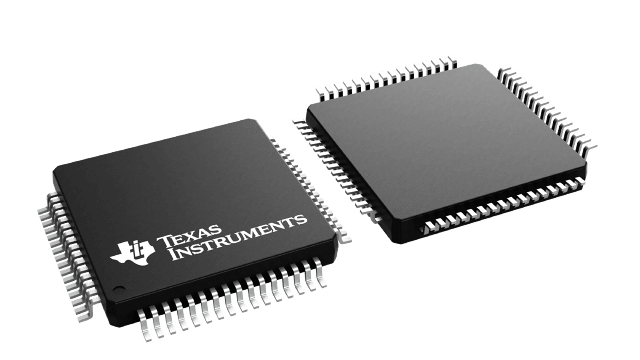
SN74ABT899610-Bit Addressable Scan Ports Multidrop-Addressable IEEE STD 1194.1 (JTAG) TAP Transceivers | Specialty Logic | 3 | Active | The 'ABT8996 10-bit addressable scan ports (ASP) are members of the Texas Instruments (TITM) SCOPETMtestability integrated-circuit family. This family of devices supports IEEE Standard 1149.1-1990 boundary scan to facilitate testing of complex circuit assemblies. Unlike most SCOPETMdevices, the ASP is not a boundary-scannable device, rather, it applies TI's addressable-shadow-port technology to the IEEE Standard 1149.1-1990 (JTAG) test access port (TAP) to extend scan access beyond the board level.
Conceptually, the ASP is a simple switch that can be used to directly connect a set of multidrop primary TAP signals to a set of secondary TAP signals - for example, to interface backplane TAP signals to a board-level TAP. The ASP provides all signal buffering that might be required at these two interfaces. When primary and secondary TAPs are connected, only a moderate propagation delay is introduced - no storage/retiming elements are inserted. This minimizes the need for reformatting board-level test vectors for in-system use.
Most operations of the ASP are synchronous to the primary test clock (PTCK) input. This PTCK signal always is buffered directly onto the secondary test clock (STCK) output.
Upon power up of the device, the ASP assumes a condition in which the primary TAP is disconnected from the secondary TAP (unless the bypass signal is used, as below). This reset condition also can be entered by the assertion of the primary test reset (PTRST\) input or by use of shadow protocol. The PTRST\ signal is always buffered directly onto the secondary test reset (STRST\) output, ensuring that the ASP and its associated secondary TAP can be reset simultaneously.
When connected, the primary test data input (PTDI) and primary test mode select (PTMS) input are buffered onto the secondary test data output (STDO) and secondary test mode select (STMS) output, respectively, while the secondary test data input (STDI) is buffered onto the primary test data output (PTDO). When disconnected, STDO is at high impedance, while PTDO is at high impedance, except during acknowledgement of a shadow protocol. Upon disconnect of the secondary TAP, STMS holds its last low or high level, allowing the secondary TAP to be held in its last stable state. Upon reset of the ASP, STMS is high, allowing the secondary TAP to be synchronously reset to the Test-Logic-Reset state.
In system, primary-to-secondary connection is based on shadow protocols that are received and acknowledged on PTDI and PTDO, respectively. These protocols can occur in any of the stable TAP states other than Shift-DR or Shift-IR (i.e., Test-Logic-Reset, Run-Test/Idle, Pause-DR or Pause-IR). The essential nature of the protocols is to receive/transmit an address via a serial bit-pair signaling scheme. When an address is received serially at PTDI that matches that at the parallel address inputs (A9-A0), the ASP serially retransmits its address at PTDO as an acknowledgement and then assumes the connected (ON) status, as above. If the received address does not match that at the address inputs, the ASP immediately assumes the disconnected (OFF) status without acknowledgement.
The ASP also supports three dedicated addresses that can be received globally (that is, to which all ASPs respond) during shadow protocols. Receipt of the dedicated disconnect address (DSA) causes the ASP to disconnect in the same fashion as a non-matching address. Reservation of this address for global use ensures that at least one address is available to disconnect all receiving ASPs. The DSA is especially useful when the secondary TAPs of multiple ASPs are to be left in different stable states. Receipt of the reset address (RSA) causes the ASP to assume the reset condition, as above. Receipt of the test-synchronization address (TSA) causes the ASP to assume a connect status (MULTICAST) in which PTDO is at high impedance but the connections from PTMS to STMS and PTDI to STDO are maintained to allow simultaneous operation of the secondary TAPs of multiple ASPs. This is useful for multicast TAP-state movement, simultaneous test operation (such as in Run-Test/Idle state), and scanning of common test data into multiple like scan chains. The TSA is valid only when received in the Pause-DR or Pause-IR TAP states.
Alternatively, primary-to-secondary connection can be selected by assertion of a low level at the bypass (BYP\) input. This operation is asynchronous to PTCK and is independent of PTRST\ and/or power-up reset. This bypassing feature is especially useful in the board-test environment, since it allows the board-level automated test equipment (ATE) to treat the ASP as a simple transceiver. When the BYP\ input is high, the ASP is free to respond to shadow protocols. Otherwise, when BYP\ is low, shadow protocols are ignored.
Whether the connected status is achieved by use of shadow protocol or by use of BYP\, this status is indicated by a low level at the connect (CON\) output. Likewise, when the secondary TAP is disconnected from the primary TAP, the CON\ output is high.
The SN54ABT8996 is characterized for operation over the full military temperature range of -55°C to 125°C. The SN74ABT8996 is characterized for operation from -40°C to 85°C.
The 'ABT8996 10-bit addressable scan ports (ASP) are members of the Texas Instruments (TITM) SCOPETMtestability integrated-circuit family. This family of devices supports IEEE Standard 1149.1-1990 boundary scan to facilitate testing of complex circuit assemblies. Unlike most SCOPETMdevices, the ASP is not a boundary-scannable device, rather, it applies TI's addressable-shadow-port technology to the IEEE Standard 1149.1-1990 (JTAG) test access port (TAP) to extend scan access beyond the board level.
Conceptually, the ASP is a simple switch that can be used to directly connect a set of multidrop primary TAP signals to a set of secondary TAP signals - for example, to interface backplane TAP signals to a board-level TAP. The ASP provides all signal buffering that might be required at these two interfaces. When primary and secondary TAPs are connected, only a moderate propagation delay is introduced - no storage/retiming elements are inserted. This minimizes the need for reformatting board-level test vectors for in-system use.
Most operations of the ASP are synchronous to the primary test clock (PTCK) input. This PTCK signal always is buffered directly onto the secondary test clock (STCK) output.
Upon power up of the device, the ASP assumes a condition in which the primary TAP is disconnected from the secondary TAP (unless the bypass signal is used, as below). This reset condition also can be entered by the assertion of the primary test reset (PTRST\) input or by use of shadow protocol. The PTRST\ signal is always buffered directly onto the secondary test reset (STRST\) output, ensuring that the ASP and its associated secondary TAP can be reset simultaneously.
When connected, the primary test data input (PTDI) and primary test mode select (PTMS) input are buffered onto the secondary test data output (STDO) and secondary test mode select (STMS) output, respectively, while the secondary test data input (STDI) is buffered onto the primary test data output (PTDO). When disconnected, STDO is at high impedance, while PTDO is at high impedance, except during acknowledgement of a shadow protocol. Upon disconnect of the secondary TAP, STMS holds its last low or high level, allowing the secondary TAP to be held in its last stable state. Upon reset of the ASP, STMS is high, allowing the secondary TAP to be synchronously reset to the Test-Logic-Reset state.
In system, primary-to-secondary connection is based on shadow protocols that are received and acknowledged on PTDI and PTDO, respectively. These protocols can occur in any of the stable TAP states other than Shift-DR or Shift-IR (i.e., Test-Logic-Reset, Run-Test/Idle, Pause-DR or Pause-IR). The essential nature of the protocols is to receive/transmit an address via a serial bit-pair signaling scheme. When an address is received serially at PTDI that matches that at the parallel address inputs (A9-A0), the ASP serially retransmits its address at PTDO as an acknowledgement and then assumes the connected (ON) status, as above. If the received address does not match that at the address inputs, the ASP immediately assumes the disconnected (OFF) status without acknowledgement.
The ASP also supports three dedicated addresses that can be received globally (that is, to which all ASPs respond) during shadow protocols. Receipt of the dedicated disconnect address (DSA) causes the ASP to disconnect in the same fashion as a non-matching address. Reservation of this address for global use ensures that at least one address is available to disconnect all receiving ASPs. The DSA is especially useful when the secondary TAPs of multiple ASPs are to be left in different stable states. Receipt of the reset address (RSA) causes the ASP to assume the reset condition, as above. Receipt of the test-synchronization address (TSA) causes the ASP to assume a connect status (MULTICAST) in which PTDO is at high impedance but the connections from PTMS to STMS and PTDI to STDO are maintained to allow simultaneous operation of the secondary TAPs of multiple ASPs. This is useful for multicast TAP-state movement, simultaneous test operation (such as in Run-Test/Idle state), and scanning of common test data into multiple like scan chains. The TSA is valid only when received in the Pause-DR or Pause-IR TAP states.
Alternatively, primary-to-secondary connection can be selected by assertion of a low level at the bypass (BYP\) input. This operation is asynchronous to PTCK and is independent of PTRST\ and/or power-up reset. This bypassing feature is especially useful in the board-test environment, since it allows the board-level automated test equipment (ATE) to treat the ASP as a simple transceiver. When the BYP\ input is high, the ASP is free to respond to shadow protocols. Otherwise, when BYP\ is low, shadow protocols are ignored.
Whether the connected status is achieved by use of shadow protocol or by use of BYP\, this status is indicated by a low level at the connect (CON\) output. Likewise, when the secondary TAP is disconnected from the primary TAP, the CON\ output is high.
The SN54ABT8996 is characterized for operation over the full military temperature range of -55°C to 125°C. The SN74ABT8996 is characterized for operation from -40°C to 85°C. |
SN74ABTE1624516-bit Incident-Wave Switching Bus Transceivers With 3-State Outputs | Integrated Circuits (ICs) | 3 | Active | The ’ABTE16245 devices are 16-bit (dual-octal) noninverting 3-state transceivers designed for synchronous two-way communication between data buses. The control-function implementation minimizes external timing requirements. These devices can be used as two 8-bit transceivers or one 16-bit transceiver. They allow data transmission from the A bus to the B bus or from the B bus to the A bus, depending on the logic level at the direction-control (DIR) input. The output-enable (OE)\ input can be used to disable the device so that the buses are effectively isolated. When (OE)\ is low, the device is active.
The B port has an equivalent 25-series output resistor to reduce ringing. Active bus-hold inputs also are on the B port to hold unused or floating inputs at a valid logic level.
The A port provides for the precharging of the outputs via VCCBIAS, which establishes a voltage between 1.3 V and 1.7 V when VCCis not connected.
Active bus-hold circuitry holds unused or undriven inputs at a valid logic state. Use of pullup or pulldown resistors with the bus-hold circuitry is not recommended.
The ’ABTE16245 devices are 16-bit (dual-octal) noninverting 3-state transceivers designed for synchronous two-way communication between data buses. The control-function implementation minimizes external timing requirements. These devices can be used as two 8-bit transceivers or one 16-bit transceiver. They allow data transmission from the A bus to the B bus or from the B bus to the A bus, depending on the logic level at the direction-control (DIR) input. The output-enable (OE)\ input can be used to disable the device so that the buses are effectively isolated. When (OE)\ is low, the device is active.
The B port has an equivalent 25-series output resistor to reduce ringing. Active bus-hold inputs also are on the B port to hold unused or floating inputs at a valid logic level.
The A port provides for the precharging of the outputs via VCCBIAS, which establishes a voltage between 1.3 V and 1.7 V when VCCis not connected.
Active bus-hold circuitry holds unused or undriven inputs at a valid logic state. Use of pullup or pulldown resistors with the bus-hold circuitry is not recommended. |
SN74ABTE1624611-Bit Incident-Wave Switching Bus Transceivers With 3-State and Open-Collector Outputs | Logic | 4 | Active | The SN74ABTE16246 is an 11-bit noninverting transceiver designed for asynchronous two-way communication between buses. This device has open-collector and 3-state outputs. The device allows data transmission from the A bus to the B bus or from the B bus to the A bus, depending on the logic level at the direction-control (DIR) input. The output-enable (OE)\ input can be used to disable the device so that the buses are effectively isolated. When OE\ is low, the device is active.
The B port has an equivalent 25-series output resistor to reduce ringing. Active bus-hold inputs on the B port hold unused or floating inputs at a valid logic level.
The A port provides for the precharging of the outputs via VCCBIAS, which establishes a voltage between 1.3 V and 1.7 V when VCCis not connected.
Active bus-hold circuitry holds unused or undriven inputs at a valid logic state. Use of pullup or pulldown resistors with the bus-hold circuitry is not recommended.
The SN74ABTE16246 is an 11-bit noninverting transceiver designed for asynchronous two-way communication between buses. This device has open-collector and 3-state outputs. The device allows data transmission from the A bus to the B bus or from the B bus to the A bus, depending on the logic level at the direction-control (DIR) input. The output-enable (OE)\ input can be used to disable the device so that the buses are effectively isolated. When OE\ is low, the device is active.
The B port has an equivalent 25-series output resistor to reduce ringing. Active bus-hold inputs on the B port hold unused or floating inputs at a valid logic level.
The A port provides for the precharging of the outputs via VCCBIAS, which establishes a voltage between 1.3 V and 1.7 V when VCCis not connected.
Active bus-hold circuitry holds unused or undriven inputs at a valid logic state. Use of pullup or pulldown resistors with the bus-hold circuitry is not recommended. |
| Logic | 4 | Active | The 'ABTH162245 devices are 16-bit noninverting 3-state transceivers designed for synchronous two-way communication between data buses. The control-function implementation minimizes external timing requirements.
These devices can be used as two 8-bit transceivers or one 16-bit transceiver. They allow data transmission from the A bus to the B bus or from the B bus to the A bus, depending on the logic level at the direction-control (DIR) input. The output-enable (OE\) input can be used to disable the device so that the buses are effectively isolated.
The A-port outputs, which are designed to source or sink up to 12 mA, include equivalent 25-series resistors to reduce overshoot and undershoot.
Active bus-hold circuitry is provided to hold unused or floating data inputs at a valid logic level.
To ensure the high-impedance state during power up or power down, OE\ should be tied to VCCthrough a pullup resistor; the minimum value of the resistor is determined by the current-sinking capability of the driver.
The SN54ABTH162245 is characterized for operation over the full military temperature range of -55°C to 125°C. The SN74ABTH162245 is characterized for operation from -40°C to 85°C.
The 'ABTH162245 devices are 16-bit noninverting 3-state transceivers designed for synchronous two-way communication between data buses. The control-function implementation minimizes external timing requirements.
These devices can be used as two 8-bit transceivers or one 16-bit transceiver. They allow data transmission from the A bus to the B bus or from the B bus to the A bus, depending on the logic level at the direction-control (DIR) input. The output-enable (OE\) input can be used to disable the device so that the buses are effectively isolated.
The A-port outputs, which are designed to source or sink up to 12 mA, include equivalent 25-series resistors to reduce overshoot and undershoot.
Active bus-hold circuitry is provided to hold unused or floating data inputs at a valid logic level.
To ensure the high-impedance state during power up or power down, OE\ should be tied to VCCthrough a pullup resistor; the minimum value of the resistor is determined by the current-sinking capability of the driver.
The SN54ABTH162245 is characterized for operation over the full military temperature range of -55°C to 125°C. The SN74ABTH162245 is characterized for operation from -40°C to 85°C. |
SN74ABTH16226012-Bit to 24-Bit Multiplexed D-Type Latches With Series-Damping Resistors And 3-State Outputs | Integrated Circuits (ICs) | 1 | Active | The 'ABTH162260 are 12-bit to 24-bit multiplexed D-type latches used in applications where two separate data paths must be multiplexed onto, or demultiplexed from, a single data path. Typical applications include multiplexing and/or demultiplexing of address and data information in microprocessor or bus-interface applications. These devices are also useful in memory-interleaving applications.
Three 12-bit I/O ports (A1-A12, 1B1-1B12, and 2B1-2B12) are available for address and/or data transfer. The output-enable (OE1B\, OE2B\, and OEA\) inputs control the bus-transceiver functions. The OE1B\ and OE2B\ control signals also allow bank control in the A-to-B direction.
Address and/or data information can be stored using the internal storage latches. The latch-enable (LE1B, LE2B, LEA1B, and LEA2B) inputs are used to control data storage. When the latch-enable input is high, the latch is transparent. When the latch-enable input goes low, the data present at the inputs is latched and remains latched until the latch-enable input is returned high.
The B-port outputs, which are designed to sink up to 12 mA, include equivalent 25- series resistors to reduce overshoot and undershoot.
Active bus-hold circuitry is provided to hold unused or floating data inputs at a valid logic level.
When VCCis between 0 and 2.1 V, the device is in the high-impedance state during power up or power down. However, to ensure the high-impedance state above 2.1 V, OE\ should be tied to VCCthrough a pullup resistor; the minimum value of the resistor is determined by the current-sinking capability of the driver.
The SN54ABTH162260 is characterized for operation over the full military temperature range of -55°C to 125°C. The SN74ABTH162260 is characterized for operation from -40°C to 85°C.
The 'ABTH162260 are 12-bit to 24-bit multiplexed D-type latches used in applications where two separate data paths must be multiplexed onto, or demultiplexed from, a single data path. Typical applications include multiplexing and/or demultiplexing of address and data information in microprocessor or bus-interface applications. These devices are also useful in memory-interleaving applications.
Three 12-bit I/O ports (A1-A12, 1B1-1B12, and 2B1-2B12) are available for address and/or data transfer. The output-enable (OE1B\, OE2B\, and OEA\) inputs control the bus-transceiver functions. The OE1B\ and OE2B\ control signals also allow bank control in the A-to-B direction.
Address and/or data information can be stored using the internal storage latches. The latch-enable (LE1B, LE2B, LEA1B, and LEA2B) inputs are used to control data storage. When the latch-enable input is high, the latch is transparent. When the latch-enable input goes low, the data present at the inputs is latched and remains latched until the latch-enable input is returned high.
The B-port outputs, which are designed to sink up to 12 mA, include equivalent 25- series resistors to reduce overshoot and undershoot.
Active bus-hold circuitry is provided to hold unused or floating data inputs at a valid logic level.
When VCCis between 0 and 2.1 V, the device is in the high-impedance state during power up or power down. However, to ensure the high-impedance state above 2.1 V, OE\ should be tied to VCCthrough a pullup resistor; the minimum value of the resistor is determined by the current-sinking capability of the driver.
The SN54ABTH162260 is characterized for operation over the full military temperature range of -55°C to 125°C. The SN74ABTH162260 is characterized for operation from -40°C to 85°C. |
SN74ABTH1624416-ch, 4.5-V to 5.5-V buffers with bus-hold, TTL-compatible CMOS inputs and 3-state outputs | Logic | 3 | Active | The 'ABTH16244 devices are 16-bit buffers and line drivers designed specifically to improve both the performance and density of 3-state memory address drivers, clock drivers, and bus-oriented receivers and transmitters. These devices can be used as four 4-bit buffers, two 8-bit buffers, or one 16-bit buffer. These devices provide true outputs and symmetrical active-low output-enable (OE\) inputs.
To ensure the high-impedance state during power up or power down, OE\ should be tied to VCCthrough a pullup resistor; the minimum value of the resistor is determined by the current-sinking capability of the driver.
Active bus-hold circuitry is provided to hold unused or floating data inputs at a valid logic level.
The SN54ABTH16244 is characterized for operation over the full military temperature range of -55°C to 125°C. The SN74ABTH16244 is characterized for operation from -40°C to 85°C.
The 'ABTH16244 devices are 16-bit buffers and line drivers designed specifically to improve both the performance and density of 3-state memory address drivers, clock drivers, and bus-oriented receivers and transmitters. These devices can be used as four 4-bit buffers, two 8-bit buffers, or one 16-bit buffer. These devices provide true outputs and symmetrical active-low output-enable (OE\) inputs.
To ensure the high-impedance state during power up or power down, OE\ should be tied to VCCthrough a pullup resistor; the minimum value of the resistor is determined by the current-sinking capability of the driver.
Active bus-hold circuitry is provided to hold unused or floating data inputs at a valid logic level.
The SN54ABTH16244 is characterized for operation over the full military temperature range of -55°C to 125°C. The SN74ABTH16244 is characterized for operation from -40°C to 85°C. |
| Buffers, Drivers, Receivers, Transceivers | 3 | Active | The 'ABTH16245 devices are 16-bit noninverting 3-state transceivers that provide synchronous two-way communication between data buses. The control-function implementation minimizes external timing requirements.
These devices can be used as two 8-bit transceivers or one 16-bit transceiver. They allow data transmission from the A bus to the B bus or from the B bus to the A bus, depending on the logic level at the direction-control (DIR) input. The output-enable (OE\) input can be used to disable the devices so that the buses are effectively isolated.
When VCCis between 0 and 2.1 V, the device is in the high-impedance state during power up or power down. However, to ensure the high-impedance state above 2.1 V, OE\ should be tied to VCCthrough a pullup resistor; the minimum value of the resistor is determined by the current-sinking capability of the driver.
Active bus-hold circuitry is provided to hold unused or floating data inputs at a valid logic level.
The SN54ABTH16245 is characterized for operation over the full military temperature range of -55°C to 125°C. The SN74ABTH16245 is characterized for operation from -40°C to 85°C.
The 'ABTH16245 devices are 16-bit noninverting 3-state transceivers that provide synchronous two-way communication between data buses. The control-function implementation minimizes external timing requirements.
These devices can be used as two 8-bit transceivers or one 16-bit transceiver. They allow data transmission from the A bus to the B bus or from the B bus to the A bus, depending on the logic level at the direction-control (DIR) input. The output-enable (OE\) input can be used to disable the devices so that the buses are effectively isolated.
When VCCis between 0 and 2.1 V, the device is in the high-impedance state during power up or power down. However, to ensure the high-impedance state above 2.1 V, OE\ should be tied to VCCthrough a pullup resistor; the minimum value of the resistor is determined by the current-sinking capability of the driver.
Active bus-hold circuitry is provided to hold unused or floating data inputs at a valid logic level.
The SN54ABTH16245 is characterized for operation over the full military temperature range of -55°C to 125°C. The SN74ABTH16245 is characterized for operation from -40°C to 85°C. |
SN74ABTH1626012-Bit To 24-Bit Multiplexed D-Type Latches With 3-State Outputs | Integrated Circuits (ICs) | 1 | Active | The SN54ABT16260 and SN74ABTH16260 are 12-bit to 24-bit multiplexed D-type latches used in applications in which two separate data paths must be multiplexed onto, or demultiplexed from, a single data path. Typical applications include multiplexing and/or demultiplexing of address and data information in microprocessor or bus-interface applications. This device is also useful in memory-interleaving applications.
Three 12-bit I/O ports (A1-A12, 1B1-1B12, and 2B1-2B12) are available for address and/or data transfer. The output-enable (OE1B\, OE2B\, and OEA\) inputs control the bus-transceiver functions. The OE1B\ and OE2B\ control signals also allow bank control in the A-to-B direction.
Address and/or data information can be stored using the internal storage latches. The latch-enable (LE1B, LE2B, LEA1B, and LEA2B) inputs are used to control data storage. When the latch-enable input is high, the latch is transparent. When the latch-enable input goes low, the data present at the inputs is latched and remains latched until the latch-enable input is returned high.
When VCCis between 0 and 2.1 V, the device is in the high-impedance state during power up or power down. However, to ensure the high-impedance state above 2.1 V, OE\ should be tied to VCCthrough a pullup resistor; the minimum value of the resistor is determined by the current-sinking capability of the driver.
Active bus-hold circuitry is provided to hold unused or floating data inputs at a valid logic level.
The SN54ABT16260 is characterized for operation over the full military temperature range of -55°C to 125°C. The SN74ABTH16260 is characterized for operation from -40°C to 85°C.
The SN54ABT16260 and SN74ABTH16260 are 12-bit to 24-bit multiplexed D-type latches used in applications in which two separate data paths must be multiplexed onto, or demultiplexed from, a single data path. Typical applications include multiplexing and/or demultiplexing of address and data information in microprocessor or bus-interface applications. This device is also useful in memory-interleaving applications.
Three 12-bit I/O ports (A1-A12, 1B1-1B12, and 2B1-2B12) are available for address and/or data transfer. The output-enable (OE1B\, OE2B\, and OEA\) inputs control the bus-transceiver functions. The OE1B\ and OE2B\ control signals also allow bank control in the A-to-B direction.
Address and/or data information can be stored using the internal storage latches. The latch-enable (LE1B, LE2B, LEA1B, and LEA2B) inputs are used to control data storage. When the latch-enable input is high, the latch is transparent. When the latch-enable input goes low, the data present at the inputs is latched and remains latched until the latch-enable input is returned high.
When VCCis between 0 and 2.1 V, the device is in the high-impedance state during power up or power down. However, to ensure the high-impedance state above 2.1 V, OE\ should be tied to VCCthrough a pullup resistor; the minimum value of the resistor is determined by the current-sinking capability of the driver.
Active bus-hold circuitry is provided to hold unused or floating data inputs at a valid logic level.
The SN54ABT16260 is characterized for operation over the full military temperature range of -55°C to 125°C. The SN74ABTH16260 is characterized for operation from -40°C to 85°C. |
SN74ABTH1682318-Bit Bus-Interface Flip-Flops With 3-State Outputs | Integrated Circuits (ICs) | 6 | Active | These 18-bit flip-flops feature 3-state outputs designed specifically for driving highly capacitive or relatively low-impedance loads. They are particularly suitable for implementing wider buffer registers, I/O ports, bidirectional bus drivers with parity, and working registers.
The 'ABTH16823 can be used as two 9-bit flip-flops or one 18-bit flip-flop. With the clock-enable (CLKEN\) input low, the D-type flip-flops enter data on the low-to-high transitions of the clock. Taking CLKEN\ high disables the clock buffer, latching the outputs. Taking the clear (CLR\) input low causes the Q outputs to go low independently of the clock.
A buffered output-enable (OE\) input can be used to place the nine outputs in either a normal logic state (high or low logic levels) or a high-impedance state. In the high-impedance state, the outputs neither load nor drive the bus lines significantly. The high-impedance state and increased drive provide the capability to drive bus lines without need for interface or pullup components.
OE\ does not affect the internal operation of the flip-flops. Old data can be retained or new data can be entered while the outputs are in the high-impedance state.
When VCCis between 0 and 2.1 V, the device is in the high-impedance state during power up or power down. However, to ensure the high-impedance state above 2.1 V, OE\ should be tied to VCCthrough a pullup resistor; the minimum value of the resistor is determined by the current-sinking capability of the driver.
Active bus-hold circuitry is provided to hold unused or floating data inputs at a valid logic level.
The SN54ABTH16823 is characterized for operation over the full military temperature range of -55°C to 125°C. The SN74ABTH16823 is characterized for operation from -40°C to 85°C.
These 18-bit flip-flops feature 3-state outputs designed specifically for driving highly capacitive or relatively low-impedance loads. They are particularly suitable for implementing wider buffer registers, I/O ports, bidirectional bus drivers with parity, and working registers.
The 'ABTH16823 can be used as two 9-bit flip-flops or one 18-bit flip-flop. With the clock-enable (CLKEN\) input low, the D-type flip-flops enter data on the low-to-high transitions of the clock. Taking CLKEN\ high disables the clock buffer, latching the outputs. Taking the clear (CLR\) input low causes the Q outputs to go low independently of the clock.
A buffered output-enable (OE\) input can be used to place the nine outputs in either a normal logic state (high or low logic levels) or a high-impedance state. In the high-impedance state, the outputs neither load nor drive the bus lines significantly. The high-impedance state and increased drive provide the capability to drive bus lines without need for interface or pullup components.
OE\ does not affect the internal operation of the flip-flops. Old data can be retained or new data can be entered while the outputs are in the high-impedance state.
When VCCis between 0 and 2.1 V, the device is in the high-impedance state during power up or power down. However, to ensure the high-impedance state above 2.1 V, OE\ should be tied to VCCthrough a pullup resistor; the minimum value of the resistor is determined by the current-sinking capability of the driver.
Active bus-hold circuitry is provided to hold unused or floating data inputs at a valid logic level.
The SN54ABTH16823 is characterized for operation over the full military temperature range of -55°C to 125°C. The SN74ABTH16823 is characterized for operation from -40°C to 85°C. |
| Integrated Circuits (ICs) | 1 | Active | The 'ABTH18502A and 'ABTH182502A scan test devices with 18-bit universal bus transceivers are members of the Texas Instruments SCOPE testability integrated-circuit family. This family of devices supports IEEE Standard 1149.1-1990 boundary scan to facilitate testing of complex circuit-board assemblies. Scan access to the test circuitry is accomplished via the 4-wire test access port (TAP) interface.
In the normal mode, these devices are 18-bit universal bus transceivers that combine D-type latches and D-type flip-flops to allow data flow in transparent, latched, or clocked modes. They can be used either as two 9-bit transceivers or one 18-bit transceiver. The test circuitry can be activated by the TAP to take snapshot samples of the data appearing at the device pins or to perform a self test on the boundary-test cells. Activating the TAP in the normal mode does not affect the functional operation of the SCOPE universal bus transceivers.
Data flow in each direction is controlled by output-enable (and), latch-enable (LEAB and LEBA), and clock (CLKAB and CLKBA) inputs. For A-to-B data flow, the device operates in the transparent mode when LEAB is high. When LEAB is low, the A-bus data is latched while CLKAB is held at a static low or high logic level. Otherwise, if LEAB is low, A-bus data is stored on a low-to-high transition of CLKAB. Whenis low, the B outputs are active. Whenis high, the B outputs are in the high-impedance state. B-to-A data flow is similar to A-to-B data flow but uses the, LEBA, and CLKBA inputs.
In the test mode, the normal operation of the SCOPE universal bus transceivers is inhibited and the test circuitry is enabled to observe and control the I/O boundary of the device. When enabled, the test circuitry performs boundary-scan test operations according to the protocol described in IEEE Standard 1149.1-1990.
Four dedicated test pins observe and control the operation of the test circuitry: test data input (TDI), test data output (TDO), test mode select (TMS), and test clock (TCK). Additionally, the test circuitry performs other testing functions such as parallel-signature analysis (PSA) on data inputs and pseudo-random pattern generation (PRPG) from data outputs. All testing and scan operations are synchronized to the TAP interface.
Improved scan efficiency is accomplished through the adoption of a one boundary-scan cell (BSC) per I/O pin architecture. This architecture is implemented in such a way as to capture the most pertinent test data. A PSA/COUNT instruction also is included to ease the testing of memories and other circuits where a binary count addressing scheme is useful.
Active bus-hold circuitry holds unused or floating data inputs at a valid logic level.
The B-port outputs of 'ABTH182502A, which are designed to source or sink up to 12 mA, include 25-series resistors to reduce overshoot and undershoot.
The SN54ABTH18502A and SN54ABTH182502A are characterized for operation over the full military temperature range of -55°C to 125°C. The SN74ABTH18502A and SN74ABTH182502A are characterized for operation from -40°C to 85°C.
A-to-B data flow is shown. B-to-A data flow is similar but uses OEBA\, LEBA, and CLKBA.
Output level before the indicated steady-state input conditions were established
The 'ABTH18502A and 'ABTH182502A scan test devices with 18-bit universal bus transceivers are members of the Texas Instruments SCOPE testability integrated-circuit family. This family of devices supports IEEE Standard 1149.1-1990 boundary scan to facilitate testing of complex circuit-board assemblies. Scan access to the test circuitry is accomplished via the 4-wire test access port (TAP) interface.
In the normal mode, these devices are 18-bit universal bus transceivers that combine D-type latches and D-type flip-flops to allow data flow in transparent, latched, or clocked modes. They can be used either as two 9-bit transceivers or one 18-bit transceiver. The test circuitry can be activated by the TAP to take snapshot samples of the data appearing at the device pins or to perform a self test on the boundary-test cells. Activating the TAP in the normal mode does not affect the functional operation of the SCOPE universal bus transceivers.
Data flow in each direction is controlled by output-enable (and), latch-enable (LEAB and LEBA), and clock (CLKAB and CLKBA) inputs. For A-to-B data flow, the device operates in the transparent mode when LEAB is high. When LEAB is low, the A-bus data is latched while CLKAB is held at a static low or high logic level. Otherwise, if LEAB is low, A-bus data is stored on a low-to-high transition of CLKAB. Whenis low, the B outputs are active. Whenis high, the B outputs are in the high-impedance state. B-to-A data flow is similar to A-to-B data flow but uses the, LEBA, and CLKBA inputs.
In the test mode, the normal operation of the SCOPE universal bus transceivers is inhibited and the test circuitry is enabled to observe and control the I/O boundary of the device. When enabled, the test circuitry performs boundary-scan test operations according to the protocol described in IEEE Standard 1149.1-1990.
Four dedicated test pins observe and control the operation of the test circuitry: test data input (TDI), test data output (TDO), test mode select (TMS), and test clock (TCK). Additionally, the test circuitry performs other testing functions such as parallel-signature analysis (PSA) on data inputs and pseudo-random pattern generation (PRPG) from data outputs. All testing and scan operations are synchronized to the TAP interface.
Improved scan efficiency is accomplished through the adoption of a one boundary-scan cell (BSC) per I/O pin architecture. This architecture is implemented in such a way as to capture the most pertinent test data. A PSA/COUNT instruction also is included to ease the testing of memories and other circuits where a binary count addressing scheme is useful.
Active bus-hold circuitry holds unused or floating data inputs at a valid logic level.
The B-port outputs of 'ABTH182502A, which are designed to source or sink up to 12 mA, include 25-series resistors to reduce overshoot and undershoot.
The SN54ABTH18502A and SN54ABTH182502A are characterized for operation over the full military temperature range of -55°C to 125°C. The SN74ABTH18502A and SN74ABTH182502A are characterized for operation from -40°C to 85°C.
A-to-B data flow is shown. B-to-A data flow is similar but uses OEBA\, LEBA, and CLKBA.
Output level before the indicated steady-state input conditions were established |