A
Analog Devices
| Series | Category | # Parts | Status | Description |
|---|---|---|---|---|
| Part | Spec A | Spec B | Spec C | Spec D | Description |
|---|---|---|---|---|---|



| Series | Category | # Parts | Status | Description |
|---|---|---|---|---|
| Part | Spec A | Spec B | Spec C | Spec D | Description |
|---|---|---|---|---|---|
| Part | Category | Description |
|---|---|---|
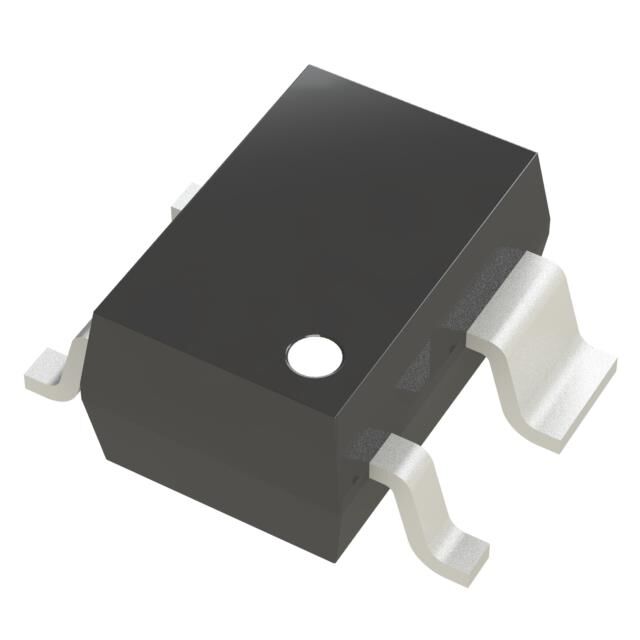 Analog Devices ADM6713RAKSZ-REELObsolete | Integrated Circuits (ICs) | IC SUPERVISOR 1 CHANNEL SC70-4 |
Analog Devices | RF and Wireless | RF AMP SINGLE GENERAL PURPOSE RF AMPLIFIER 20GHZ 3.6V 22-PIN DIE TRAY |
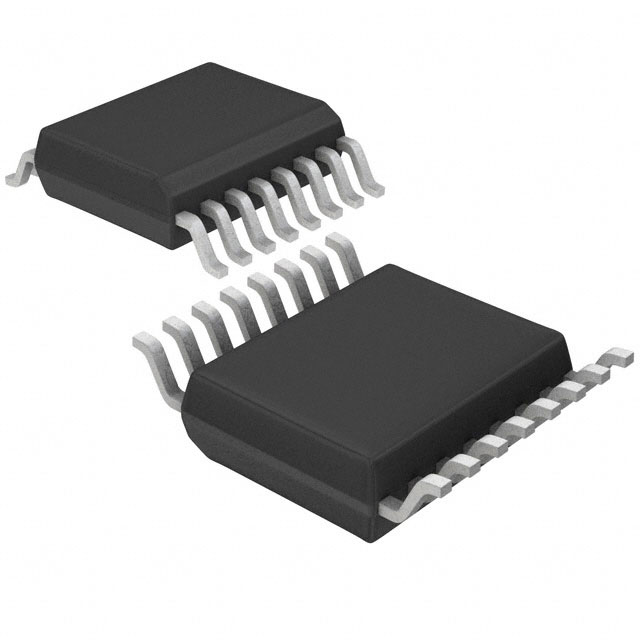 Analog Devices | Integrated Circuits (ICs) | LOW NOISE, SWITCHED CAPACITOR REGULATED VOLTAGE INVERTERS |
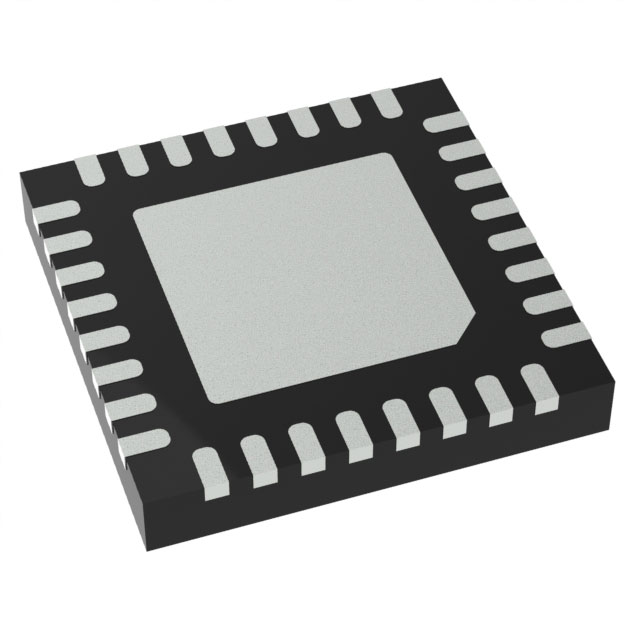 Analog Devices | Integrated Circuits (ICs) | QUAD 16-BIT/12-BIT ±10V VOUTSOFTSPAN DACS WITH 10PPM/°C MAX REFERENCE |
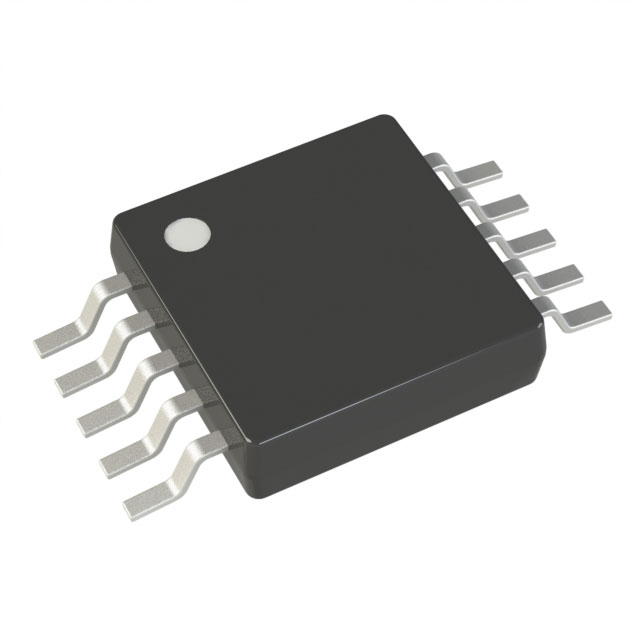 Analog Devices | Integrated Circuits (ICs) | SERIAL 14-BIT, 3.5MSPS SAMPLING ADC WITH BIPOLAR INPUTS |
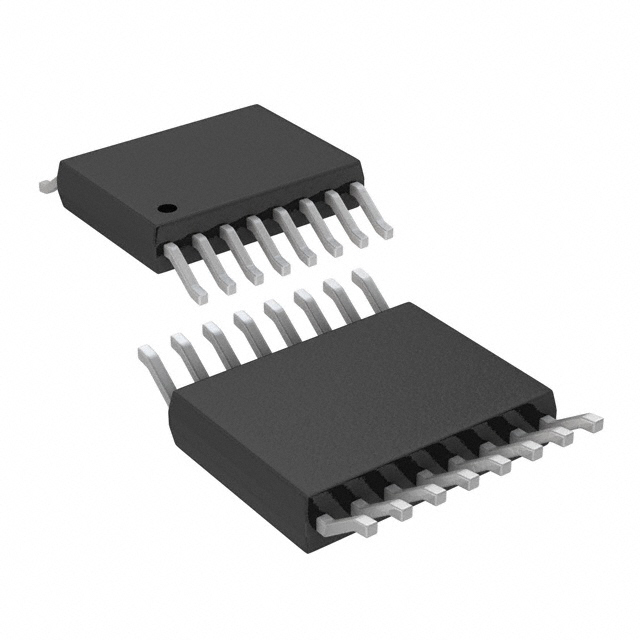 Analog Devices | Integrated Circuits (ICs) | ISOSPI ISOLATED COMMUNICATIONS INTERFACE |
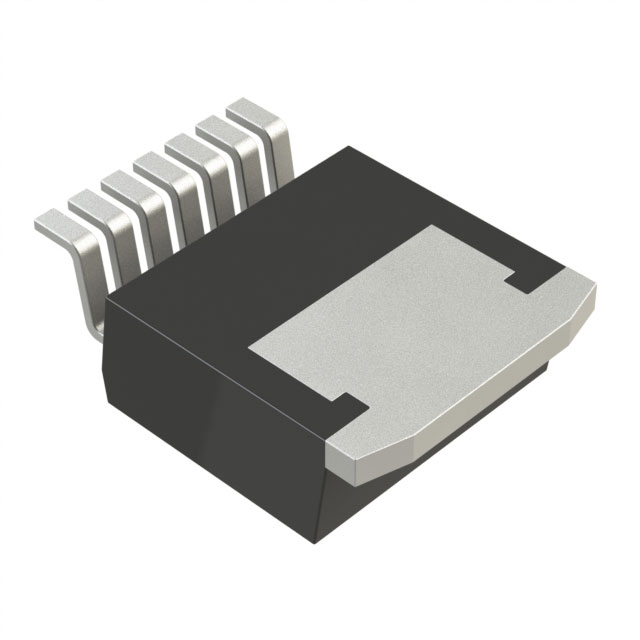 Analog Devices | Integrated Circuits (ICs) | 4.5A, 500KHZ STEP-DOWN SWITCHING REGULATOR |
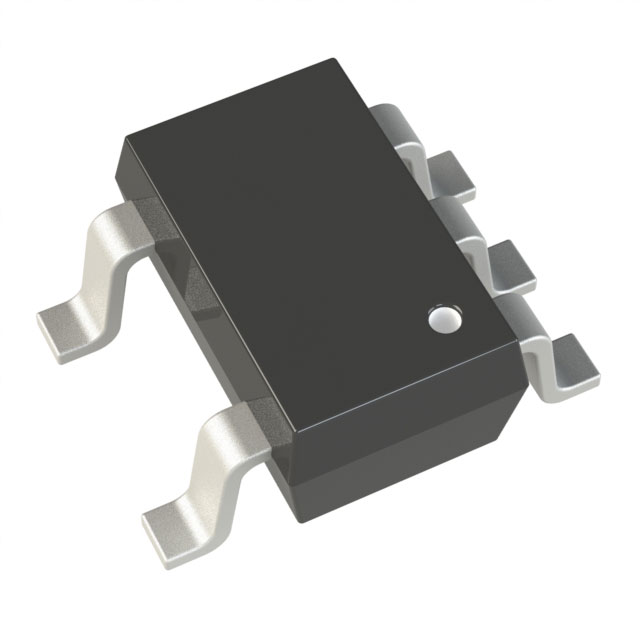 Analog Devices | Integrated Circuits (ICs) | 300 MA, LOW QUIESCENT CURRENT, ADJUSTABLE OUTPUT, CMOS LINEAR REGULATOR |
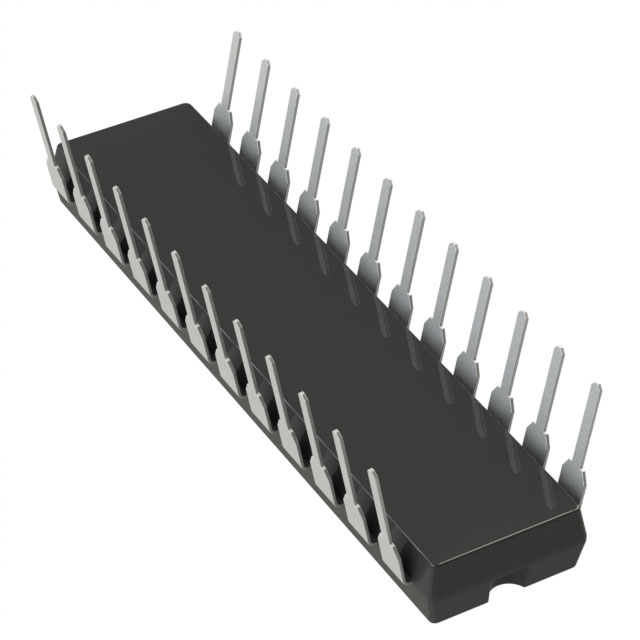 Analog Devices AD767KNObsolete | Integrated Circuits (ICs) | IC DAC 12BIT V-OUT 24DIP |
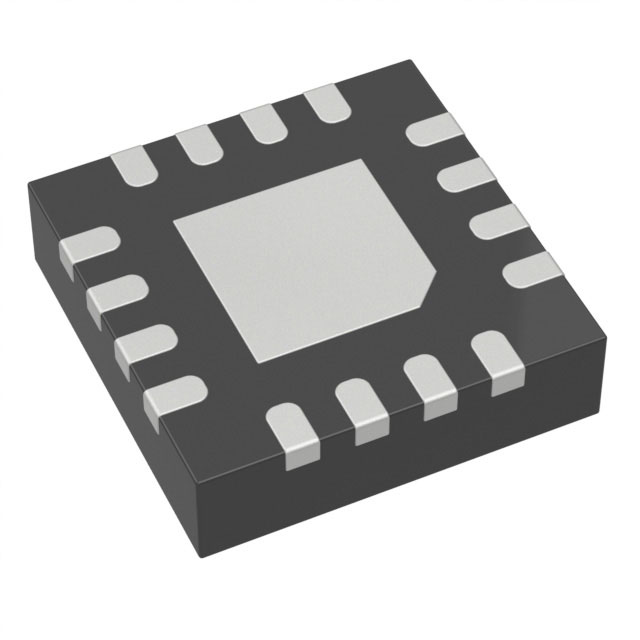 Analog Devices | Integrated Circuits (ICs) | QUAD 12-/10-/8-BIT RAIL-TO-RAIL DACS WITH 10PPM/°C REFERENCE |
| Series | Category | # Parts | Status | Description |
|---|---|---|---|---|
| RF Misc ICs and Modules | 2 | Active | ||
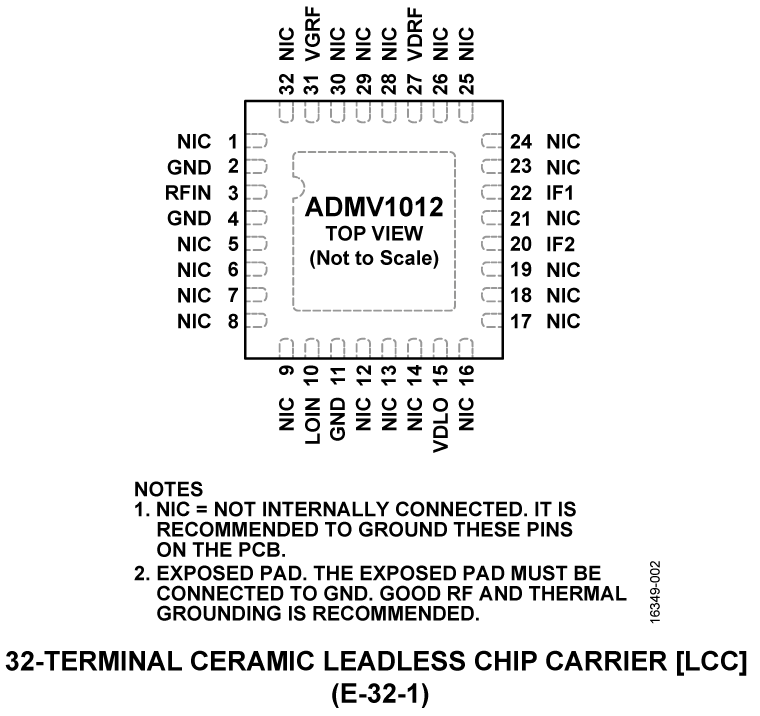
ADMV101217.5 GHz to 24 GHz, GaAs, MMIC, I/Q Downconverter | RF and Wireless | 1 | Active | The ADMV1012 is a compact, gallium arsenide (GaAs) design, monolithic microwave integrated circuit (MMIC) double sideband (DSB) downconverter in a RoHS compliant package optimized for point to point microwave radio designs that operate in the 17.5 GHz to 24 GHz input frequency range.The ADMV1012 provides 15 dB of conversion gain with 25 dB of image rejection, and 2.5 dB noise figure. The ADMV1012 uses a radio frequency (RF) low noise amplifier (LNA) followed by an in phase/quadrature (I/Q), double balanced mixer, where a driver amplifier drives the local oscillator (LO) with a ×2 multiplier. IF1 and IF2 mixer quadrature outputs are provided, and an external 90° hybrid is required to select the required sideband.The I/Q mixer topology reduces the need for filtering of unwanted sideband. The ADMV1012 is a much smaller alternative to hybrid style DSB downconverter assemblies and eliminates the need for wire bonding by allowing the use of surface-mount manufacturing assemblies.The ADMV1012 downconverter comes in a compact, thermally enhanced, 4.9 mm × 4.9 mm, 32-terminal LCC. The ADMV1012 operates over the −40°C to +85°C temperature range.ApplicationsPoint to point microwave radiosRadars and electronic warfare systemsInstrumentation, automatic test equipment (ATE)Satellite communications |
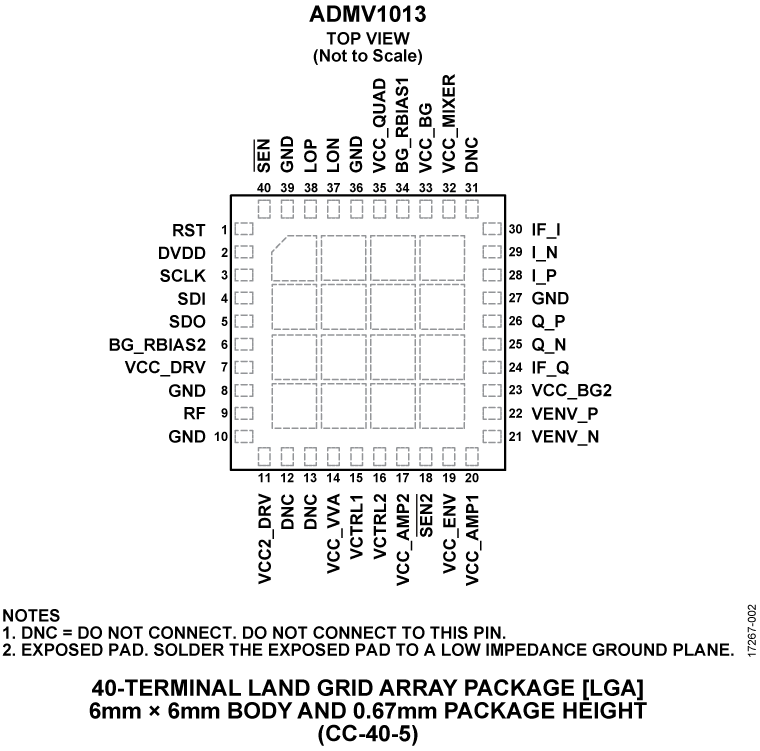
ADMV101324 GHz to 44 GHz, Wideband, Microwave Upconverter | RF Evaluation and Development Kits, Boards | 3 | Active | The ADMV1013 is a wideband, microwave upconverter optimized for point to point microwave radio designs operating in the 24 GHz to 44 GHz radio frequency (RF) range.The upconverter offers two modes of frequency translation. The device is capable of direct conversion to RF from baseband in-phase quadrature (I/Q) input signals, as well as single-sideband (SSB) upconversion from complex intermediate frequency (IF) inputs. The baseband I/Q input path can be disabled and modulated complex IF signals, anywhere from 0.8 GHz to 6.0 GHz, can be inserted in the IF path and upconverted to 24 GHz to 44 GHz while suppressing the unwanted sideband by typically better than 26 dBc. The serial port interface (SPI) allows adjustment of the quadrature phase and mixer gate voltage to allow optimum sideband suppression and local oscillator (LO) nulling. In addition, the SPI interface allows powering down the output envelope detector to reduce power consumption.The ADMV1013 upconverter comes in a 40-terminal land grid array package (LGA) package. The ADMV1013 operates over the −40°C to +85°C case temperature range.ApplicationsPoint to point microwave radiosRadar, electronic warfare systemsInstrumentation, automatic test equipment (ATE) |
ADMV101424 GHz to 44 GHz, Wideband, Microwave Downconverter | RF Misc ICs and Modules | 1 | Active | The ADMV1014 is a silicon germanium (SiGe), wideband, microwave downconverter optimized for point to point microwave radio designs operating in the 24 GHz to 44 GHz frequency range.The downconverter offers two modes of frequency translation. The device is capable of direct quadrature demodulation to baseband inphase (I)/quadrature (Q) output signals, as well as image rejection downconversion to a complex intermediate frequency (IF) output carrier frequency. The baseband outputs can be dc-coupled, or, more typically, the I/Q outputs are ac-coupled with a sufficiently low high-pass corner frequency to ensure adequate demodulation accuracy. The serial port interface (SPI) allows fine adjustment of the quadrature phase to allow the user to optimize I/Q demodulation performance. Alternatively, the baseband I/Q outputs can be disabled, and the I/Q signals can be passed through an on-chip active balun to provide two single-ended complex IF outputs anywhere between 800 MHz and 6000 MHz. When used as an image rejecting downconverter, the unwanted image term is typically suppressed to better than 30 dBc below the wanted sideband. The ADMV1014 offers a flexible local oscillator (LO) system, including a frequency quadruple option allowing up to a 41 GHz range of LO input frequencies to cover a radio frequency (RF) input range as wide as 24 GHz to 44 GHz. A square law power detector is provided to allow monitoring of the power levels at the mixer inputs. The detector output provides closed-loop control of the RF input variable attenuator through an external op amp error integrator circuit option.The ADMV1014 downconverter comes in a compact, thermally enhanced, 5 mm × 5 mm LGA package. The ADMV1014 operates over the −40°C to +85°C case temperature range.ApplicationsPoint to point microwave radiosRadar, electronic warfare systemsInstrumentation, automatic test equipment (ATE) |
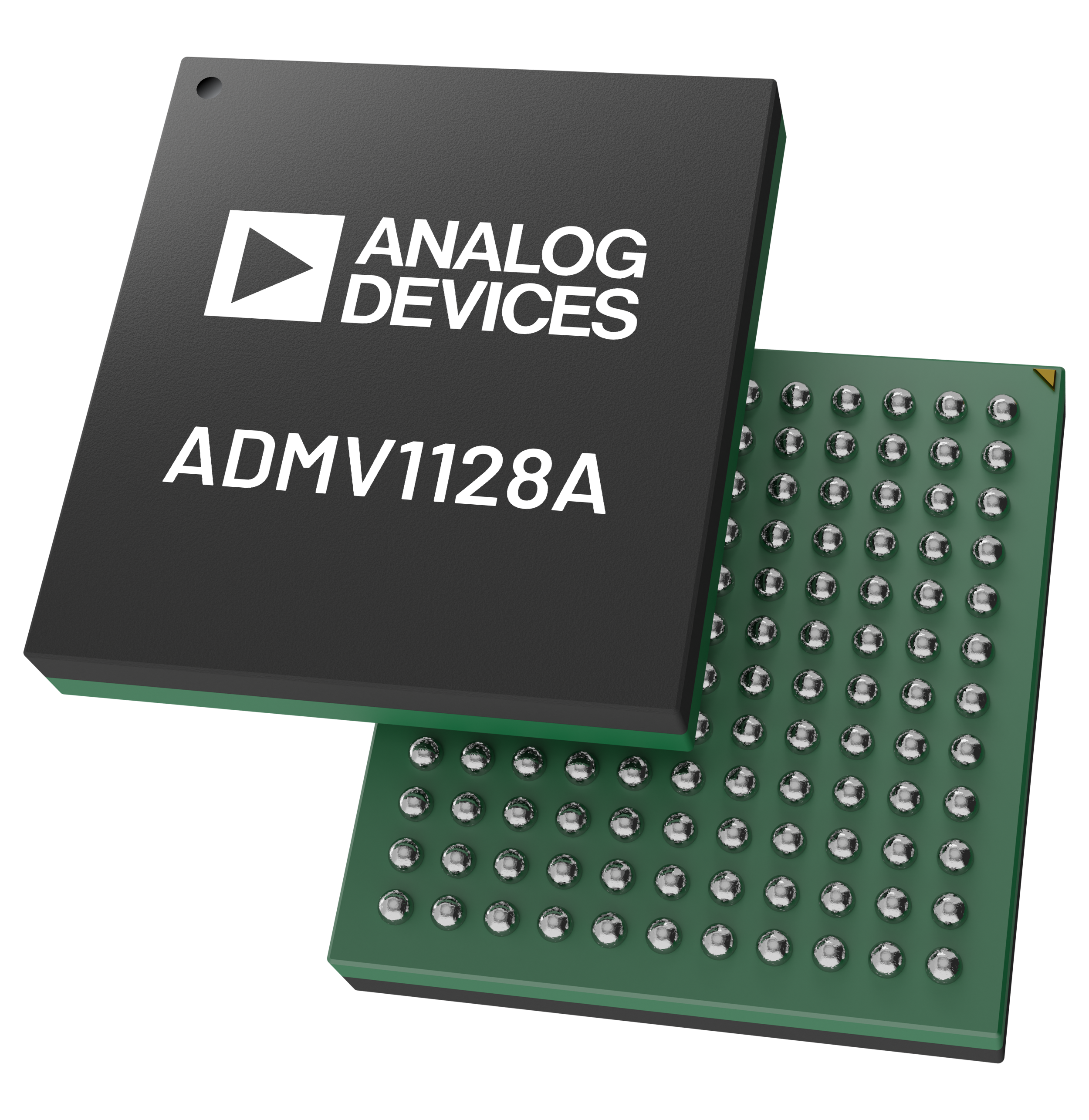
ADMV1128A24 GHz to 29.5 GHz, 5G, Microwave Upconverter and Downconverter | RF Misc ICs and Modules | 2 | Active | The ADMV1128A is a silicon on isolator (SOI), microwave, upconverter and downconverter optimized for 5G radio designs operating in the 24 GHz to 29.5 GHz frequency range.Both upconverters and downconverters offer two modes of frequency translation. One mode is conversion from and/or to single-ended or complex intermediate frequency (IF) signals, which then pass through an on-chip 90° IF hybrid, known as IF mode.The other mode is a direct conversion from and/or to differential baseband inphase/quadrature (I/Q) inputs and outputs, known as baseband mode. The I/Q baseband output common-mode voltage is programmable between 0 V and 1.5 V. The SPI provides fine adjustment of the quadrature phase to optimize I/Q demodulation performance.When the device is used as an image rejecting downconverter, the unwanted image term is typically rejected to 24 dBc, before calibration. The ADMV1128A offers a square law power detector to allow monitoring of the power levels at the mixer inputs of the downconverter.The RF receive input, RF transmit output, and local oscillator (LO) interface are all single-ended and matched to 50 Ω. The on-chip RF switch provides the option to combine the transmit and receive RF ports together for time division duplex (TDD) applications.The serial port interface (SPI) provides adjustment of the quadrature phase to allow optimum sideband rejection. In addition, the SPI allows powering down the output envelope detector to reduce power consumption when carrier feedthrough optimization is not necessary.The ADMV1128A upconverter and downconverter is housed in a compact, thermally enhanced, 6 mm × 6.5 mm, ball grid array (BGA) package. This BGA package enables the ability to heat sink the ADMV1128A from the top of the package for the most efficient thermal heat sinking. The ADMV1128A operates over the −40°C to +95°C TCrange.ApplicationsMillimeter-wave 5G applicationsPoint to point microwave radiosRadar and electronic warfare systemsInstrumentation and automatic test equipment (ATE) |
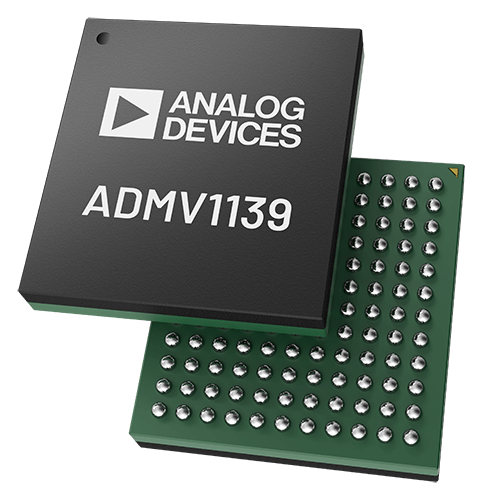
ADMV113937 GHz to 48.2 GHz, 5G, Microwave Upconverter and Downconverter | RF Misc ICs and Modules | 1 | Obsolete | The ADMV1139 is an silicon on isolator (SOI), microwave, upconverter and downconverter optimized for 5G radio designs operating in the 37 GHz to 48.2 GHz frequency range.Both upconverters and downconverters offer two modes of frequency translation. One mode is conversion from and/or to complex intermediate frequency (IF) signals, which then pass through an on-chip 90° IF hybrid, known as IF mode.The other mode is a direct conversion from and/or to single-ended or differential baseband inphase/quadrature (I/Q) inputs and outputs, known as baseband mode. The I/Q baseband output common-mode voltage is programmable between 0 V and 1.5 V. The SPI provides fine adjustment of the quadrature phase to optimize I/Q demodulation performance.When the device is used as an image rejecting downconverter, the unwanted image term is typically rejected to 26 dBc, before calibration. The ADMV1139 offers a square law power detector to allow monitoring of the power levels at the mixer inputs of the downconverter.The RF receive input, RF transmit output, and local oscillator (LO) interface are all single-ended and matched to 50 Ω. The on-chip RF switch provides the option to combine the transmit and receive RF ports together for time division duplex (TDD) applications.The serial port interface (SPI) provides adjustment of the quadrature phase to allow optimum sideband rejection. In addition, the SPI allows powering down the output envelope detector to reduce power consumption when carrier feedthrough optimization is not necessary.The ADMV1139 upconverter and downconverter is housed in a compact, thermally enhanced, 6 mm × 6.5 mm, ball grid array (BGA) package. This BGA package enables the ability to heat sink the ADMV1139 from the top of the package for the most efficient thermal heat sinking. The ADMV1139 operates over the −40°C to +95°C TCrange.APPLICATIONSMillimeter-wave 5G applicationsPoint to point microwave radiosRadar and electronic warfare systemsInstrumentation and automatic test equipment (ATE) |
| RF and Wireless | 2 | Active | ||
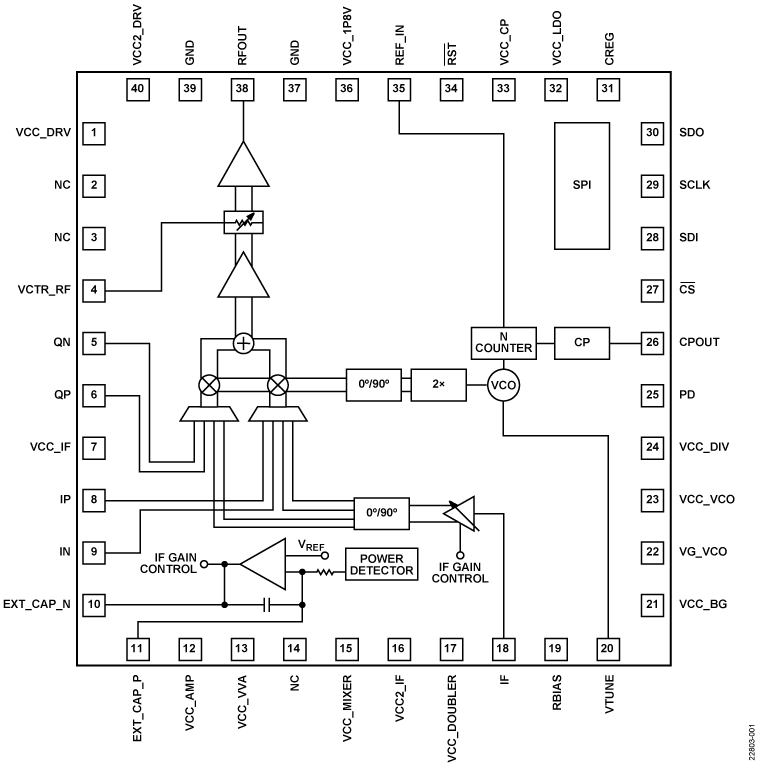
ADMV4530Dual-mode, Ka Band Upconverter with Integrated Fractional-N PLL and VCO | RF Evaluation and Development Kits, Boards | 5 | Active | The ADMV4530 is a highly integrated upconverter with an in-phase/quadrature (I/Q) mixer that is ideally suited for next generation Ka band satellite communications.An integrated low phase noise, fractional-N phase-locked loop (PLL) with a voltage controlled oscillator (VCO) and internal 2× multiplier generate the necessary on-chip local oscillator (LO) signal for the I/Q mixer, eliminating the need for external frequency synthesis. The VCO uses an internal autocalibration routine that allows the PLL to select the necessary settings and locks in approximately 100 µs.The single-ended reference input to the PLL operates up to 500 MHz and features internal reference dividers and a multiplier for added flexibility. Additionally, the phase frequency detector (PFD) comparison frequency can be up to 250 MHz for integer mode and 160 MHz for fraction-N mode.The upconverter consists of an I/Q mixer that can operate in either I/Q mode with 500 MHz of bandwidth or in IF mode up to 3 GHz of bandwidth, which allows various radio architectures and backward compatibility with legacy systems.Immediately following the I/Q mixer are stages of gain and variable attenuation. The configuration can achieve a minimum 1 dB compression point (P1dB) compression point of 19 dBm, eliminating the need for external stages of gain.A programmable 4-wire serial port interface (SPI) allows adjustment of the quadrature phase for optimum sideband suppression. In addition, the SPI allows nulling of LO feedthrough in IF mode. In I/Q mode, the LO feedthrough can be nulled by applying external dc offset to the differential baseband I/Q inputs.An IF automatic gain control (AGC) adjusts the IF variable gain amplifier (VGA) to compensate for input power variations. During normal operation, this AGC feature can be enabled or disabled via the SPI. When disabled during normal operation, the AGC feature only works on a test tone during power-down mode to track temperature variations.The ADMV4530 upconverter comes in a RoHs compliant, 6 mm × 6 mm, 40-terminal land grid array (LGA) package. The ADMV4530 operates over the −40°C to +85°C case temperature range.ApplicationsSatellite communicationPoint to point microwave communication |
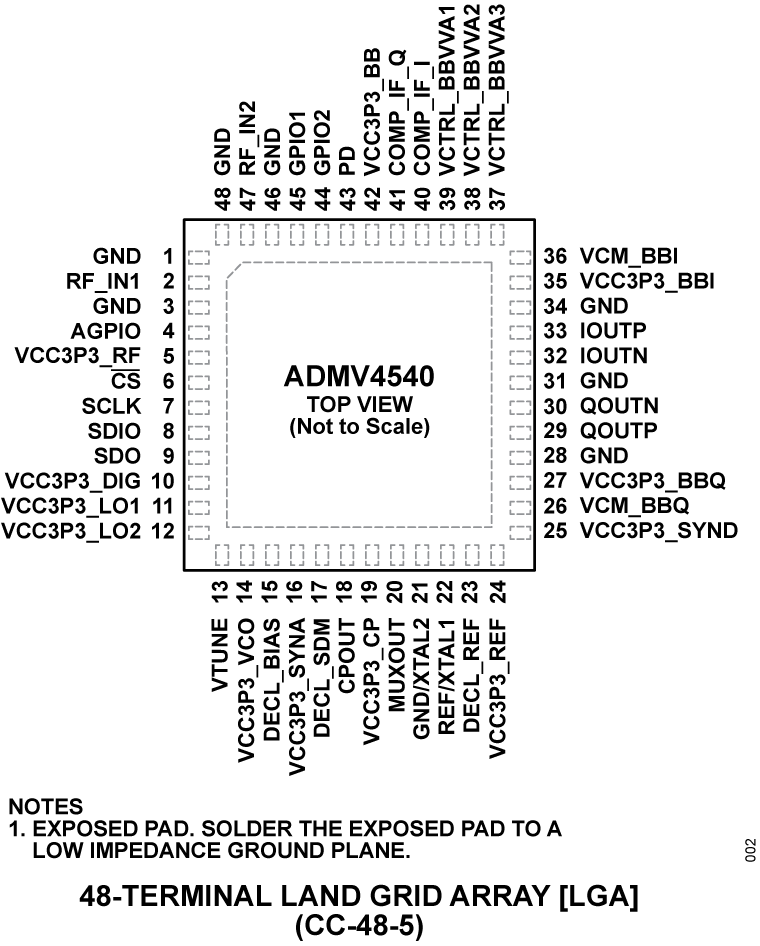
ADMV4540K Band Quadrature Demodulator with Integrated Fractional-N PLL and VCO | RF Misc ICs and Modules | 1 | Active | The ADMV4540 is a highly integrated quadrature demodulator with integrated synthesizer ideally suited for next generation K band satellite communication.The RF front end of the ADMV4540 consists of two low noise amplifier (LNA) paths, each with an optimal cascaded, 5 dB, double sideband noise figure at maximum gain, while minimizing external components. The dual paths allow support for antenna polarization. Selection of the LNA path can be done through the SPI.The LNA output is then downconverted to baseband using an inphase and quadrature (I/Q) mixer. The I/Q mixer output is then fed into fully differential low noise and low distortion programmable filters and variable gain amplifiers (VGAs). Each channel is capable of rejecting large, out of band interferers while reliably boosting the wanted signal, thus reducing the bandwidth and resolution requirements on the analog-to-digital converters (ADCs) of the system. The excellent matching between channels and their high spurious-free dynamic range (SFDR) over all gain and bandwidth settings make the ADMV4540 ideal for satellite communication systems with dense constellations, multiple carriers, and nearby interferers.The three filter corners of 125 MHz, 250 MHz, and 500 MHz are all programmable via a serial peripheral interface (SPI). The filters provide a sixth-order Butterworth response with −3 dB corner frequencies of 141 MHz, 282 MHz, and 565 MHz. For operation beyond 565 MHz, the filter can be disabled and completely bypassed, thereby extending the −3 dB bandwidth up to 900 MHz.The high dynamic range baseband output amplifiers of the ADMV4540 provide an overall nominal conversion gain of 57 dB. The three baseband voltage variable attenuator (VVA) pins (VCTRL_BBVVAx) of the ADMV4540 can be used for automatic gain control (AGC), giving the ADMV4540 a wide RF input dynamic range.This feature rich device contains an integrated fractional-N phase-locked loop (PLL) and a low phase noise voltage controlled oscillator (VCO) that generates the necessary on-chip local oscillator (LO) signal for the two double balanced I/Q mixers, eliminating the need for external frequency synthesis. The VCO utilizes an internal automatic calibration routine that allows the PLL to select the necessary settings and lock.The reference input (REFIN) to the PLL of the ADMV4540 employs a differentially excited crystal oscillator at 50 MHz. Alternatively, the REFINcan be driven by an external single-ended frequency reference up to 100 MHz. The phase frequency detector (PFD) comparison frequency operates up to 100 MHz, which allows for continuous LO coverage from 17 GHz to 21.5 GHz in extremely fine steps.The ADMV4540 operates on a 3.3 V supply with less than 3.2 W of total power dissipation. It is available in a 48-terminal, RoHS compliant, 7 mm × 7 mm LGA package with an exposed paddle. The ADMV4540 can operate over the −40℃ to +85℃ temperature range on a + 3.3 V power supply.APPLICATIONSSatellite communications |
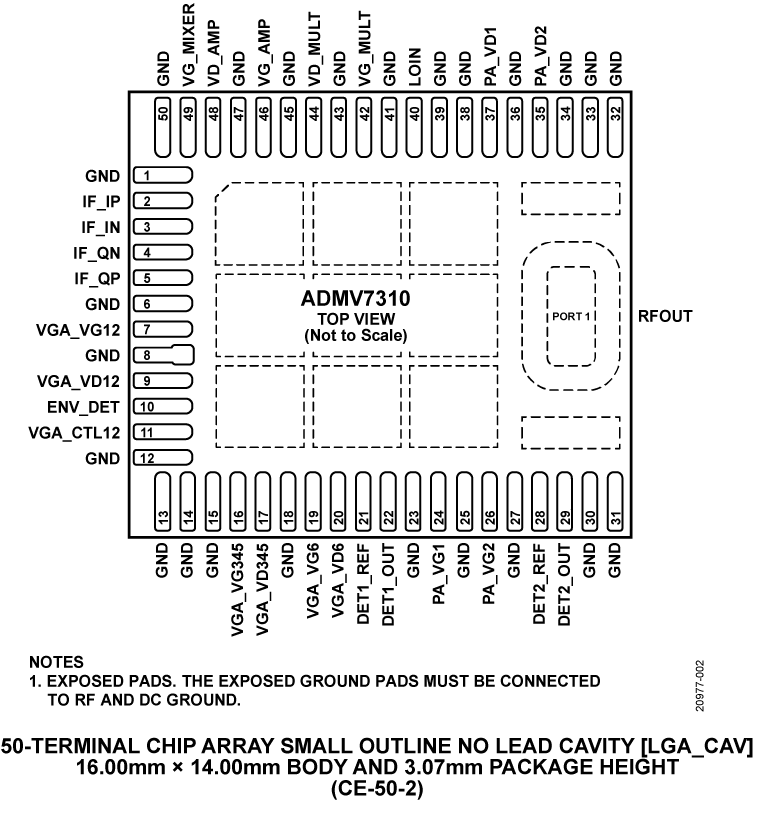
ADMV7310E-Band Upconverter SiP, 71 GHz to 76 GHz | RF Misc ICs and Modules | 1 | Active | The ADMV7310 is a fully integrated system in package (SiP), in phase/quadrature (I/Q) upconverter that operates between an intermediate frequency (IF) input range of dc to 2 GHz and a radio frequency (RF) output range of 71 GHz to 76 GHz. The device uses an image rejection mixer that is driven by a 6× local oscillator (LO) multiplier. The mixer RF output is followed by a variable gain amplifier (VGA) and a power amplifier (PA), providing a conversion gain of 35 dB typical. Differential I and Q mixer inputs are provided and can be driven with differential I and Q baseband waveforms for direct conversion applications. Alternatively, the inputs can be driven using an external 90° hybrid and two external 180° hybrids for single-ended applications.The ADMV7310 comes in a fully integrated, surface-mount, 50-terminal, 16.00 mm × 14.00 mm, chip array small outline no lead cavity (LGA_CAV) package. The ADMV7310 operates over the −40°C to +85°C temperature range.APPLICATIONSE-band communication systemsHigh capacity wireless backhaulsTest and measurementAerospace and defense |