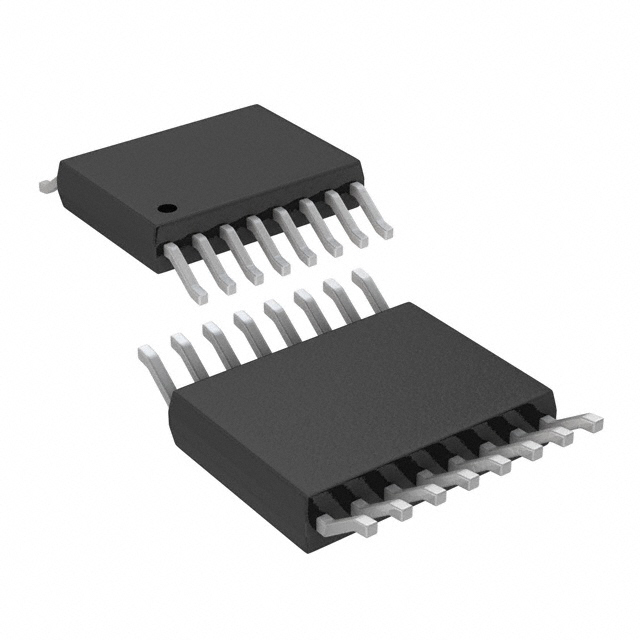
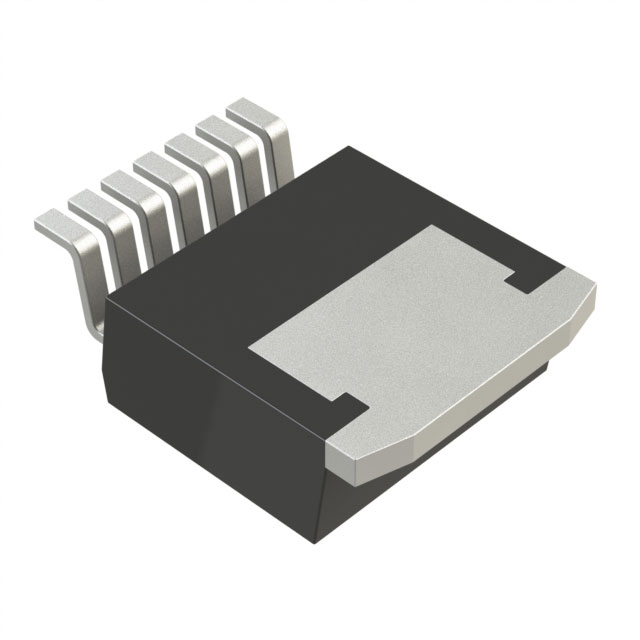
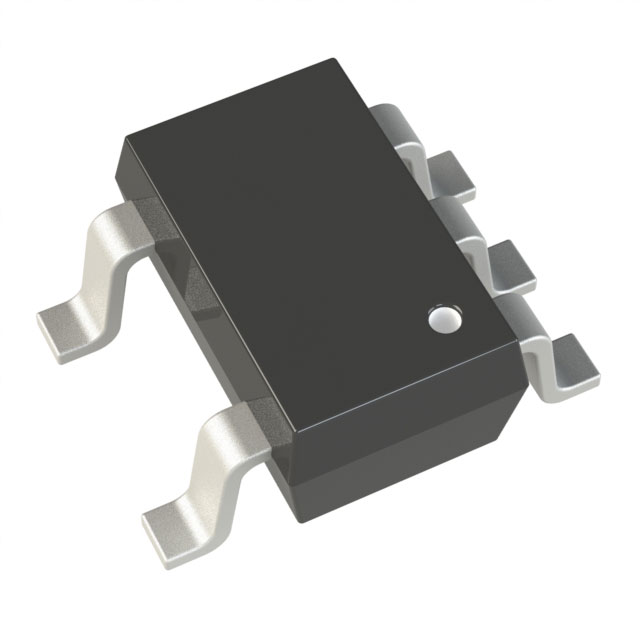
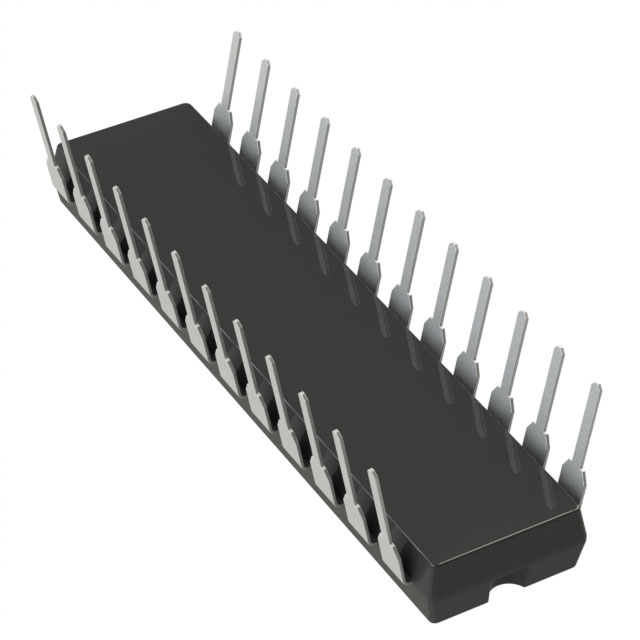
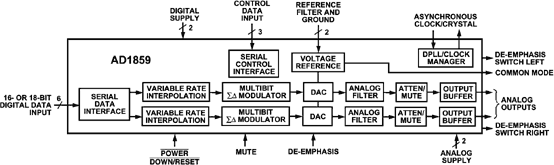
AD1859Stereo, Single-Supply 18-Bit Integrated (Sigma Delta) DAC | ADCs/DACs - Special Purpose | 2 | Obsolete | The AD1859 is a complete 16-/18-bit single-chip stereo digital audio play-back subsystem. It comprises a variable rate digital interpolation filter, a revolutionary multibit sigma-delta modulator with dither, a jitter-tolerant DAC, switched capacitor and continuous time analog filters, and analog output drive circuitry. Other features include an on-chip stereo attenuator and mute, programmed through an SPI-compatible serial control port.The key differentiating feature of the AD1859 is its asynchronous master clock capability. Previous sigma-delta audio DACs required a high frequency master clock at 256 or 384 times the intended audio sample rate. The generation and management of this high frequency synchronous clock is burdensome to the board level designer. The analog performance of conventional single bit sigma-delta DACs is also dependent on the spectral purity of the sample and master clocks. The AD1859 has a digital Phase Locked Loop (PLL) which allows the master clock to be asynchronous, and which also strongly rejects jitter on the sample clock (left/right clock). The digital PLL allows the AD1859 to be clocked with a single frequency (27 MHz for example) while the sample frequency (as determined from the left/right clock) can vary over a wide range. The digital PLL will lock to the new sample rate in approximately 100 ms. Jitter components 15 Hz above and below the sample frequency are rejected by 6 dB per octave. This level of jitter rejection is unprecedented in audio DACs.The AD1859 supports continuously variable sample rates with essentially linear phase response, and with an option for external analog deemphasis processing. The clock circuit includes an on-chip oscillator, so that the user need only provide an external crystal. The oscillator may be overdriven, if desired, with an external clock source.The AD1859 has a simple but very flexible serial data input port that allows for glueless interconnection to a variety of ADCs, DSP chips, AES/EBU receivers and sample rate converters. The serial data input port can be configured in left-justified, I2S-justified, right-justified and DSP serial port compatible modes. The AD1859 accepts 16- or 18-bit serial audio data in MSB-first, twos-complement format. A power-down mode is offered to minimize power consumption when the device is inactive. The AD1859 operates from a single +5 V power supply. It is fabricated on a single monolithic integrated circuit using a 0.6 µM CMOS double polysilicon, double metal process, and is housed in 28-pin SOIC and SSOP packages for operation over the temperature range -40°C to +105°C. |
| Digital to Analog Converters (DAC) | 4 | Obsolete | |
| Integrated Circuits (ICs) | 1 | Obsolete | |
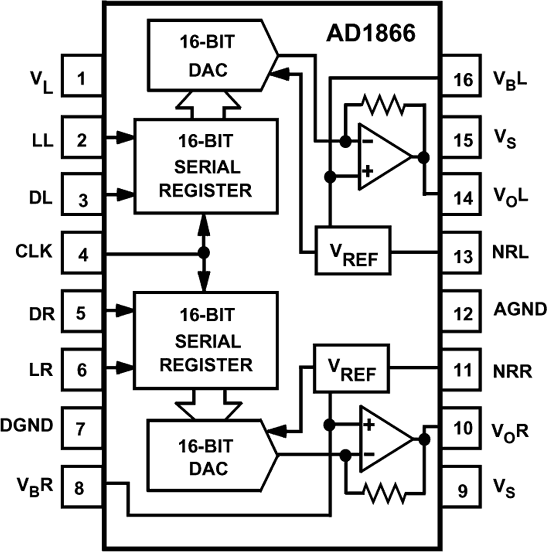
AD1866Single Supply Dual 16-Bit Audio DAC | Integrated Circuits (ICs) | 1 | Active | The AD1866 is a complete dual 16-bit DAC offering excellent performance while requiring a single +5 V power supply. It is fabricated on Analog Devices' ABCMOS wafer fabrication process. The monolithic chip includes CMOS logic elements, bipolar and MOS linear elements and laser trimmed, thinfilm resistor elements. Careful design and layout techniques have resulted in low distortion, low noise, high channel separation and low power dissipation.The DACs on the AD1866 chip employ a partially segmented architecture. The first three MSBs of each DAC are segmented into 7 elements. The 13 LSBs are produced using standard R-2R techniques. The segments and R-2R resistors are laser trimmed to provide extremely low total harmonic distortion. The AD1866 requires no deglitcher or trimming circuitry.Each DAC is equipped with a high performance output amplifier. These amplifiers achieve fast settling and high slew rate, producing ±1 V signals at load currents up to ±1 mA. The buffered output signal range is 1.5 V to 3.5 V. The 2.5 V reference voltages eliminate the need for "false ground" networks.A versatile digital interface allows the AD1866 to be directly connected to all digital filter chips. Fast CMOS logic elements allow for an input clock rate of up to 16 MHz. This allows for operation at 2x, 4x, 8x, or 16x the sampling frequency (where FS= 44.1 kHz) for each channel. The digital input pins of the AD1866 are TTL and +5 V CMOS compatible.The AD1866 operates on +5 V power supplies. The digital supply, VL, can be separated from the analog supply, VS, for reduced digital feedthrough. Separate analog and digital ground pins are also provided. In systems employing a single +5 volt power supply, VLand VSshould be connected together. In battery operated systems, operation will continue even with reduced supply voltage. Typically, the AD1866 dissipates 50 mW.The AD1866 is packaged in either a 16-pin plastic DIP or a 16-pin plastic SOIC package. Operation is guaranteed over the temperature range of -35°C to +85°C and over the voltage supply range of 4.75 V to 5.25 V.PRODUCT HIGHLIGHTSSingle supply operation @ +5 V.50 mW power dissipation.THD+N is 0.005% (typical).Signal-to-Noise Ratio is 95 dB (typical).115 dB channel separation (typical).Compatible with all digital filter chips.16-pin DIP and 16-pin SOIC packages.No deglitcher required.No external adjustments required.APPLICATIONSMultimedia WorkstationsPC Audio Add-In BoardsPortable CD and DAT PlayersAutomotive CD and DAT PlayersNoise Cancellation |
| Integrated Circuits (ICs) | 2 | Obsolete | |
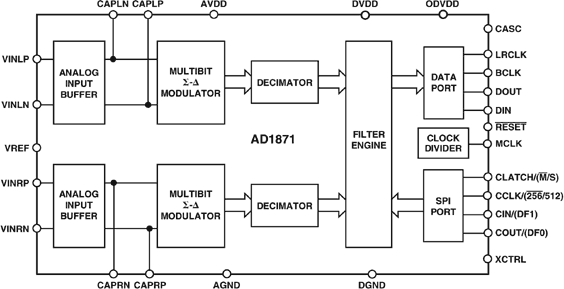
AD1871Stereo Audio, 24-bit, 96kHz, Multi-bit Sigma Delta ADC | ADCs/DACs - Special Purpose | 1 | Active | The AD1871 is a stereo audio ADC intended for digital audio applications requiring high performance analog-to-digital conversion. It features two 24-bit conversion channels each with programmable gain amplifier (PGA), multi-bit sigma-delta modulator and decimation filters. Each channel provides 97 dB of THD+N and 107 db of Dynamic Range making the AD1871 suitable for applications such as Digital Audio Recorders and Mixing Consoles. |
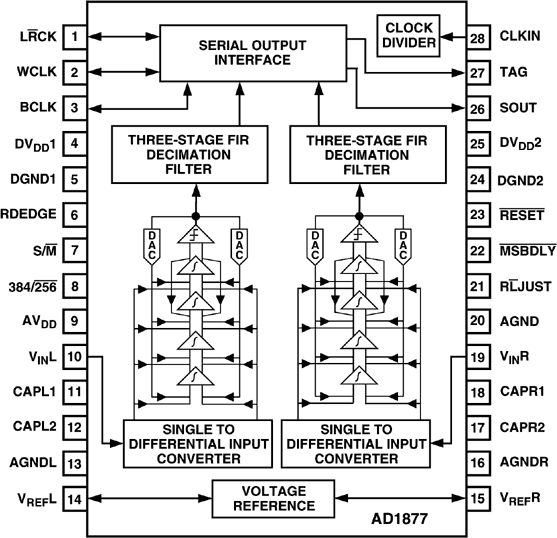
AD1877Single-Supply 16-Bit (Sigma Delta) Stereo ADC | ADCs/DACs - Special Purpose | 1 | Active | The AD1877 is a stereo, 16-bit oversampling ADC based on Sigma Delta technology. This part is intended primarily for digital audio applications requiring a single 5 V power supply. Each single-ended channel consists of a fourth-order one-bit noise shaping modulator and a digital decimation filter. An on-chip voltage reference, stable over temperature and time, defines the full-scale range for both channels. Digital output data from both channels are time-multiplexed to a single, flexible serial interface. The AD1877 accepts a 256 × FSor a 384 × FSinput clock and operates in both serial port "master" and "slave" modes. In slave mode, all clocks must be externally derived from a common source.The flexible serial output port, which is configured with pin selections, produces data in two s-complement, MSB-first format. The input and output signals are TTL-compatible. Each 16-bit output word of a stereo pair can be formatted within a 32-bit field of a 64-bit frame as either right-justified, I2S-compatible, Word Clock controlled or left-justified positions. Both 16-bit samples can also be packed into a 32-bit frame, in left-justified and I2S-compatible positions.The AD1877 is fabricated on a single monolithic integrated circuit using a 0.8 µm CMOS double polysilicon, double metal process, and is offered in a plastic 28-lead SOIC package. Analog and digital supply connections are separated to isolate the analog circuitry from the digital supply and reduce digital crosstalk. The AD1877 operates from a single 5 V power supply over the temperature range of 0°C to +70°C, and typically consumes less than 260 mW of power. |
| CODECS | 1 | Obsolete | |
| Integrated Circuits (ICs) | 1 | Obsolete | |
| Interface | 2 | Obsolete | |