SN74HCS164-Q1 Series
Automotive 8-bit serial-in/parallel-out shift register
Manufacturer: Texas Instruments
Catalog
Automotive 8-bit serial-in/parallel-out shift register
Key Features
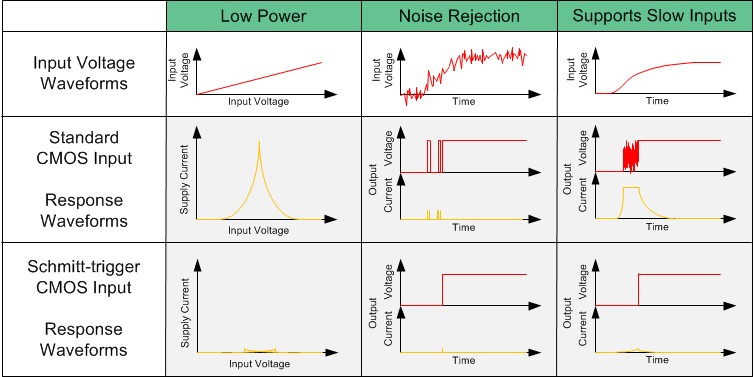
• AEC-Q100 qualified for automotive applications:Device temperature grade 1: –40°C to +125°C, TADevice HBM ESD Classification Level 2Device CDM ESD Classifcation Level C6Wide operating voltage range: 2 V to 6 VSchmitt-trigger inputs allow for slow or noisy input signalsLow power consumptionTypical ICCof 100 nATypical input leakage current of ±100 nA±7.8-mA output drive at 6 VAEC-Q100 qualified for automotive applications:Device temperature grade 1: –40°C to +125°C, TADevice HBM ESD Classification Level 2Device CDM ESD Classifcation Level C6Wide operating voltage range: 2 V to 6 VSchmitt-trigger inputs allow for slow or noisy input signalsLow power consumptionTypical ICCof 100 nATypical input leakage current of ±100 nA±7.8-mA output drive at 6 V
Description
AI
The SN74HCS164-Q1 device contains an 8-bit shift register with AND-gated serial inputs and an asynchronous clear (CLR) input. The gated serial (A and B) inputs permit complete control over incoming data; a low at either input inhibits entry of the new data and resets the first flip-flop to the low level at the next clock (CLK) pulse. A high-level input enables the other input, which then determines the state of the first flip-flop. Data at the serial inputs can be changed while CLK is high or low, provided the minimum set-up time requirements are met. Clocking occurs on the low-to-high-level transition of CLK. All inputs include Schmitt-triggers, eliminating any erroneous data outputs due to slow-edged or noisy input signals.
The SN74HCS164-Q1 device contains an 8-bit shift register with AND-gated serial inputs and an asynchronous clear (CLR) input. The gated serial (A and B) inputs permit complete control over incoming data; a low at either input inhibits entry of the new data and resets the first flip-flop to the low level at the next clock (CLK) pulse. A high-level input enables the other input, which then determines the state of the first flip-flop. Data at the serial inputs can be changed while CLK is high or low, provided the minimum set-up time requirements are met. Clocking occurs on the low-to-high-level transition of CLK. All inputs include Schmitt-triggers, eliminating any erroneous data outputs due to slow-edged or noisy input signals.