


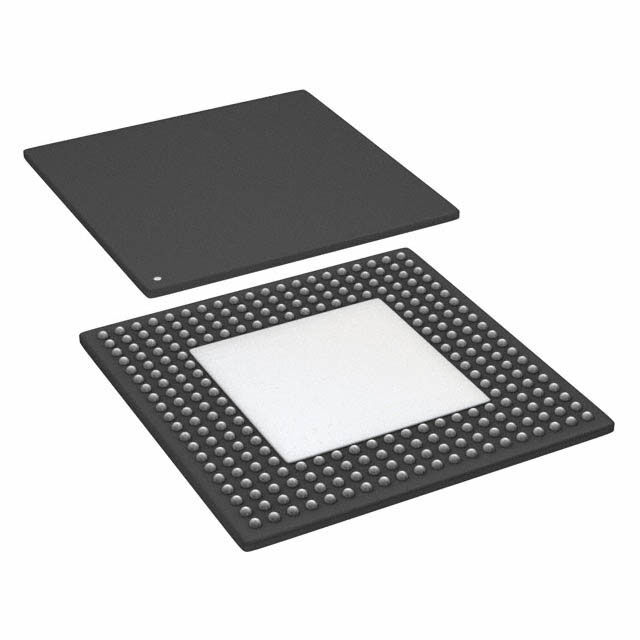
AD8152JBPZ
Active34 × 34, 3.2 GBPS ASYNCHRONOUS DIGITAL CROSSPOINT SWITCH
Deep-Dive with AI
Search across all available documentation for this part.
AD8152JBPZ
Active34 × 34, 3.2 GBPS ASYNCHRONOUS DIGITAL CROSSPOINT SWITCH
Deep-Dive with AI
Technical Specifications
Parameters and characteristics for this part
| Specification | AD8152JBPZ |
|---|---|
| Circuit [custom] | 34 |
| Circuit [custom] | 1 |
| Circuit [custom] | 34 |
| Independent Circuits | 1 |
| Mounting Type | Surface Mount |
| Operating Temperature [Max] | 85 °C |
| Operating Temperature [Min] | 0 °C |
| Package / Case | 256-LBGA Exposed Pad |
| Supplier Device Package | 256-BGA-ED (27x27) |
| Type | Crosspoint Switch |
| Voltage - Supply [Max] | 3.63 V |
| Voltage - Supply [Min] | 2.25 V |
| Voltage Supply Source | Single Supply |
Pricing
Prices provided here are for design reference only. For realtime values and availability, please visit the distributors directly
| Distributor | Package | Quantity | $ | |
|---|---|---|---|---|
| Digikey | Tray | 1 | $ 323.28 | |
| 10 | $ 323.27 | |||
Description
General part information
AD8152 Series
The AD8152 is a breakthrough cross point switch offering a large switch array (34 × 34) on very little power, typically 2.0 W. Additionally, the device operates at data rates up to 3.2 Gbps per port, making it suitable for Sonet/SDH OC-48 with forward error correction (FEC).The useful supply voltage range of the AD8152 allows the user to operate at LVPECL/CML data levels down to 2.5 V. The control interface is low voltage transistor transistor logic (LVTTL) or low voltage complementary metal-oxide (LVCMOS) compatible on 2.5 V to 3.3 V.The fully differential signal path of the AD8152 reduces jitter and crosstalk and allows the use of smaller single-ended voltage swings. The device is offered in a 256-ball BGA_ED package that operates over the industrial temperature range of 0°C to 85°C.ApplicationsFiber optic network switchingHigh speed serial backplane routing to OC-48 with FECGigabit ethernetDigital video (HDTV)Data storage networks