Deep-Dive with AI
Search across all available documentation for this part.
Deep-Dive with AI
Technical Specifications
Parameters and characteristics for this part
| Specification | SN65LVDT388DBT |
|---|---|
| Data Rate | 200 Mbps |
| Mounting Type | Surface Mount |
| Number of Drivers/Receivers | 8, 0 |
| Operating Temperature [Max] | 85 °C |
| Operating Temperature [Min] | -40 °C |
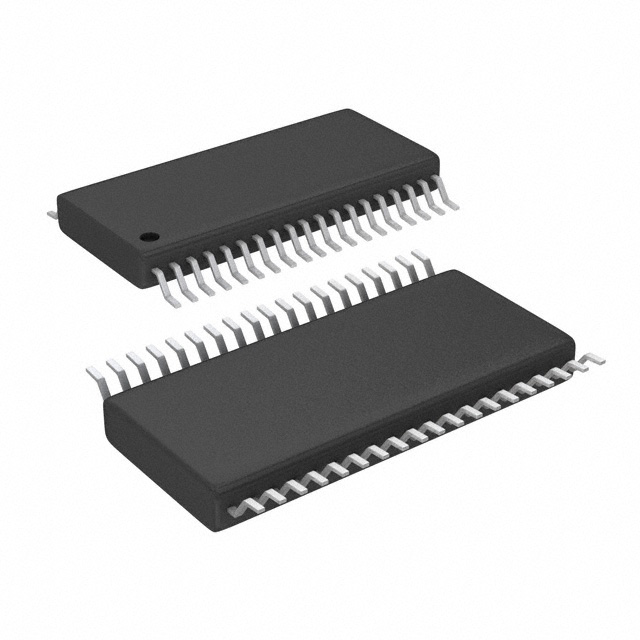
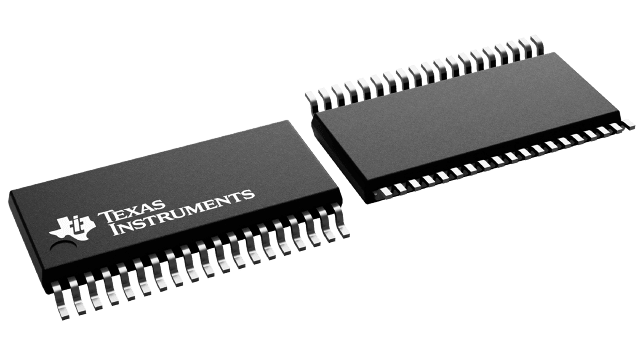
| Package / Case | 38-TFSOP |
| Package / Case [custom] | 4.4 mm |
| Package / Case [custom] | 0.173 in |
| Protocol | LVDS |
| Supplier Device Package | 38-TSSOP |
| Type | Receiver |
| Voltage - Supply [Max] | 3.6 V |
| Voltage - Supply [Min] | 3 V |
Pricing
Prices provided here are for design reference only. For realtime values and availability, please visit the distributors directly
| Distributor | Package | Quantity | $ | |
|---|---|---|---|---|
| Digikey | Tube | 150 | $ 8.48 | |
| Texas Instruments | TUBE | 1 | $ 10.05 | |
| 100 | $ 8.19 | |||
| 250 | $ 6.44 | |||
| 1000 | $ 5.46 | |||
Description
General part information
SN65LVDT388 Series
The \x91LVDS388 and \x91LVDT388 (Tdesignates integrated termination) are eight differential line receivers that implement the electrical characteristics of low-voltage differential signaling (LVDS). This signaling technique lowers the output voltage levels of 5-V differential standard levels (such as EIA/TIA-422B) to reduce the power, increase the switching speeds, and allow operation with a 3-V supply rail. Any of the eight differential receivers will provide a valid logical output state with a ±100-mV differential input voltage within the input common-mode voltage range. The input common-mode voltage range allows 1 V of ground potential difference between two LVDS nodes. Additionally, the high-speed switching of LVDS signals always require the use of a line impedance matching resistor at the receiving end of the cable or transmission media. The LVDT product eliminates this external resistor by integrating it with the receiver.
The intended application of this device and signaling technique is for point-to-point baseband data transmission over controlled impedance media of approximately 100. The transmission media may be printed-circuit board traces, backplanes, or cables. The large number of drivers integrated into the same substrate along with the low pulse skew of balanced signaling, allows extremely precise timing alignment of clock and data for synchronous parallel data transfers. When used with its companion, 8-channel driver, the SN65LVDS389 over 150 million data transfers per second in single-edge clocked systems are possible with very little power. Note: The ultimate rate and distance of data transfer is dependent upon the attenuation characteristics of the media, the noise coupling to the environment, and other system characteristics.
The SN65LVDS388 and SN65LVDT388 is characterized for operation from -40°C to 85°C. The SN75LVDS388 and SN75LVDT388 is characterized for operation from 0°C to 70°C.
Documents
Technical documentation and resources