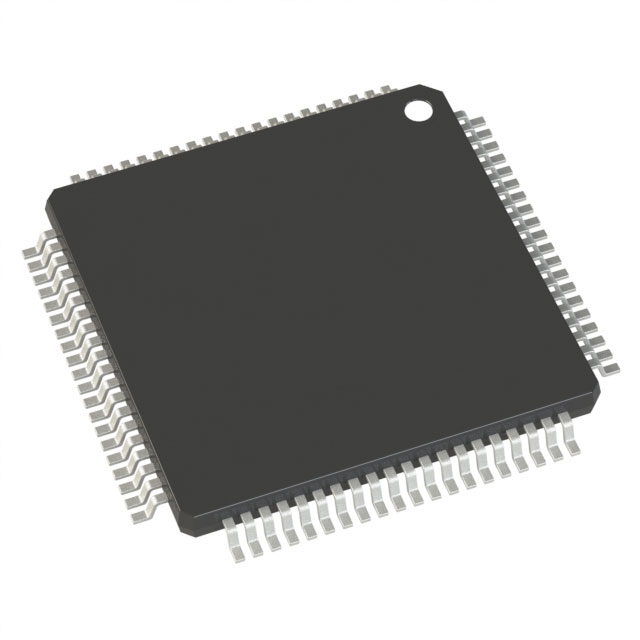
KSZ8795CLXCC
ActiveETHERNET CONTROLLER, ETHERNET SWITCH, IEEE 802.3, IEEE 802.3U, IEEE 802.3X, 1.14 V, 3.465 V, LQFP
Deep-Dive with AI
Search across all available documentation for this part.
KSZ8795CLXCC
ActiveETHERNET CONTROLLER, ETHERNET SWITCH, IEEE 802.3, IEEE 802.3U, IEEE 802.3X, 1.14 V, 3.465 V, LQFP
Technical Specifications
Parameters and characteristics for this part
| Specification | KSZ8795CLXCC |
|---|---|
| Function | Controller |
| Interface | MII, RMII |
| Operating Temperature [Max] | 70 °C |
| Operating Temperature [Min] | 0 °C |
| Package / Case | 80-LQFP |
| Protocol | Ethernet |
| Standards | 10/100 Base-T/TX PHY |
| Supplier Device Package | 80-LQFP (10x10) |
| Voltage - Supply | 3.3 V |
Pricing
Prices provided here are for design reference only. For realtime values and availability, please visit the distributors directly
| Distributor | Package | Quantity | $ | |
|---|---|---|---|---|
| Digikey | Tray | 1 | $ 6.43 | |
| 25 | $ 5.34 | |||
| 100 | $ 5.19 | |||
| Microchip Direct | TRAY | 1 | $ 6.43 | |
| 25 | $ 5.34 | |||
| 100 | $ 4.86 | |||
| 1000 | $ 4.49 | |||
| 5000 | $ 4.27 | |||
| Newark | Each | 1 | $ 6.69 | |
| 10 | $ 6.13 | |||
| 25 | $ 5.55 | |||
| 50 | $ 5.47 | |||
| 100 | $ 5.40 | |||
Description
General part information
KSZ8795 Series
The KSZ8795 is a highly-integrated, Layer 2-managed, 5-port switch with numerous features designed to reduce system cost. It is intended for cost-sensitive applications requiring four 10/100Mbps copper ports and one 10/100/1000Mbps Gigabit uplink port.
The KSZ8795CLX incorporates a small package outline, lowest power consumption with internal biasing, and on-chip termination. Its extensive features set includes enhanced power management, programmable rate limiting and priority ratio, tagged and port-based VLAN, port-based security and ACL rule-based packet filtering technology, quality-of-service (QoS) priority with four queues, management interfaces, enhanced MIB counters, high-performance memory bandwidth, and a shared memory-based switch fabric with non-blocking support.
The KSZ8795CLX provides support for multiple CPU data interfaces to effectively address both current and emerging fast Ethernet and Gigabit Ethernet applications where the port 5 GMAC can be configured to any of GMII, RGMII, MII and RMII modes.
Documents
Technical documentation and resources