TXS0102DQMR
Active2-BIT BIDIRECTIONAL VOLTAGE-LEVEL SHIFTER FOR OPEN-DRAIN AND PUSH-PULL APPLICATION
Deep-Dive with AI
Search across all available documentation for this part.
TXS0102DQMR
Active2-BIT BIDIRECTIONAL VOLTAGE-LEVEL SHIFTER FOR OPEN-DRAIN AND PUSH-PULL APPLICATION
Technical Specifications
Parameters and characteristics for this part
| Specification | TXS0102DQMR |
|---|---|
| Channel Type | Bidirectional |
| Channels per Circuit | 2 |
| Data Rate | 24 Mbps |
| Features | Auto-Direction Sensing |
| Mounting Type | Surface Mount |
| Number of Circuits | 1 |
| Operating Temperature [Max] | 85 C |
| Operating Temperature [Min] | -40 ¯C |
| Output Type | Open Drain, Push-Pull |
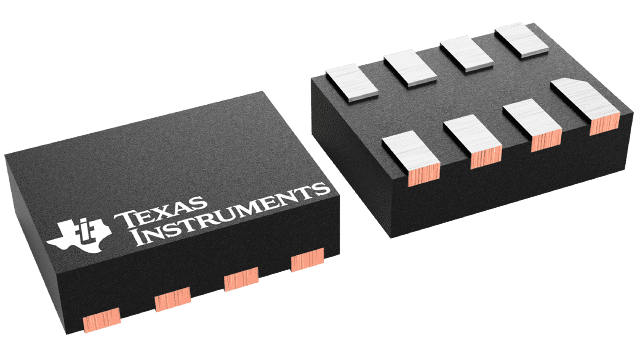
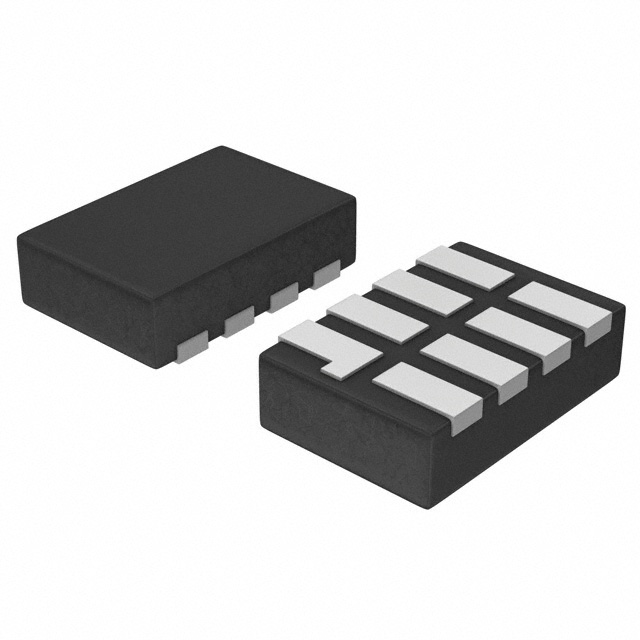
| Package / Case | 8-XFDFN |
| Supplier Device Package | 8-X2SON (1.8x1.2) |
| Translator Type | Voltage Level |
| Voltage - VCCA [Max] | 3.6 V |
| Voltage - VCCA [Min] | 1.65 V |
| Voltage - VCCB [Max] | 5.5 V |
| Voltage - VCCB [Min] | 2.3 V |
Pricing
Prices provided here are for design reference only. For realtime values and availability, please visit the distributors directly
| Distributor | Package | Quantity | $ | |
|---|---|---|---|---|
| Digikey | Cut Tape (CT) | 1 | $ 0.90 | |
| 10 | $ 0.80 | |||
| 25 | $ 0.75 | |||
| 100 | $ 0.61 | |||
| 250 | $ 0.57 | |||
| 500 | $ 0.48 | |||
| 1000 | $ 0.39 | |||
| Digi-Reel® | 1 | $ 0.90 | ||
| 10 | $ 0.80 | |||
| 25 | $ 0.75 | |||
| 100 | $ 0.61 | |||
| 250 | $ 0.57 | |||
| 500 | $ 0.48 | |||
| 1000 | $ 0.39 | |||
| N/A | 10746 | $ 0.81 | ||
| Tape & Reel (TR) | 3000 | $ 0.35 | ||
| 6000 | $ 0.33 | |||
| 15000 | $ 0.31 | |||
| 30000 | $ 0.30 | |||
| Texas Instruments | LARGE T&R | 1 | $ 0.56 | |
| 100 | $ 0.43 | |||
| 250 | $ 0.32 | |||
| 1000 | $ 0.23 | |||
Description
General part information
TXS0102 Series
This two-bit non-inverting translator is a bidirectional voltage-level translator and can be used to establish digital switching compatibility between mixed-voltage systems. It uses two separate configurable power-supply rails, with the A ports supporting operating voltages from 1.65 V to 3.6 V while it tracks the V CCA supply, and the B ports supporting operating voltages from 2.3 V to 5.5 V while it tracks the V CCB supply. This allows the support of both lower and higher logic signal levels while providing bidirectional translation capabilities between any of the 1.8-V, 2.5-V, 3.3-V, and 5-V voltage nodes.
When the output-enable (OE) input is low, all I/Os are placed in the high-impedance state, which significantly reduces the power-supply quiescent current consumption.
To ensure the high-impedance state during power up or power down, OE should be tied to GND through a pulldown resistor; the minimum value of the resistor is determined by the current-sourcing capability of the driver.
Documents
Technical documentation and resources