


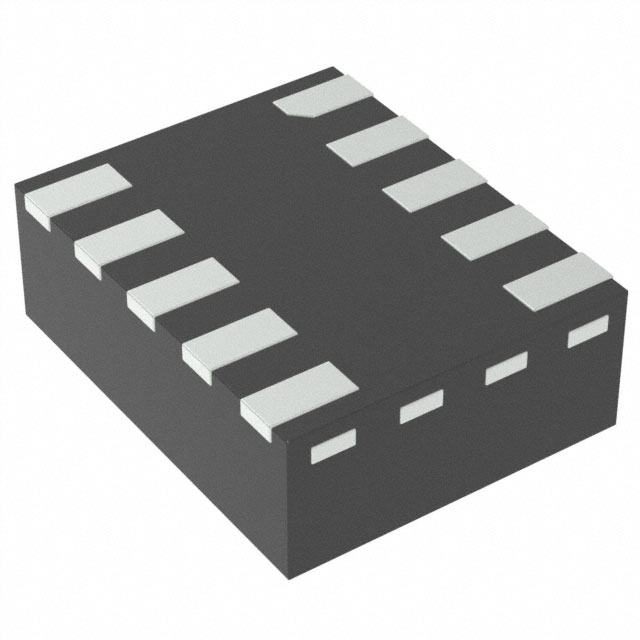
EMC1824T-2E/9R
Active1.8V, 4 CHANNEL TEMP SENSOR, I2C, SHUTDOWN, ALERT, FIXED ADDRESS 10 VDFN 2.5X2X0.9MM T/R ROHS COMPLIANT: YES
Deep-Dive with AI
Search across all available documentation for this part.
EMC1824T-2E/9R
Active1.8V, 4 CHANNEL TEMP SENSOR, I2C, SHUTDOWN, ALERT, FIXED ADDRESS 10 VDFN 2.5X2X0.9MM T/R ROHS COMPLIANT: YES
Deep-Dive with AI
Technical Specifications
Parameters and characteristics for this part
| Specification | EMC1824T-2E/9R |
|---|---|
| Accuracy - Highest (Lowest) | 1 °C |
| Features | Shutdown Mode, Standby Mode, Programmable Limit, One-Shot, Output Switch |
| Mounting Type | Surface Mount |
| Operating Temperature [Max] | 125 °C |
| Operating Temperature [Min] | -40 °C |
| Output Type | I2C/SMBus, 2-Wire Serial |
| Package / Case | 10-VFDFN |
| Sensing Temperature - Local [Max] | 125 °C |
| Sensing Temperature - Local [Min] | -40 °C |
| Sensor Type | Internal |
| Supplier Device Package | 10-VDFN (2.5x2) |
| Test Condition [Max] | 125 °C |
| Test Condition [Max] | 125 °C |
| Test Condition [Min] | -40 °C |
| Test Condition [Min] | -20 °C |
| Voltage - Supply [Max] | 3.6 V |
| Voltage - Supply [Min] | 1.62 V |
Pricing
Prices provided here are for design reference only. For realtime values and availability, please visit the distributors directly
| Distributor | Package | Quantity | $ | |
|---|---|---|---|---|
| Digikey | Cut Tape (CT) | 1 | $ 1.23 | |
| Digi-Reel® | 1 | $ 1.23 | ||
| Tape & Reel (TR) | 3000 | $ 0.94 | ||
| Microchip Direct | T/R | 1 | $ 1.23 | |
| 25 | $ 1.03 | |||
| 100 | $ 0.94 | |||
| 1000 | $ 0.89 | |||
| 5000 | $ 0.88 | |||
| Newark | Each (Supplied on Full Reel) | 1 | $ 0.97 | |
| 4000 | $ 0.97 | |||
Description
General part information
EMC1824 Series
The EMC1824 is a 1.8V, 4 channel, high accuracy, 2-Wire (I2C compatible) temperature sensor. Advanced features such as Rate of Change, Shutdown, Resistance Error Correction (REC), Beta Compensation (to support CPU diodes requiring the BJT/transistor model), and Ideality Configuration combine to provide a robust solution for complex environmental monitoring applications.
The EMC1824 monitors is the first device family to introduce rate of change functionality. This data, in addition to the temperature itself, facilitates a preemptive system f. This type of data can help customer better regulate
their applications to
Documents
Technical documentation and resources