


Deep-Dive with AI
Search across all available documentation for this part.
Deep-Dive with AI
Technical Specifications
Parameters and characteristics for this part
| Specification | STM32F769IIT6E |
|---|---|
| Connectivity | SPDIF, SAI, MMC/SD/SDIO, Ethernet, SPI, CANbus, UART/USART, QSPI, LINbus, I2C, EBI/EMI, USB OTG, IrDA |
| Core Processor | ARM® Cortex®-M7 |
| Core Size | 32-Bit Single-Core, 32-Bit |
| Data Converters | D/A 2x12b, A/D 24x12b |
| Mounting Type | Surface Mount |
| Number of I/O | 140 |
| Operating Temperature [Max] | 85 C |
| Operating Temperature [Min] | -40 ¯C |
| Oscillator Type | Internal |
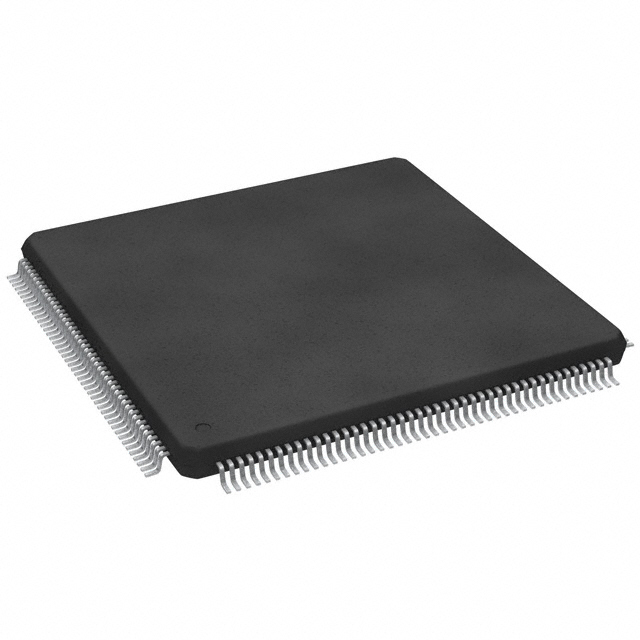
| Package / Case | 176-LQFP |
| Peripherals | WDT, I2S, DMA, PWM, POR, Brown-out Detect/Reset, LCD |
| Program Memory Size | 2 MB |
| Program Memory Type | FLASH |
| RAM Size | 512 K |
| Speed | 216 MHz |
| Supplier Device Package | 176-LQFP (24x24) |
| Voltage - Supply (Vcc/Vdd) [Max] | 3.6 V |
| Voltage - Supply (Vcc/Vdd) [Min] | 1.7 V |
STM32F769 Series
High-performance and DSP with FPU, Arm Cortex-M7 MCU with 2 Mbytes of Flash memory, 216 MHz CPU, Art Accelerator, L1 cache, SDRAM, TFT, MIPI-DSI, JPEG codec, DFSDM
| Part | Core Size | Oscillator Type | Core Processor | Package / Case | Supplier Device Package | Program Memory Type | Number of I/O | Operating Temperature [Max] | Operating Temperature [Min] | Program Memory Size | Connectivity | Peripherals | Voltage - Supply (Vcc/Vdd) [Max] | Voltage - Supply (Vcc/Vdd) [Min] | Speed | RAM Size | Mounting Type | Data Converters |
|---|---|---|---|---|---|---|---|---|---|---|---|---|---|---|---|---|---|---|
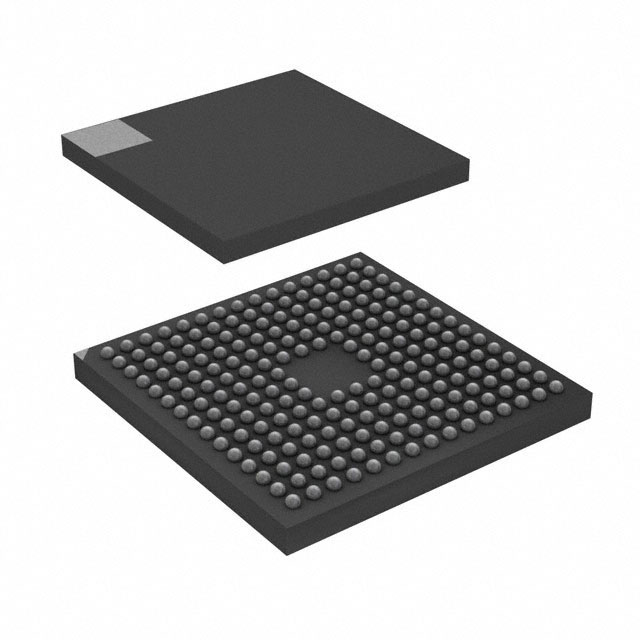 STMicroelectronics | 32-Bit 32-Bit Single-Core | Internal | ARM® Cortex®-M7 | 216-TFBGA | 216-TFBGA (13x13) | FLASH | 168 | 85 C | -40 ¯C | 2 MB | CANbus EBI/EMI Ethernet I2C IrDA LINbus MMC/SD/SDIO QSPI SAI SPDIF SPI UART/USART USB OTG | Brown-out Detect/Reset DMA I2S LCD POR PWM WDT | 3.6 V | 1.7 V | 216 MHz | 512 K | Surface Mount | A/D 24x12b D/A 2x12b |
STMicroelectronics | 32-Bit 32-Bit Single-Core | Internal | ARM® Cortex®-M7 | 176-LQFP | 176-LQFP (24x24) | FLASH | 140 | 85 C | -40 ¯C | 2 MB | CANbus EBI/EMI Ethernet I2C IrDA LINbus MMC/SD/SDIO QSPI SAI SPDIF SPI UART/USART USB OTG | Brown-out Detect/Reset DMA I2S LCD POR PWM WDT | 3.6 V | 1.7 V | 216 MHz | 512 K | Surface Mount | A/D 24x12b D/A 2x12b |
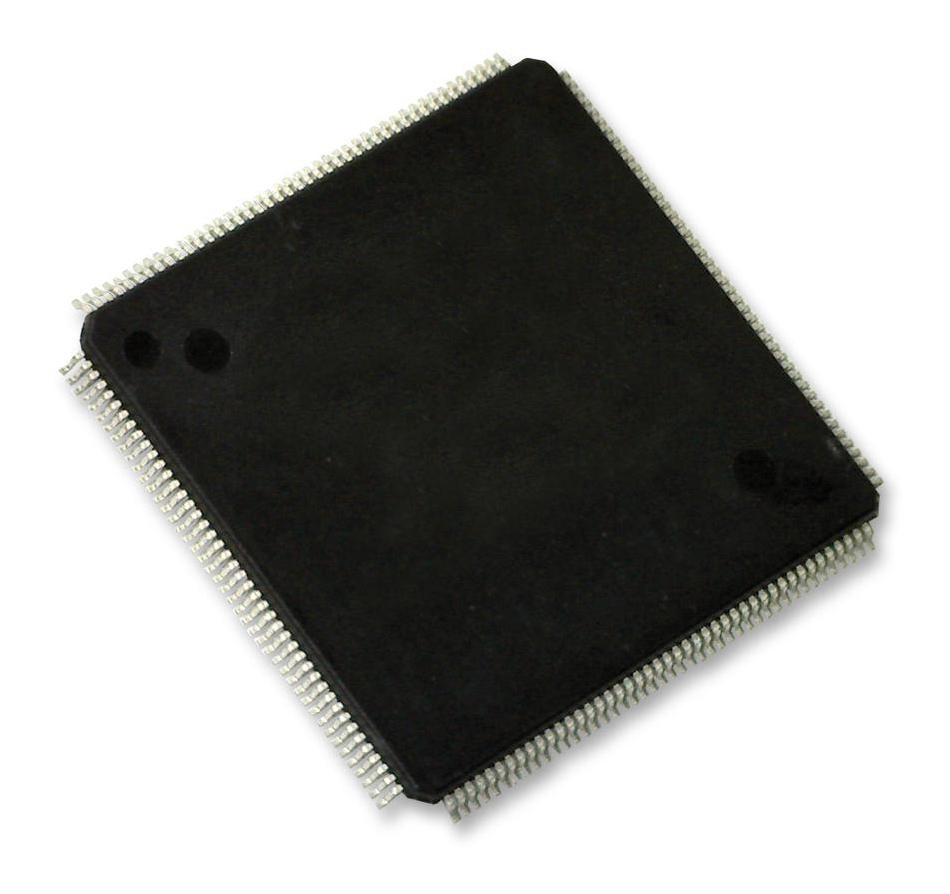 STMicroelectronics | 32-Bit 32-Bit Single-Core | Internal | ARM® Cortex®-M7 | 176-LQFP | 176-LQFP (24x24) | FLASH | 140 | 85 C | -40 ¯C | 2 MB | CANbus EBI/EMI Ethernet I2C IrDA LINbus MMC/SD/SDIO QSPI SAI SPDIF SPI UART/USART USB OTG | Brown-out Detect/Reset DMA I2S LCD POR PWM WDT | 3.6 V | 1.7 V | 216 MHz | 512 K | Surface Mount | A/D 24x12b D/A 2x12b |
Pricing
Prices provided here are for design reference only. For realtime values and availability, please visit the distributors directly
| Distributor | Package | Quantity | $ | |
|---|---|---|---|---|
| Digikey | N/A | 0 | $ 0.00 | |
Description
General part information
STM32F769 Series
The STM32F765xx, STM32F767xx, STM32F768Ax, and STM32F769xx devices are based on the high-performance Arm®Cortex®-M7 32-bit RISC core operating at up to 216 MHz frequency. The Cortex®-M7 core features a floating point unit (FPU), which supports Arm®double-precision and single-precision data-processing instructions and data types. It also implements a full set of DSP instructions and a memory protection unit (MPU), which enhances the application security.
The STM32F765xx, STM32F767xx, STM32F768Ax, and STM32F769xx devices incorporate high-speed embedded memories with a flash up to 2 Mbytes, 512 Kbytes of SRAM (including 128 Kbytes of Data TCM RAM for critical real-time data), 16 Kbytes of instruction TCM RAM (for critical real-time routines), 4 Kbytes of backup SRAM available in the lowest power modes, and an extensive range of enhanced I/Os and peripherals connected to two APB buses, two AHB buses, a 32-bit multi-AHB bus matrix, and a multi layer AXI interconnect supporting internal and external memories access.
The devices offer three 12-bit ADCs, two DACs, a low-power RTC, twelve general-purpose 16-bit timers including two PWM timers for motor control, two general-purpose 32-bit timers, a true random number generator (RNG). They also feature standard and advanced communication interfaces:
Documents
Technical documentation and resources