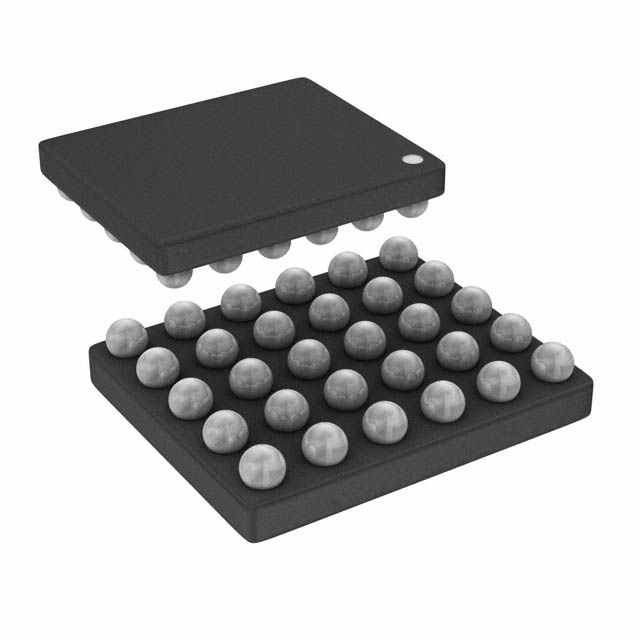
AFE4420YZR
ActiveULTRA-SMALL INTEGRATED AFE WITH FIFO FOR MULTISENSOR WEARABLE OPTICAL HEART-RATE MONITORING
Deep-Dive with AI
Search across all available documentation for this part.
AFE4420YZR
ActiveULTRA-SMALL INTEGRATED AFE WITH FIFO FOR MULTISENSOR WEARABLE OPTICAL HEART-RATE MONITORING
Technical Specifications
Parameters and characteristics for this part
| Specification | AFE4420YZR |
|---|---|
| Mounting Type | Surface Mount |
| Number of Bits | 24 |
| Number of Channels | 4 |
| Package / Case | 30-XFBGA, DSBGA |
| Supplier Device Package | 30-DSBGA |
Pricing
Prices provided here are for design reference only. For realtime values and availability, please visit the distributors directly
| Distributor | Package | Quantity | $ | |
|---|---|---|---|---|
| Digikey | Tape & Reel (TR) | 3000 | $ 2.51 | |
| Texas Instruments | LARGE T&R | 1 | $ 3.96 | |
| 100 | $ 3.23 | |||
| 250 | $ 2.54 | |||
| 1000 | $ 2.15 | |||
Description
General part information
AFE4420 Series
The AFE4420 is an analog front-end for optical bio-sensing applications, such as heart-rate monitoring (HRM) and saturation of peripheral capillary oxygen (SpO2). The device supports up to four switching light-emitting diodes (LEDs) and up to four photodiodes. Up to 16 signal phases can be defined and the signal can be acquired from each phase in a synchronized manner and stored in a 128-sample First in, First out (FIFO) block. The FIFO can be read out using either an I2C or a SPI interface. The AFE also has a fully integrated LED driver with an 8-bit current control. The device has a high dynamic range transmit-and-receive circuitry that helps with the sensing of very small signal levels.
The AFE4420 is an analog front-end for optical bio-sensing applications, such as heart-rate monitoring (HRM) and saturation of peripheral capillary oxygen (SpO2). The device supports up to four switching light-emitting diodes (LEDs) and up to four photodiodes. Up to 16 signal phases can be defined and the signal can be acquired from each phase in a synchronized manner and stored in a 128-sample First in, First out (FIFO) block. The FIFO can be read out using either an I2C or a SPI interface. The AFE also has a fully integrated LED driver with an 8-bit current control. The device has a high dynamic range transmit-and-receive circuitry that helps with the sensing of very small signal levels.
Documents
Technical documentation and resources