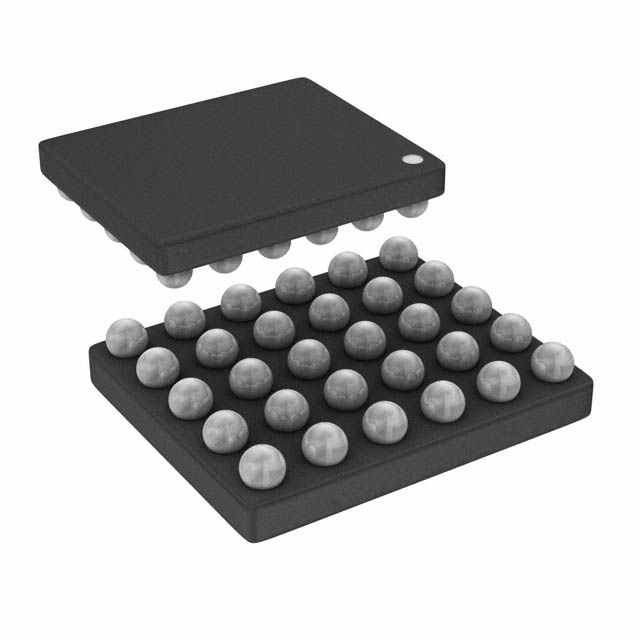
AFE4420 Series
Ultra-small integrated AFE with FIFO for multisensor wearable optical heart-rate monitoring
Manufacturer: Texas Instruments
Catalog
Ultra-small integrated AFE with FIFO for multisensor wearable optical heart-rate monitoring
Key Features
• Supports signal acquisition of up to 16 phasesFlexible allocation of LEDs and PDs in each phaseAccurate, continuous heart-rate monitoring:Up to 100-dB dynamic rangeLow current for continuous operation on a wearable device with a typical value15 µA for an LED, 20 µA for the receiverTransmitter:Supports common anode LED configuration8-Bit programmable LED current with range adjustable from 50 mA to 200 mAMode to fire two LEDs in parallelProgrammable LED on-timeSimultaneous support of 4 LEDs for optimized SpO2, HRM, or multi-wavelength HRMProgrammable control signals to extend operation to 8 LEDs using external SPDT switchesReceiver:Supports 4 time-multiplexed photodiode inputsIndividual DC offset subtraction DAC at TIA input for each LED, ambient with 7-bit control and range up to ±254 µATransimpedance gain: 10 kΩ to 2 MΩDigital ambient subtraction at ADC output to suppress ambient tonesNoise filtering with programmable bandwidthSupports external clock and internal oscillator modesAutomatic ambient cancellation mode (AACM) to increase receiver dynamic rangeTwo programmable GPIO pins with flexible interrupt generationFIFO with 128-sample depthI2C, SPI interfaces: selectable by pinOperating temperature range: –40°C to +85°C2.6-mm × 2.1-mm DSBGA, 0.4-mm pitchSupplies:Rx:1.7 V to 1.9 V (LDO bypass)1.9 V to 3.6 V (LDO enabled)Tx: 3 V to 5.5 VIO: 1.7 V to RX_SUPSupports signal acquisition of up to 16 phasesFlexible allocation of LEDs and PDs in each phaseAccurate, continuous heart-rate monitoring:Up to 100-dB dynamic rangeLow current for continuous operation on a wearable device with a typical value15 µA for an LED, 20 µA for the receiverTransmitter:Supports common anode LED configuration8-Bit programmable LED current with range adjustable from 50 mA to 200 mAMode to fire two LEDs in parallelProgrammable LED on-timeSimultaneous support of 4 LEDs for optimized SpO2, HRM, or multi-wavelength HRMProgrammable control signals to extend operation to 8 LEDs using external SPDT switchesReceiver:Supports 4 time-multiplexed photodiode inputsIndividual DC offset subtraction DAC at TIA input for each LED, ambient with 7-bit control and range up to ±254 µATransimpedance gain: 10 kΩ to 2 MΩDigital ambient subtraction at ADC output to suppress ambient tonesNoise filtering with programmable bandwidthSupports external clock and internal oscillator modesAutomatic ambient cancellation mode (AACM) to increase receiver dynamic rangeTwo programmable GPIO pins with flexible interrupt generationFIFO with 128-sample depthI2C, SPI interfaces: selectable by pinOperating temperature range: –40°C to +85°C2.6-mm × 2.1-mm DSBGA, 0.4-mm pitchSupplies:Rx:1.7 V to 1.9 V (LDO bypass)1.9 V to 3.6 V (LDO enabled)Tx: 3 V to 5.5 VIO: 1.7 V to RX_SUP
Description
AI
The AFE4420 is an analog front-end for optical bio-sensing applications, such as heart-rate monitoring (HRM) and saturation of peripheral capillary oxygen (SpO2). The device supports up to four switching light-emitting diodes (LEDs) and up to four photodiodes. Up to 16 signal phases can be defined and the signal can be acquired from each phase in a synchronized manner and stored in a 128-sample First in, First out (FIFO) block. The FIFO can be read out using either an I2C or a SPI interface. The AFE also has a fully integrated LED driver with an 8-bit current control. The device has a high dynamic range transmit-and-receive circuitry that helps with the sensing of very small signal levels.
The AFE4420 is an analog front-end for optical bio-sensing applications, such as heart-rate monitoring (HRM) and saturation of peripheral capillary oxygen (SpO2). The device supports up to four switching light-emitting diodes (LEDs) and up to four photodiodes. Up to 16 signal phases can be defined and the signal can be acquired from each phase in a synchronized manner and stored in a 128-sample First in, First out (FIFO) block. The FIFO can be read out using either an I2C or a SPI interface. The AFE also has a fully integrated LED driver with an 8-bit current control. The device has a high dynamic range transmit-and-receive circuitry that helps with the sensing of very small signal levels.