LM5017SD/NOPB
Active7.5-100V WIDE VIN, 600MA CONSTANT ON-TIME SYNCHRONOUS BUCK REGULATOR
Deep-Dive with AI
Search across all available documentation for this part.
LM5017SD/NOPB
Active7.5-100V WIDE VIN, 600MA CONSTANT ON-TIME SYNCHRONOUS BUCK REGULATOR
Technical Specifications
Parameters and characteristics for this part
| Specification | LM5017SD/NOPB |
|---|---|
| Current - Output | 600 mA |
| Frequency - Switching | Adj to 1MHz |
| Function | Step-Down |
| Mounting Type | Surface Mount |
| Number of Outputs | 1 |
| Operating Temperature [Max] | 125 ¯C |
| Operating Temperature [Min] | -40 °C |
| Output Configuration | Positive |
| Output Type | Adjustable |
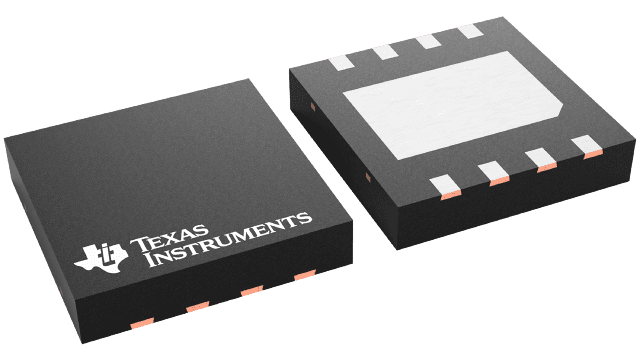
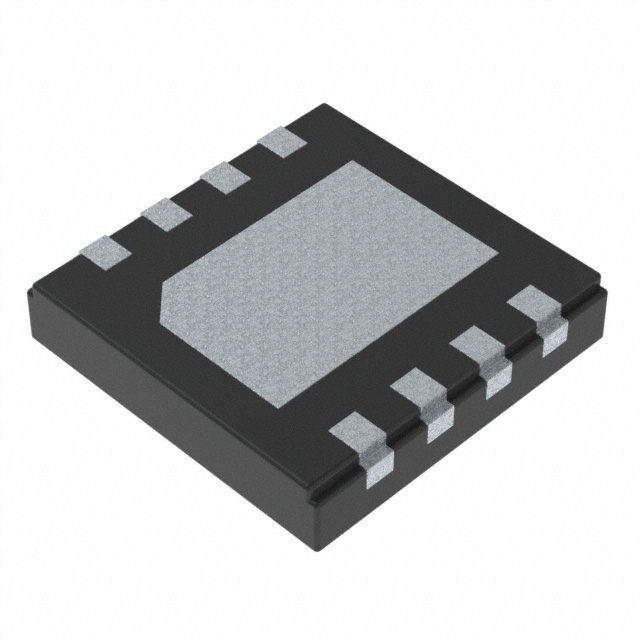
| Package / Case | 8-WDFN Exposed Pad |
| Supplier Device Package | 8-WSON (4x4) |
| Synchronous Rectifier | True |
| Topology | Buck |
| Voltage - Input (Max) [Max] | 100 V |
| Voltage - Input (Min) [Min] | 7.5 V |
| Voltage - Output (Max) [Max] | 90 V |
| Voltage - Output (Min/Fixed) | 1.225 V |
Pricing
Prices provided here are for design reference only. For realtime values and availability, please visit the distributors directly
| Distributor | Package | Quantity | $ | |
|---|---|---|---|---|
| Digikey | Cut Tape (CT) | 1 | $ 4.20 | |
| 10 | $ 3.78 | |||
| 25 | $ 3.57 | |||
| 100 | $ 3.09 | |||
| 250 | $ 2.94 | |||
| 500 | $ 2.63 | |||
| Digi-Reel® | 1 | $ 4.20 | ||
| 10 | $ 3.78 | |||
| 25 | $ 3.57 | |||
| 100 | $ 3.09 | |||
| 250 | $ 2.94 | |||
| 500 | $ 2.63 | |||
| Tape & Reel (TR) | 1000 | $ 2.22 | ||
| 2000 | $ 2.11 | |||
| Texas Instruments | SMALL T&R | 1 | $ 3.17 | |
| 100 | $ 2.78 | |||
| 250 | $ 1.95 | |||
| 1000 | $ 1.57 | |||
Description
General part information
LM5017 Series
The LM5017 is a 100-V, 600-mA synchronous stepdown regulator with integrated high side and low side MOSFETs. The constant on-time (COT) control scheme employed in the LM5017 requires no loop compensation, provides excellent transient response, and enables very high step-down ratios. The on-time varies inversely with the input voltage resulting in nearly constant frequency over the input voltage range. A high voltage startup regulator provides bias power for internal operation of the IC and for integrated gate drivers.
A peak current limit circuit protects against overload conditions. The undervoltage lockout (UVLO) circuit allows the input undervoltage threshold and hysteresis to be independently programmed. Other protection features include thermal shutdown and bias supply undervoltage lockout (VCCUVLO).
The LM5017 device is available in WSON-8 and HSOP PowerPAD-8 plastic packages.
Documents
Technical documentation and resources