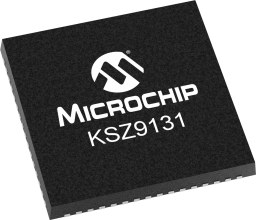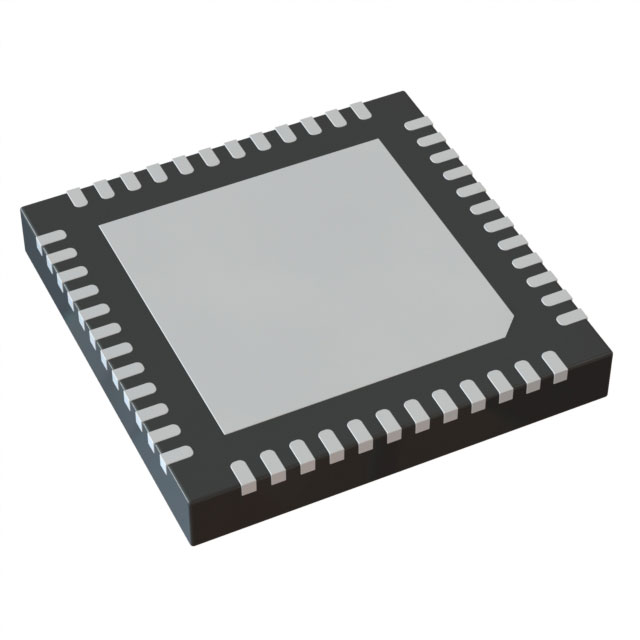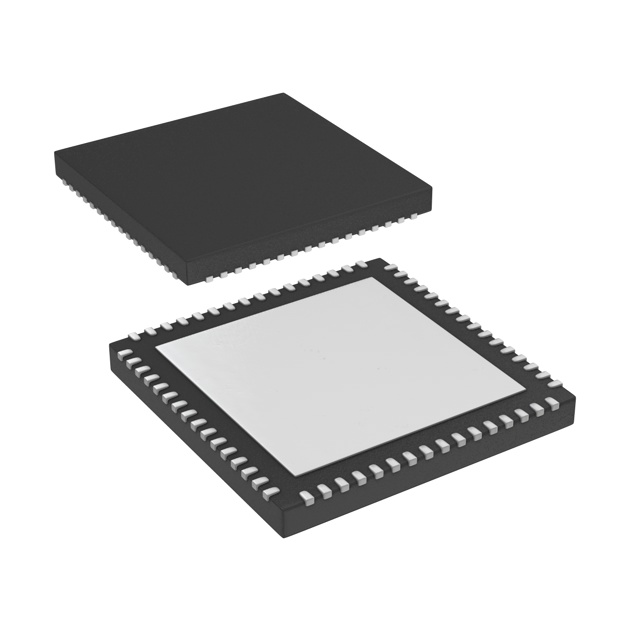
KSZ9131MNXC-TR
ActiveGIGABIT ETHERNET TRANSCEIVER WITH GMII/MII SUPPORT 64 VQFN 8X8X0.9MM T/R ROHS COMPLIANT: YES
Deep-Dive with AI
Search across all available documentation for this part.
KSZ9131MNXC-TR
ActiveGIGABIT ETHERNET TRANSCEIVER WITH GMII/MII SUPPORT 64 VQFN 8X8X0.9MM T/R ROHS COMPLIANT: YES
Deep-Dive with AI
Technical Specifications
Parameters and characteristics for this part
| Specification | KSZ9131MNXC-TR |
|---|---|
| Data Rate | 100Mbps, 1Gbps, 10Mbps |
| Duplex | Half, Full |
| Mounting Type | Surface Mount |
| Number of Drivers/Receivers [custom] | 8 |
| Number of Drivers/Receivers [custom] | 8 |
| Operating Temperature [Max] | 70 °C |
| Operating Temperature [Min] | 0 °C |
| Package / Case | 64-VFQFN Exposed Pad |
| Protocol | Gigabit Ethernet |
| Receiver Hysteresis | 500 mV |
| Supplier Device Package | 64-QFN (8x8) |
| Type | Transceiver |
| Voltage - Supply [Max] | 3.63 V, 2.75 V, 1.89 V |
| Voltage - Supply [Min] | 2.375 V, 3.135 V, 1.71 V |
Pricing
Prices provided here are for design reference only. For realtime values and availability, please visit the distributors directly
| Distributor | Package | Quantity | $ | |
|---|---|---|---|---|
| Digikey | Cut Tape (CT) | 1 | $ 3.85 | |
| 25 | $ 3.21 | |||
| 100 | $ 3.11 | |||
| Digi-Reel® | 1 | $ 3.85 | ||
| 25 | $ 3.21 | |||
| 100 | $ 3.11 | |||
| Tape & Reel (TR) | 1000 | $ 3.11 | ||
| Microchip Direct | T/R | 1 | $ 3.85 | |
| 25 | $ 3.21 | |||
| 100 | $ 2.90 | |||
| 1000 | $ 2.70 | |||
| 5000 | $ 2.55 | |||
| Newark | Each (Supplied on Full Reel) | 100 | $ 2.90 | |
Description
General part information
KSZ9131 Series
The KSZ9131 is a completely integrated triple-speed (10Base-T/100Base-TX/1000Base-T) Ethernet physical-layer transceiver for transmission and reception of data on standard CAT-5, CAT-5e and CAT6 unshielded twisted pair (UTP) cable.
The KSZ9131RNX provides Reduced Gigabit Media Independent Interface RGMII and the KSZ9131MNX offers the industry-standard GMII/MII (Gigabit Media Independent Interface/Media Independent Interface) for connection to GMII/MII MACs in Gigabit Ethernet processors and switches for data transfer at 1000Mbps or 10/100Mbps.
The KSZ9131 reduces board cost and simplifies board layout by using on-chip termination resistors for the four differential pairs and by integrating an LDO controller to drive a low-cost MOSFET to supply the 1.2V core.
Documents
Technical documentation and resources