


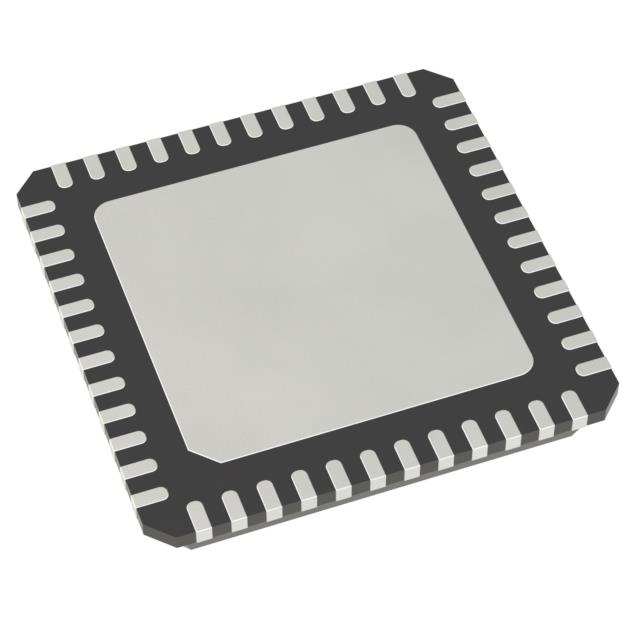
AD9254BCPZRL7-150
Active14-BIT, 150 MSPS, 1.8 V ANALOG-TO-DIGITAL CONVERTER
Deep-Dive with AI
Search across all available documentation for this part.
AD9254BCPZRL7-150
Active14-BIT, 150 MSPS, 1.8 V ANALOG-TO-DIGITAL CONVERTER
Technical Specifications
Parameters and characteristics for this part
| Specification | AD9254BCPZRL7-150 |
|---|---|
| Architecture | Pipelined |
| Configuration | S/H-ADC |
| Data Interface | Parallel |
| Input Type | Differential |
| Mounting Type | Surface Mount |
| Number of A/D Converters | 1 |
| Number of Bits | 14 |
| Number of Inputs | 1 |
| Operating Temperature [Max] | 85 °C |
| Operating Temperature [Min] | -40 °C |
| Package / Case | 48-VFQFN Exposed Pad, CSP |
| Ratio - S/H:ADC | 1:1 |
| Reference Type | Internal |
| Sampling Rate (Per Second) | 150 M |
| Supplier Device Package | 48-LFCSP-VQ (7x7) |
| Voltage - Supply, Analog [Max] | 1.9 V |
| Voltage - Supply, Analog [Min] | 1.7 V |
| Voltage - Supply, Digital [Max] | 3.6 V |
| Voltage - Supply, Digital [Min] | 1.7 V |
Pricing
Prices provided here are for design reference only. For realtime values and availability, please visit the distributors directly
| Distributor | Package | Quantity | $ | |
|---|---|---|---|---|
| Digikey | Tape & Reel (TR) | 750 | $ 99.13 | |
Description
General part information
AD9254 Series
The AD9254 is a monolithic, single 1.8 V supply, 14-bit, 150 MSPS analog-to-digital converter (ADC), featuring a high performance sample-and-hold amplifier (SHA) and on-chip voltage reference. The product uses a multistage differential pipeline architecture with output error correction logic to provide 14-bit accuracy at 150 MSPS data rates and guarantees no missing codes over the full operating temperature range.The wide bandwidth, truly differential SHA allows a variety of user-selectable input ranges and offsets, including single-ended applications. It is suitable for multiplexed systems that switch full-scale voltage levels in successive channels and for sampling single-channel inputs at frequencies well beyond the Nyquist rate. Combined with power and cost savings over previously available ADCs, the AD9254 is suitable for applications in communications, imaging, and medical ultrasound.A differential clock input controls all internal conversion cycles. A duty cycle stabilizer (DCS) compensates for wide variations in the clock duty cycle while maintaining excellent overall ADC performance.The digital output data is presented in offset binary, Gray code, or twos complement formats. A data output clock (DCO) is provided to ensure proper latch timing with receiving logic.The AD9254 is available in a 48-lead LFCSP_VQ and is specified over the industrial temperature range (−40°C to +85°C).ul.noindent { margin-top:0px; margin-right:0px; margin-bottom:0px; margin-left:15px; padding-top:0px; padding-right:0px; padding-bottom:10px; padding-left:0px;} li.noindent { padding-top:0px; padding-right:0px; padding-bottom:5px; padding-left:0px; margin-top:0px; margin-right:0px; margin-bottom:0px; margin-left:0px;} ol class="noindent"> { margin-top:0px; margin-right:0px; margin-bottom:0px; margin-left:25px; padding-top:0px; padding-right:0px; padding-bottom:10px; padding-left:0px;} li class="noindent">{ padding-top:0px; padding-right:0px; padding-bottom:5px; padding-left:0px; margin-top:0px; margin-right:0px; margin-bottom:0px; margin-left:0px;}Product HighlightsThe AD9254 operates from a single 1.8 V power supply and features a separate digital output driver supply to accommodate 1.8 V to 3.3 V logic families.The patented SHA input maintains excellent performance for input frequencies up to 225 MHz.The clock DCS maintains overall ADC performance over a wide range of clock pulse widths.A standard serial port interface supports various product features and functions, such as data formatting (offset binary, twos complement, or Gray coding), enabling the clock DCS, power-down, and voltage reference mode.The AD9254 is pin-compatible with the AD9233, allowing a simple migration from 12 bits to 14 bits.APPLICATIONSUltrasound equipmentIF sampling in communications receiversCDMA2000, WCDMA, TD-SCDMA, and WiMaxBattery-powered instrumentsHand-held scopemetersLow cost digital oscilloscopesMacro, micro, and pico cell infrastructure
Documents
Technical documentation and resources