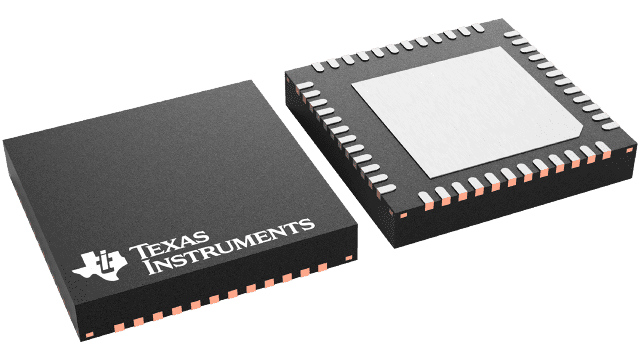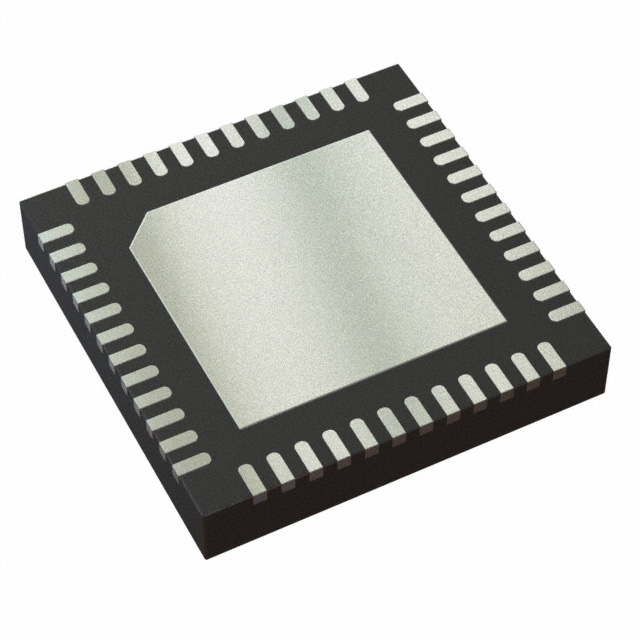
TPS65910A1RSLR
ActiveINTEGRATED POWER MANAGEMENT IC (PMIC) W/ 4 DC/DCS, 8 LDOS AND RTC IN 6X6MM QFN FAMILY
Deep-Dive with AI
Search across all available documentation for this part.
TPS65910A1RSLR
ActiveINTEGRATED POWER MANAGEMENT IC (PMIC) W/ 4 DC/DCS, 8 LDOS AND RTC IN 6X6MM QFN FAMILY
Deep-Dive with AI
Technical Specifications
Parameters and characteristics for this part
| Specification | TPS65910A1RSLR |
|---|---|
| Applications | Handheld/Mobile Devices, OMAP™ |
| Mounting Type | Surface Mount |
| Operating Temperature [Max] | 85 °C |
| Operating Temperature [Min] | -40 °C |
| Package / Case | 48-VFQFN Exposed Pad |
| Supplier Device Package | 48-VQFN (6x6) |
| Voltage - Supply [Max] | 5.5 V |
| Voltage - Supply [Min] | 1.7 V |
Pricing
Prices provided here are for design reference only. For realtime values and availability, please visit the distributors directly
| Distributor | Package | Quantity | $ | |
|---|---|---|---|---|
| Digikey | Cut Tape (CT) | 1 | $ 3.45 | |
| 10 | $ 3.09 | |||
| 25 | $ 2.93 | |||
| 100 | $ 2.54 | |||
| 250 | $ 2.40 | |||
| 500 | $ 2.29 | |||
| Digi-Reel® | 1 | $ 3.45 | ||
| 10 | $ 3.09 | |||
| 25 | $ 2.93 | |||
| 100 | $ 2.54 | |||
| 250 | $ 2.40 | |||
| 500 | $ 2.29 | |||
| Tape & Reel (TR) | 2500 | $ 2.29 | ||
| Texas Instruments | LARGE T&R | 1 | $ 3.23 | |
| 100 | $ 2.83 | |||
| 250 | $ 1.99 | |||
| 1000 | $ 1.60 | |||
Description
General part information
TPS659102 Series
The TPS65910 device is an integrated power-management IC available in 48-QFN package and dedicated to applications powered by one Li-Ion or Li-Ion polymer battery cell or 3-series Ni-MH cells, or by a 5-V input; it requires multiple power rails. The device provides three step-down converters, one step-up converter, and eight LDOs and is designed to support the specific power requirements of OMAP-based applications.
Two of the step-down converters provide power for dual processor cores and are controllable by a dedicated class-3 SmartReflex interface for optimum power savings. The third converter provides power for the I/Os and memory in the system.
The device includes eight general-purpose LDOs providing a wide range of voltage and current capabilities. The LDOs are fully controllable by the I2C interface. The use of the LDOs is flexible; they are intended to be used as follows: Two LDOs are designated to power the PLL and video DAC supply rails on the OMAP-based processors, four general-purpose auxiliary LDOs are available to provide power to other devices in the system, and two LDOs are provided to power DDR memory supplies in applications requiring these memories.
Documents
Technical documentation and resources