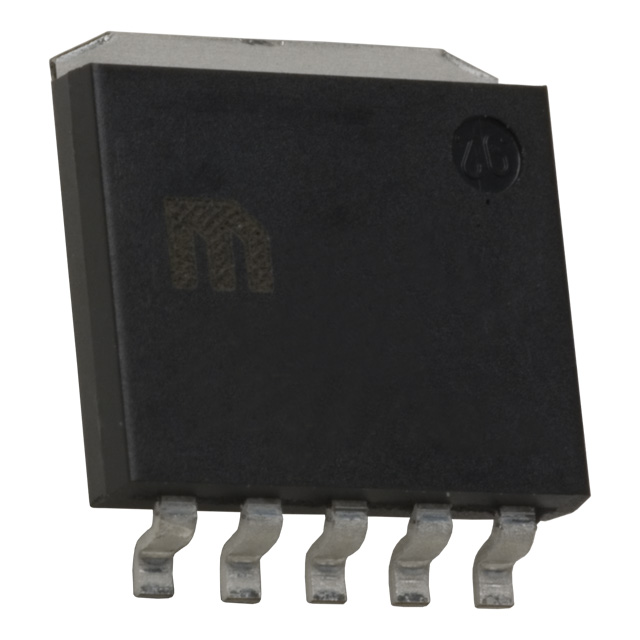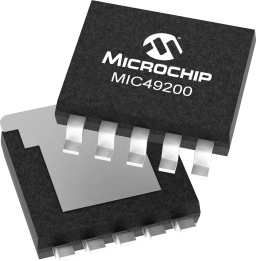
MIC49200-1.8WR
Active2A LDO, LOW VIN, LOW VOUT, FAST TRANSIENT RESPONSE, UCAP STABLE 5 SPAK - TUBE ROHS COMPLIANT: YES
Deep-Dive with AI
Search across all available documentation for this part.
MIC49200-1.8WR
Active2A LDO, LOW VIN, LOW VOUT, FAST TRANSIENT RESPONSE, UCAP STABLE 5 SPAK - TUBE ROHS COMPLIANT: YES
Deep-Dive with AI
Technical Specifications
Parameters and characteristics for this part
| Specification | MIC49200-1.8WR |
|---|---|
| Control Features | Enable |
| Current - Output | 2 A |
| Mounting Type | Surface Mount |
| Number of Regulators | 1 |
| Operating Temperature [Max] | 125 °C |
| Operating Temperature [Min] | -40 °C |
| Output Configuration | Positive |
| Output Type | 1.81 mOhm |
| Package / Case | SPAK-5 (5 Leads + Tab) |
| Protection Features | Over Current, Over Temperature |
| Supplier Device Package | 5-SPAK, S-PAK-5 |
| Voltage - Input (Max) [Max] | 6.5 V |
| Voltage - Output (Min/Fixed) | 1.8 V |
| Voltage Dropout (Max) [Max] | 0.625 V |
Pricing
Prices provided here are for design reference only. For realtime values and availability, please visit the distributors directly
| Distributor | Package | Quantity | $ | |
|---|---|---|---|---|
| Digikey | Bulk | 83 | $ 3.63 | |
| Tube | 144 | $ 3.14 | ||
| Microchip Direct | TUBE | 1 | $ 3.93 | |
| 25 | $ 3.27 | |||
| 100 | $ 2.96 | |||
| 1000 | $ 2.87 | |||
| 5000 | $ 2.85 | |||
| Newark | Each | 100 | $ 3.05 | |
Description
General part information
MIC49200 Series
The MIC49200 is a high-bandwidth, low-dropout, 2A voltage regulator ideal for powering core voltages of low-power microprocessors. The MIC49200 implements a dual supply confi guration allowing for very low output impedance and very fast transient response .
The MIC49200 requires a bias input supply and a main input supply, allowing for ultra-low input voltages on the main supply rail. The input supply operates from 1.4V to 6.5V and the bias supply requires between 3V and 6.5V for proper operation. The MIC49200 offers fi xed output voltages from 0.9V to 1.8V and adjustable output voltages down to 0.9V.
The MIC49200 requires a minimum of output capacitance for stability, working optimally with small ceramic capacitors.
Documents
Technical documentation and resources