AD8450ASTZ-RL
ActivePRECISION ANALOG FRONT END AND CONTROLLER FOR BATTERY TEST/FORMATION SYSTEMS
Deep-Dive with AI
Search across all available documentation for this part.
AD8450ASTZ-RL
ActivePRECISION ANALOG FRONT END AND CONTROLLER FOR BATTERY TEST/FORMATION SYSTEMS
Deep-Dive with AI
Technical Specifications
Parameters and characteristics for this part
| Specification | AD8450ASTZ-RL |
|---|---|
| Mounting Type | Surface Mount |
| Number of Channels [custom] | 2 |
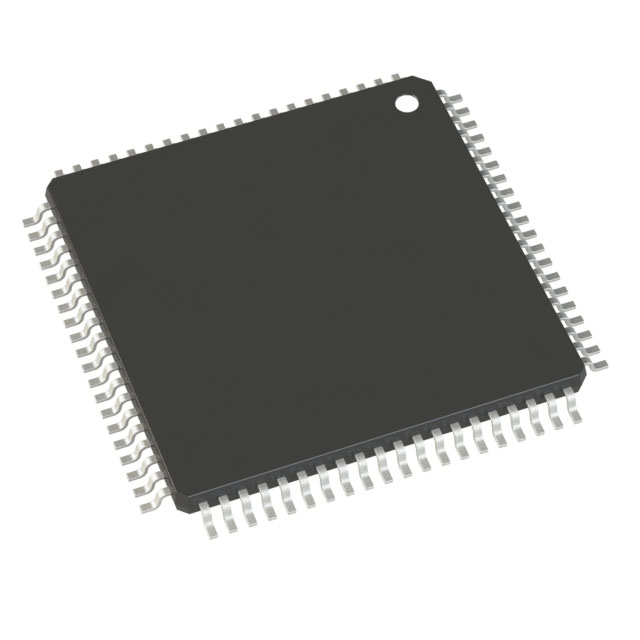
| Package / Case | 80-LQFP |
| Supplier Device Package | 80-LQFP |
| Supplier Device Package [x] | 14 |
| Supplier Device Package [y] | 14 |
| Voltage - Supply, Analog [Max] | 36 V |
| Voltage - Supply, Analog [Min] | 5 V |
| Voltage - Supply, Digital [Max] | 5 V |
| Voltage - Supply, Digital [Min] | 3 V |
Pricing
Prices provided here are for design reference only. For realtime values and availability, please visit the distributors directly
| Distributor | Package | Quantity | $ | |
|---|---|---|---|---|
| Digikey | Tape & Reel (TR) | 1000 | $ 11.25 | |
Description
General part information
AD8450 Series
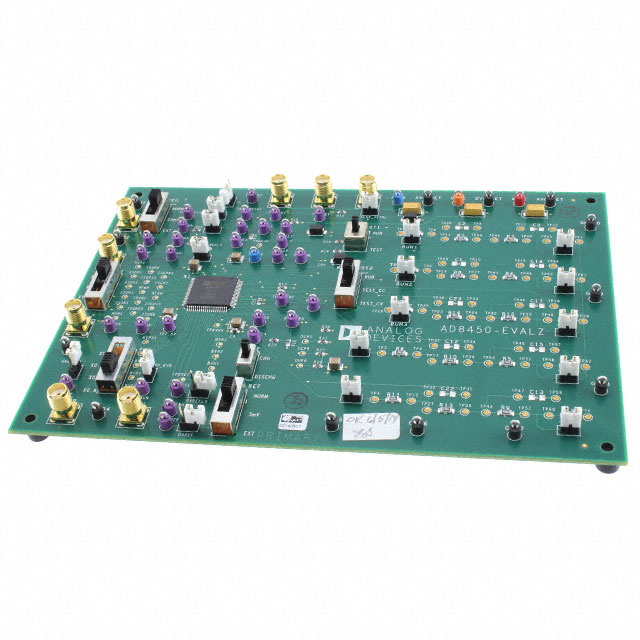
The AD8450 is a precision analog front end for testing and monitoring battery cells. Referring to figure one, a precision programmable gain instrumentation amplifier (PGIA) measures the battery’s charge/discharge current and a programmable gain difference amplifier (PGDA) measures the battery’s voltage. Internal laser trimmed resistor networks set the gains for the PGIA and the PGDA, optimizing the AD8450’s performance over the rated temperature range. PGIA gains are 26×, 66×, 133×, and 200×. PGDA gains are 0.2×, 0.27×,0.4×, and 0.8×.Voltages at the ISET and VSET inputs set the desired constant voltage (CV) and constant current (CC) values. CC to CV switching is automatic and transparent to the system.A TTL level logic input, MODE, selects between charge and discharge modes (high for charge, low for discharge). An analog output, VCTRL, interfaces directly with ADI’sADP1972&ADP1974PWM controllers.The AD8450 includes resistor programmable overvoltage and overcurrent detection and current sharing circuitry. Current sharing is used to balance charge among multiple batteries. The AD8450 simplifies designs by providing excellent accuracy, performance over temperature, flexibility with functionality, and overall reliability in a space-saving package. The AD8450 is available in an 80 lead 14 mm ×14 mm × 1 mm LQFP package and is rated at −40 °C to +85 °C operating temperature.APPLICATIONSBattery cell testing & formationBattery module testing
Documents
Technical documentation and resources