TLC251BCP
ObsoleteSINGLE, 16-V, 1.7-MHZ, 2-MV OFFSET VOLTAGE, IN TO V- OP AMP
Deep-Dive with AI
Search across all available documentation for this part.
TLC251BCP
ObsoleteSINGLE, 16-V, 1.7-MHZ, 2-MV OFFSET VOLTAGE, IN TO V- OP AMP
Deep-Dive with AI
Technical Specifications
Parameters and characteristics for this part
| Specification | TLC251BCP |
|---|---|
| Amplifier Type | General Purpose |
| Current - Input Bias | 0.7 pA |
| Current - Supply | 950 µA |
| Gain Bandwidth Product | 2.2 MHz |
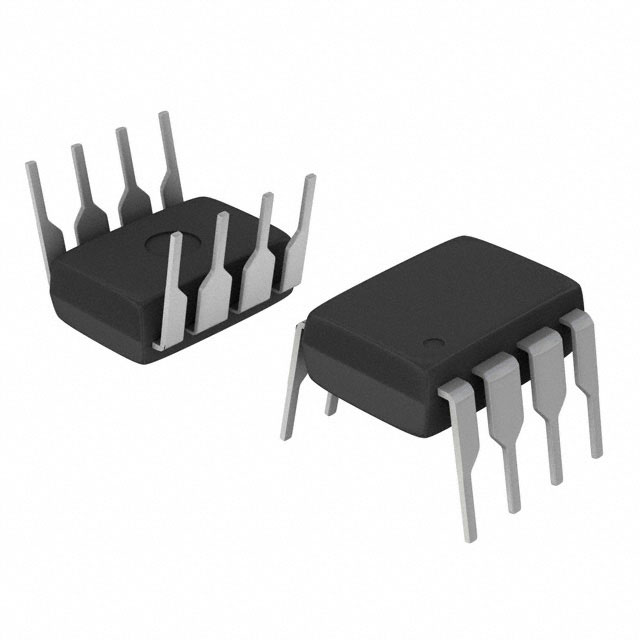
| Mounting Type | Through Hole |
| Number of Circuits | 1 |
| Operating Temperature [Max] | 70 °C |
| Operating Temperature [Min] | 0 °C |
| Package / Case | 0.3 in |
| Package / Case | 8-DIP |
| Package / Case | 7.62 mm |
| Slew Rate | 5.3 V/µs |
| Supplier Device Package | 8-PDIP |
| Voltage - Input Offset | 390 µV |
| Voltage - Supply Span (Max) [Max] | 16 V |
| Voltage - Supply Span (Min) [Min] | 1.4 V |
Pricing
Prices provided here are for design reference only. For realtime values and availability, please visit the distributors directly
| Distributor | Package | Quantity | $ | |
|---|---|---|---|---|
| Texas Instruments | TUBE | 1 | $ 4.62 | |
| 100 | $ 4.05 | |||
| 250 | $ 2.84 | |||
| 1000 | $ 2.29 | |||
Description
General part information
TLC251B Series
The TLC251C, TLC251AC, and TLC251BC are low-cost, low-power programmable operational amplifiers designed to operate with single or dual supplies. Unlike traditional metal-gate CMOS operational amplifiers, these devices utilize Texas Instruments silicon-gate LinCMOSTMprocess, giving them stable input offset voltages without sacrificing the advantages of metal-gate CMOS.
This series of parts is available in selected grades of input offset voltage and can be nulled with one external potentiometer. Because the input common-mode range extends to the negative rail and the power consumption is extremely low, this family is ideally suited for battery-powered or energy-conserving applications. A bias-select pin can be used to program one of three ac performance and power-dissipation levels to suit the application. The series features operation down to a 1.4-V supply and is stable at unity gain.
These devices have internal electrostatic-discharge (ESD) protection circuits that prevent catastrophic failures at voltages up to 2000 V as tested under MIL-STD-883C, Method 3015.1. However, care should be exercised in handling these devices as exposure to ESD may result in a degradation of the device parametric performance.
Documents
Technical documentation and resources