ADUCRF101BCPZ128R7
ActivePRECISION ANALOG MICROCONTROLLER ARM CORTEX M3 WITH RF TRANSCEIVER
Deep-Dive with AI
Search across all available documentation for this part.
ADUCRF101BCPZ128R7
ActivePRECISION ANALOG MICROCONTROLLER ARM CORTEX M3 WITH RF TRANSCEIVER
Deep-Dive with AI
Technical Specifications
Parameters and characteristics for this part
| Specification | ADUCRF101BCPZ128R7 |
|---|---|
| Current - Receiving | 12.8 mA |
| Current - Transmitting [Max] | 32 mA |
| Current - Transmitting [Min] | 9 mA |
| Data Rate (Max) | 300 kbps |
| Frequency [Max] | 928 MHz, 464 MHz |
| Frequency [Min] | 862 MHz, 431 MHz |
| GPIO | 28 |
| Memory Size | 128 kB, 16 kB |
| Modulation | GFSK, 2FSK |
| Mounting Type | Surface Mount |
| Operating Temperature [Max] | 85 °C |
| Operating Temperature [Min] | -40 °C |
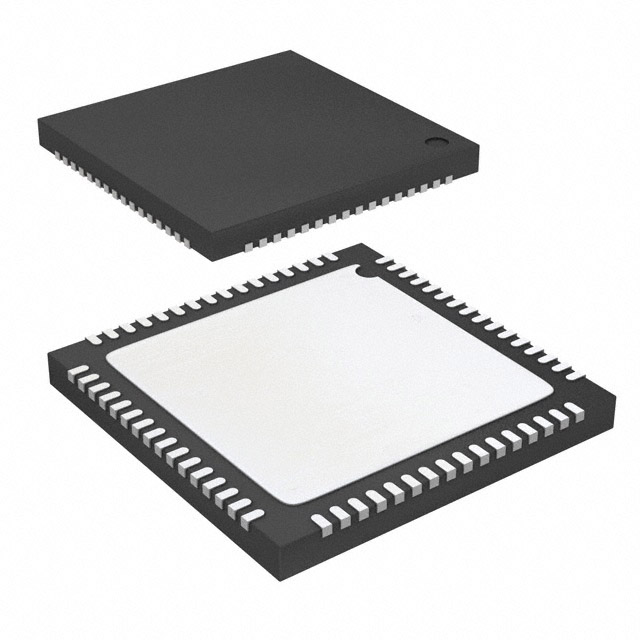
| Package / Case | 64-VFQFN Exposed Pad, CSP |
| Power - Output | 13 dBm |
| RF Family/Standard | General ISM < 1GHz |
| Sensitivity | -116 dBm |
| Serial Interfaces | UART, I2C, SPI |
| Supplier Device Package | 64-LFCSP-VQ (9x9) |
| Type | TxRx + MCU |
| Voltage - Supply [Max] | 3.6 V |
| Voltage - Supply [Min] | 2.2 V |
Pricing
Prices provided here are for design reference only. For realtime values and availability, please visit the distributors directly
| Distributor | Package | Quantity | $ | |
|---|---|---|---|---|
| Digikey | Tape & Reel (TR) | 750 | $ 7.84 | |
Description
General part information
ADUCRF101 Series
The ADuCRF101 is a fully integrated, data acquisition solution that is designed for low power, wireless applications. It features a 12-bit analog-to-digital converter (ADC), a low power ARM Cortex™-M3 processor, a 862 MHz to 928 MHz and 431 MHz to 464 MHz RF transceiver, and Flash®/EE memory. The ADuCRF101 is packaged in a 9 mm × 9 mm LFCSP.The data acquisition section consists of a 12-bit SAR ADC. The six inputs can be configured in single-ended or differential mode. When configured in single-ended mode, they can be used for ratiometric measurements on sensors that are powered, when required, from the internal low dropout regulator (LDO). An internal battery monitor channel and an on-chip temperature sensor are also available.This wireless data acquisition system is designed to operate in battery-powered applications where low power is critical. The device can be configured in normal operating mode or different low power modes under direct program control. In flexi mode, any peripheral can wake up the device and operate it. In hibernate mode, the internal wake-up timer remains active. In shutdown mode, only an external interrupt can wake up the device.The ADuCRF101 integrates a low power ARM Cortex-M3 processor. It is a 32-bit RISC machine, offering up to 1.25 DMIPS peak performance. The ARM Cortex-M3 processor also has a flexible 14-channel direct memory access (DMA) controller that supports communication peripherals, serial peripheral interface (SPI), UART, and I2C. Also provided on chip are 128 kB of nonvolatile Flash/EE memory and 16 kB of SRAM.A 16 MHz on-chip oscillator generates the system clock. This clock can be internally divided for the processor to operate at a lower frequency, thus saving power. A low power, internal 32 kHz oscillator is available and can be used to clock the four timers, as follows: two general-purpose timers, a wake-up timer, and a system watchdog timer.A range of communication peripherals can be configured, as required, in a specific application. These peripherals include UART, I2C, SPI, GPIO ports, PWM, and RF transceivers.The RF transceiver communicates in the 862 MHz to 928 MHz and 431 MHz to 464 MHz frequency bands using multiple configurations.On-chip factory firmware supports in-circuit serial download via the UART, and nonintrusive emulation and program download are also supported via the serial wire interface. These features are incorporated into a low cost development system supporting this precision analog microcontroller family.The ADuCRF101 operates from 2.2 V to 3.6 V and is specified over an industrial temperature range of −40°C to +85°C. It is available in a 64-lead LFCSP packageApplicationsBattery powered wireless sensorMedical telemetry systemsIndustrial and home automationAsset trackingSecurity systems (access systems)Health and fitness applications
Documents
Technical documentation and resources