Deep-Dive with AI
Search across all available documentation for this part.
Deep-Dive with AI
Technical Specifications
Parameters and characteristics for this part
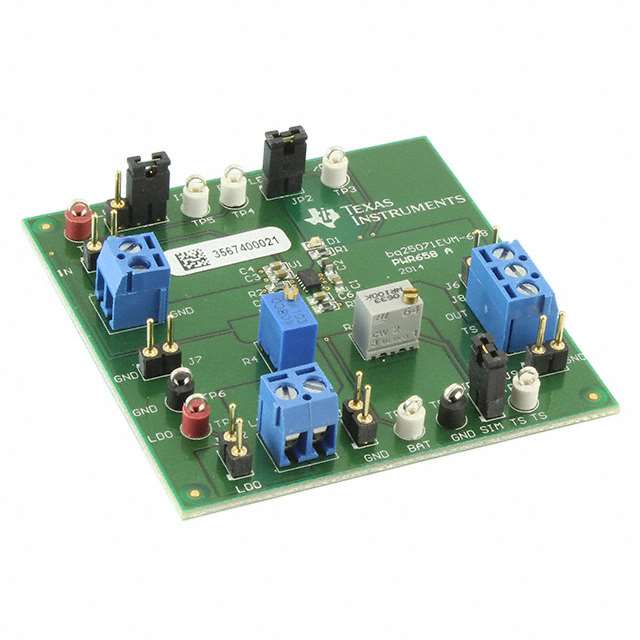
| Specification | BQ25071EVM-658 |
|---|---|
| Function | Battery Charger |
| Secondary Attributes | On-Board LEDs |
| Supplied Contents | Board(s) |
| Type | Power Management |
| Utilized IC / Part | BQ25071 |
Pricing
Prices provided here are for design reference only. For realtime values and availability, please visit the distributors directly
| Distributor | Package | Quantity | $ | |
|---|---|---|---|---|
| Digikey | Box | 1 | $ 118.80 | |
Description
General part information
BQ25071-Q1 Series
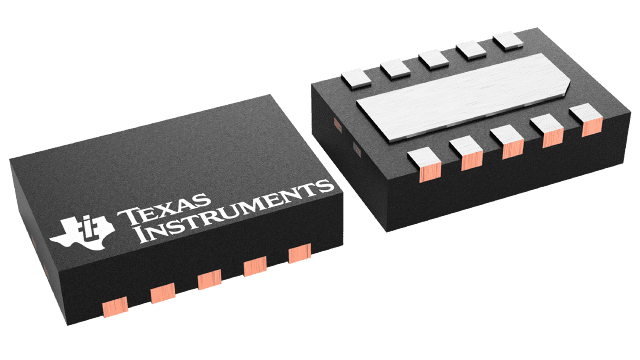
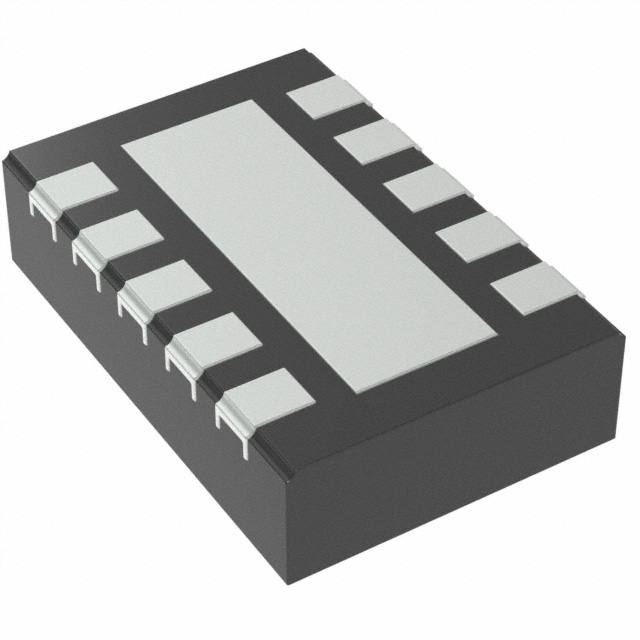
The bq25071-Q1 is a highly integrated, linear, LiFePO4battery charger targeted at space-limited automotive applications. It accepts power from either a USB port or AC adapter and charges a single-cell LiFePO4battery with up to 1 A of charge current. The 30-V input rating supports low-cost unregulated adapters.
The bq25071-Q1 has a single power output that simultaneously charges the battery and powers the system. The input current is programmable from 100 mA up to 1 A using the ISET input or configurable for USB500. There is also a 4.9 V ±10% 50 mA LDO integrated into the IC for supplying low power external circuitry.
The LiFePO4charging algorithm removes the current taper typically seen as part of the constant voltage mode control used in Li-Ion battery charge cycles which reduces charge time significantly. Instead, the battery is fast charged to the overcharge voltage and then allowed to relax to a lower float charge voltage threshold. The charger integrates the power stage with the charge current and voltage sense to achieve a high level of accuracy in the current and voltage regulation loops. An internal control loop monitors the IC junction temperature through the charge cycle and reduces the charge current if an internal temperature threshold is exceeded.
Documents
Technical documentation and resources