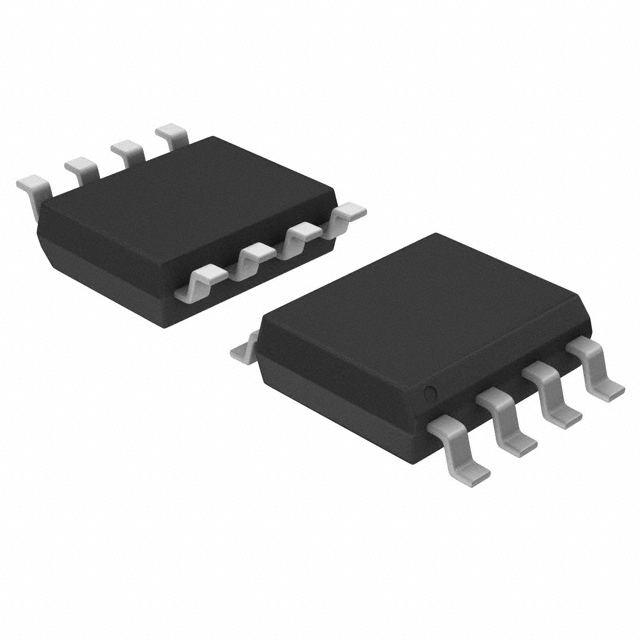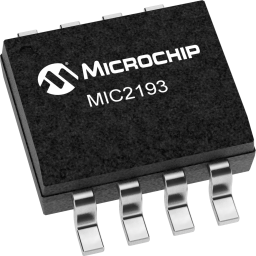
Deep-Dive with AI
Search across all available documentation for this part.
Deep-Dive with AI
Technical Specifications
Parameters and characteristics for this part
| Specification | MIC2193BM |
|---|---|
| Clock Sync | False |
| Duty Cycle (Max) [Max] | 100 % |
| Frequency - Switching | 400 kHz |
| Function | Step-Down |
| Mounting Type | Surface Mount |
| Number of Outputs | 1 |
| Operating Temperature [Max] | 125 ¯C |
| Operating Temperature [Min] | -40 °C |
| Output Configuration | Positive |
| Output Phases | 1 |
| Output Type | Transistor Driver |
| Package / Case | 8-SOIC |
| Package / Case [x] | 0.154 in |
| Package / Case [y] | 3.9 mm |
| Supplier Device Package | 8-SOIC |
| Synchronous Rectifier | True |
| Topology | Buck |
| Voltage - Supply (Vcc/Vdd) [Max] | 14 V |
| Voltage - Supply (Vcc/Vdd) [Min] | 2.9 V |
Pricing
Prices provided here are for design reference only. For realtime values and availability, please visit the distributors directly
| Distributor | Package | Quantity | $ | |
|---|---|---|---|---|
| Digikey | Bulk | 190 | $ 1.58 | |
Description
General part information
MIC2193 Series
MIC2193 is a high efficiency, PWM synchronous buck control IC housed in the SO-8 package. Its 2.9V to 14V input voltage range allows it to efficiently step down voltages in 3.3V, 5V, and 12V systems as well as 1- or 2-cell Li-Ion battery powered applications.
The MIC2193 solution saves valuable board space. The device is housed in the space-saving SO-8 package, whose low pin-count minimizes external components. Its 400kHz PWM operation allows a small inductor and small output capacitors to be used. The MIC2193 can implement all-ceramic capacitor solutions.
The MIC2193 drives a high-side P-Channel MOSFET, eliminating the need for high-side boot-strap circuitry. This feature allows the MIC2193 to achieve maximum duty cycles of 100%, which can be useful in low headroom applications. A low output driver impedance of 4ω allows the MIC2193 to drive large external MOSFETs to generate a wide range of output currents.
Documents
Technical documentation and resources
No documents available