


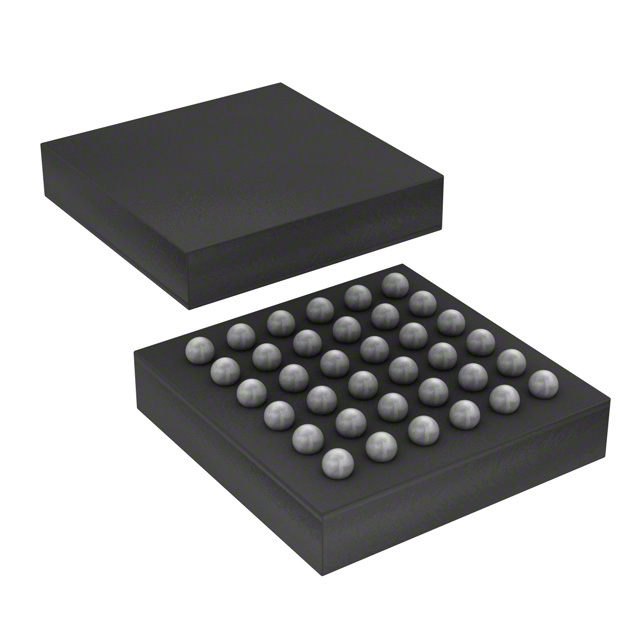
TUSB1211A1ZRQ
ObsoleteHIGH SPEED 480 MBPS USB 2.0 OTG TRANSCEIVER WITH BC 1.2 SUPPORT
Deep-Dive with AI
Search across all available documentation for this part.
TUSB1211A1ZRQ
ObsoleteHIGH SPEED 480 MBPS USB 2.0 OTG TRANSCEIVER WITH BC 1.2 SUPPORT
Deep-Dive with AI
Technical Specifications
Parameters and characteristics for this part
| Specification | TUSB1211A1ZRQ |
|---|---|
| Mounting Type | Surface Mount |
| Number of Drivers/Receivers [custom] | 8 |
| Number of Drivers/Receivers [custom] | 8 |
| Operating Temperature [Max] | 85 °C |
| Operating Temperature [Min] | -40 °C |
| Package / Case | 36-VFBGA |
| Protocol | USB 2.0 |
| Supplier Device Package | 36-BGA Microstar Junior (3.5x3.5) |
| Type | Transceiver |
| Voltage - Supply [Max] | 4.8 V |
| Voltage - Supply [Min] | 2.7 V |
Pricing
Prices provided here are for design reference only. For realtime values and availability, please visit the distributors directly
| Distributor | Package | Quantity | $ | |
|---|---|---|---|---|
| Texas Instruments | JEDEC TRAY (10+1) | 1 | $ 2.42 | |
| 100 | $ 2.12 | |||
| 250 | $ 1.49 | |||
| 1000 | $ 1.20 | |||
Description
General part information
TUSB1211 Series
The TUSB1211 device is a USB2.0 transceiver chip, designed to interface with a USB controller through a ULPI interface. The device supports all USB2.0 data rates (high-speed 480 Mbps, full-speed 12 Mbps and low-speed 1.5 Mbps), and is compliant to both Host and Peripheral modes. The TUSB1211 also supports a UART mode and legacy ULPI serial modes.
The TUSB1211 device supports the OTG (Ver1.3) optional addendum to the USB 2.0 Specification, including Host Negotiation Protocol (HNP) and Session Request Protocol (SRP). TUSB1211 also supports USB Battery Charging Specification Ver1.1 integrating a charger detection module for sensing and control on DP/DM lines, and ACA (Accessory Charger Adapter) detection and control on ID line.
The DP/DM external component compensation in the transmitter compensates for variations in the series impendence to match with the data line impedance and the receiver input impedance, to limit data reflections and, thereby, improve eye diagrams.
Documents
Technical documentation and resources