NUCLEO-F756ZG
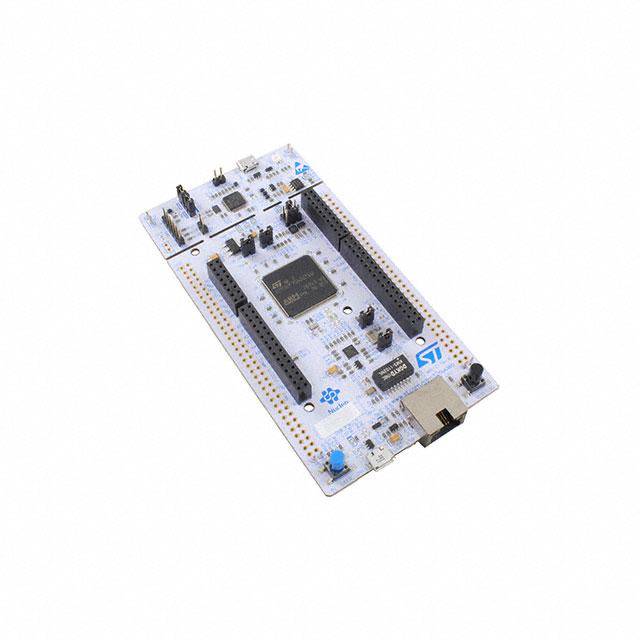
ActiveSTM32 NUCLEO-144 DEVELOPMENT BOARD WITH STM32F756ZG MCU, SUPPORTS ARDUINO, ST ZIO AND MORPHO CONNECTIVITY
NUCLEO-F756ZG
ActiveSTM32 NUCLEO-144 DEVELOPMENT BOARD WITH STM32F756ZG MCU, SUPPORTS ARDUINO, ST ZIO AND MORPHO CONNECTIVITY
Technical Specifications
Parameters and characteristics for this part
| Specification | NUCLEO-F756ZG |
|---|---|
| Board Type | Evaluation Platform |
| Contents | Board(s) |
| Core Processor | ARM® Cortex®-M7 |
| Interconnect System | ST Zio, Arduino R3 Shield, ST Morpho |
| Mounting Type | Fixed |
| Platform | Nucleo-144 |
| Suggested Programming Environment | Keil MDK, STM32Cube, IAR EW |
| Type | MCU 32-Bit |
| Utilized IC / Part | STM32F756 |
Pricing
Prices provided here are for design reference only. For realtime values and availability, please visit the distributors directly
Description
General part information
STM32F756 Series
The STM32F756xx devices are based on the high-performance ARM®Cortex®-M7 32-bit RISC core operating at up to 216 MHz frequency. The Cortex®-M7 core features a single floating point unit (SFPU) precision which supports all ARM®single-precision data-processing instructions and data types. It also implements a full set of DSP instructions and a memory protection unit (MPU) which enhances the application security.
The STM32F756xx devices incorporate high-speed embedded memories with a Flash memory up to 1 Mbyte, 320 Kbytes of SRAM (including 64 Kbytes of Data TCM RAM for critical real-time data), 16 Kbytes of instruction TCM RAM (for critical real-time routines), 4 Kbytes of backup SRAM available in the lowest power modes, and an extensive range of enhanced I/Os and peripherals connected to two APB buses, two AHB buses, a 32-bit multi-AHB bus matrix and a multi layer AXI interconnect supporting internal and external memories access.
All the devices offer three 12-bit ADCs, two DACs, a low-power RTC, thirteen general-purpose 16-bit timers including two PWM timers for motor control and one low-power timer available in Stop mode, two general-purpose 32-bit timers, a true random number generator (RNG), and a cryptographic acceleration cell. They also feature standard and advanced communication interfaces.
Documents
Technical documentation and resources