Deep-Dive with AI
Search across all available documentation for this part.
Deep-Dive with AI
Technical Specifications
Parameters and characteristics for this part
| Specification | PCM1608Y/2K |
|---|---|
| Data Interface | I2S |
| Mounting Type | Surface Mount |
| Number of Channels | 8 |
| Operating Temperature [Max] | 85 °C |
| Operating Temperature [Min] | -25 °C |
| Package / Case | 48-LQFP |
| Resolution (Bits) | 24 b |
| Sampling Rate (Per Second) | 192k |
| Supplier Device Package | 48-LQFP (7x7) |
| Type | Audio, DAC |
| Voltage - Supply | 5 V |
| Voltage - Supply [Max] | 3.6 V |
| Voltage - Supply [Min] | 3 V |
| Voltage Supply Source | Analog and Digital |
Pricing
Prices provided here are for design reference only. For realtime values and availability, please visit the distributors directly
| Distributor | Package | Quantity | $ | |
|---|---|---|---|---|
| Digikey | Tape & Reel (TR) | 2000 | $ 6.58 | |
Description
General part information
PCM1608 Series
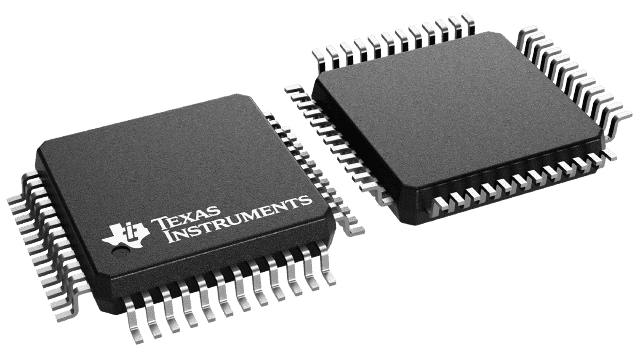
The PCM1608 is a CMOS, monolithic integrated circuit that features eight 24-bit audio digital-to-analog converters (DACs) and support circuitry in a small LQFP-48 package. The DACs use Texas Instruments' enhanced multilevel, delta-sigma architecture that employs fourth-order noise shaping and 8-level amplitude quantization to achieve excellent signal-to-noise performance and a high tolerance to clock jitter.
The PCM1608 accepts industry-standard audio data formats with 16- to 24-bit audio data. Sampling rates up to 200 kHz (channels 1, 2, 7, and 8) or 100 kHz (channels 3, 4, 5, and 6) are supported. A full set of user-programmable functions is accessible through a 4-wire serial control port that supports register write and read functions.
The PCM1608 is a CMOS, monolithic integrated circuit that features eight 24-bit audio digital-to-analog converters (DACs) and support circuitry in a small LQFP-48 package. The DACs use Texas Instruments' enhanced multilevel, delta-sigma architecture that employs fourth-order noise shaping and 8-level amplitude quantization to achieve excellent signal-to-noise performance and a high tolerance to clock jitter.
Documents
Technical documentation and resources
No documents available