Catalog
105dB SNR 8-Channel Audio DAC
Key Features
• 24-Bit ResolutionAnalog Performance:Dynamic Range:100 dB, Typical (PCM1608Y)105 dB, Typical (PCM1608KY)SNR:100 dB, Typical (PCM1608Y)105 dB, Typical (PCM1608KY)THD+N:0.003%, Typical (PCM1608Y)0.002%, Typical (PCM1608KY)Full-Scale Output: 3.1 Vp-p, Typical4×/8× Oversampling Interpolation Filter:Stop-Band Attenuation: -55 dBPass-Band Ripple: ±0.03 dBSampling Frequency:5 kHz to 200 kHz (Channels 1, 2, 7, and 8)5 kHz to 100 kHz (Channels 3, 4, 5, and 6)Accepts 16-, 18-, 20-, and 24-Bit Audio DataData Formats: Standard, I2S, and Left-JustifiedSystem Clock: 128 fS, 192 fS, 256 fS, 384 fS, 512 fS, or 768 fSUser-Programmable Functions:Digital Attenuation: 0 dB to -63 dB, 0.5 dB/StepSoft MuteZero Flags Can Be Used As General-Purpose Logic OutputDigital De-EmphasisDigital Filter Rolloff: Sharp or SlowDual-Supply Operation:5-V Analog3.3-V Digital5-V Tolerant Digital Logic InputsPackage: LQFP-48APPLICATIONSIntegrated A/V ReceiversDVD Movie and Audio PlayersHDTV ReceiversCar Audio SystemsDVD Add-On Cards for High-End PCsDigital Audio WorkstationsOther Multichannel Audio SystemsFilterPro is a trademark of Texas Instruments.System Two, Audio Precision are trademarks of Audio Precision, Inc.All trademarks are the property of their respective owners.24-Bit ResolutionAnalog Performance:Dynamic Range:100 dB, Typical (PCM1608Y)105 dB, Typical (PCM1608KY)SNR:100 dB, Typical (PCM1608Y)105 dB, Typical (PCM1608KY)THD+N:0.003%, Typical (PCM1608Y)0.002%, Typical (PCM1608KY)Full-Scale Output: 3.1 Vp-p, Typical4×/8× Oversampling Interpolation Filter:Stop-Band Attenuation: -55 dBPass-Band Ripple: ±0.03 dBSampling Frequency:5 kHz to 200 kHz (Channels 1, 2, 7, and 8)5 kHz to 100 kHz (Channels 3, 4, 5, and 6)Accepts 16-, 18-, 20-, and 24-Bit Audio DataData Formats: Standard, I2S, and Left-JustifiedSystem Clock: 128 fS, 192 fS, 256 fS, 384 fS, 512 fS, or 768 fSUser-Programmable Functions:Digital Attenuation: 0 dB to -63 dB, 0.5 dB/StepSoft MuteZero Flags Can Be Used As General-Purpose Logic OutputDigital De-EmphasisDigital Filter Rolloff: Sharp or SlowDual-Supply Operation:5-V Analog3.3-V Digital5-V Tolerant Digital Logic InputsPackage: LQFP-48APPLICATIONSIntegrated A/V ReceiversDVD Movie and Audio PlayersHDTV ReceiversCar Audio SystemsDVD Add-On Cards for High-End PCsDigital Audio WorkstationsOther Multichannel Audio SystemsFilterPro is a trademark of Texas Instruments.System Two, Audio Precision are trademarks of Audio Precision, Inc.All trademarks are the property of their respective owners.
Description
AI
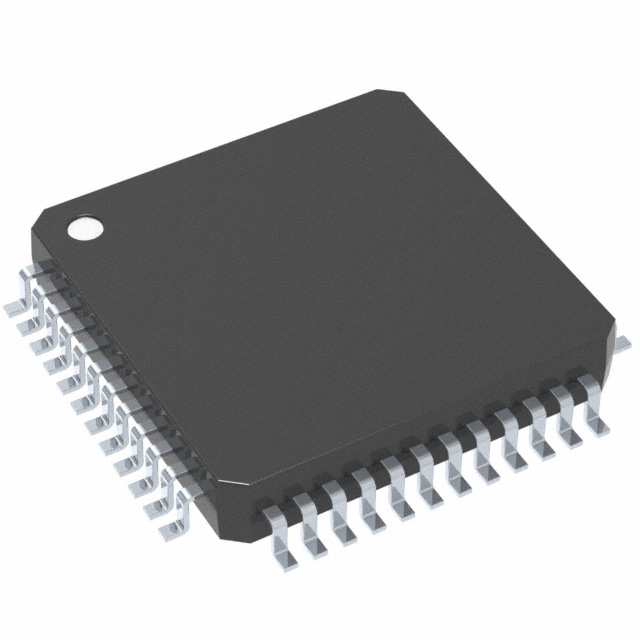
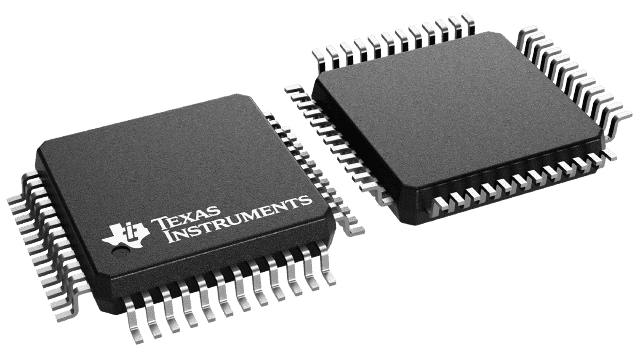
The PCM1608 is a CMOS, monolithic integrated circuit that features eight 24-bit audio digital-to-analog converters (DACs) and support circuitry in a small LQFP-48 package. The DACs use Texas Instruments' enhanced multilevel, delta-sigma architecture that employs fourth-order noise shaping and 8-level amplitude quantization to achieve excellent signal-to-noise performance and a high tolerance to clock jitter.
The PCM1608 accepts industry-standard audio data formats with 16- to 24-bit audio data. Sampling rates up to 200 kHz (channels 1, 2, 7, and 8) or 100 kHz (channels 3, 4, 5, and 6) are supported. A full set of user-programmable functions is accessible through a 4-wire serial control port that supports register write and read functions.
The PCM1608 is a CMOS, monolithic integrated circuit that features eight 24-bit audio digital-to-analog converters (DACs) and support circuitry in a small LQFP-48 package. The DACs use Texas Instruments' enhanced multilevel, delta-sigma architecture that employs fourth-order noise shaping and 8-level amplitude quantization to achieve excellent signal-to-noise performance and a high tolerance to clock jitter.
The PCM1608 accepts industry-standard audio data formats with 16- to 24-bit audio data. Sampling rates up to 200 kHz (channels 1, 2, 7, and 8) or 100 kHz (channels 3, 4, 5, and 6) are supported. A full set of user-programmable functions is accessible through a 4-wire serial control port that supports register write and read functions.