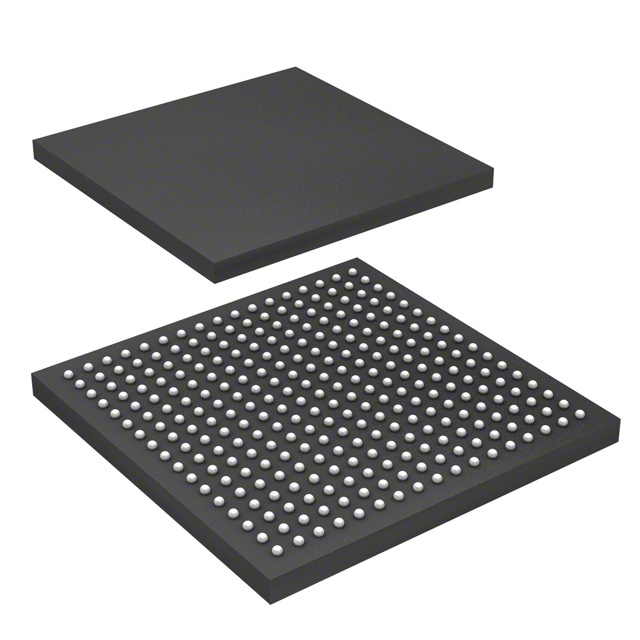
AFE58JD32LPZAV
Active32-CH ULTRASOUND AFE WITH 18.5-MW/CH POWER, DIGITAL DEMODULATOR, AND JESD204B AND LVDS INTERFACE
Deep-Dive with AI
Search across all available documentation for this part.
AFE58JD32LPZAV
Active32-CH ULTRASOUND AFE WITH 18.5-MW/CH POWER, DIGITAL DEMODULATOR, AND JESD204B AND LVDS INTERFACE
Technical Specifications
Parameters and characteristics for this part
| Specification | AFE58JD32LPZAV |
|---|---|
| Mounting Type | Surface Mount |
| Number of Channels [custom] | 32 |
| Package / Case | 289-LFBGA |
| Power (Watts) | 18.5 mW |
| Supplier Device Package | 289-NFBGA (15x15) |
Pricing
Prices provided here are for design reference only. For realtime values and availability, please visit the distributors directly
| Distributor | Package | Quantity | $ | |
|---|---|---|---|---|
| Digikey | Tray | 630 | $ 363.44 | |
| Texas Instruments | JEDEC TRAY (5+1) | 1 | $ 337.27 | |
| 100 | $ 305.29 | |||
| 250 | $ 296.56 | |||
| 1000 | $ 290.75 | |||
Description
General part information
AFE58JD32LP Series
The AFE58JD32 device is a highly-integrated, analog front-end solution specifically designed for ultrasound systems where high performance, low power, and small size are required.
The AFE58JD32 is an integrated analog front-end (AFE) optimized for medical ultrasound application. The device is realized through a multichip module (MCM) with three dies: two voltage-controlled amplifier (VCA) dies and one analog-to-digital converter (ADC) die. Each VCA die has 16 channels and the ADC die converts all of the 32 channels.
Each channel in the VCA die is configured in either of two modes: time gain compensation (TGC) mode or continuous wave (CW) mode. In TGC mode, each channel includes an input attenuator (ATTEN), a low-noise amplifier (LNA) with variable-gain, and a third-order, low-pass filter (LPF). The attenuator supports an attenuation range of 8 dB to 0 dB, and the LNA supports gain ranges from 20 dB to 51 dB. The LPF cutoff frequency can be configured at 5 MHz, 7.5 MHz, 10 MHz, or 12.5 MHz to support ultrasound applications with different frequencies. In CW mode, each channel includes an LNA with a fixed gain of 18 dB, and a low-power passive mixer with 16 selectable phase delays. Different phase delays can be applied to each analog input signal to perform an on-chip beamforming operation. A harmonic filter in the CW mixer suppresses the third and fifth harmonic to enhance the sensitivity of the CW Doppler measurement.