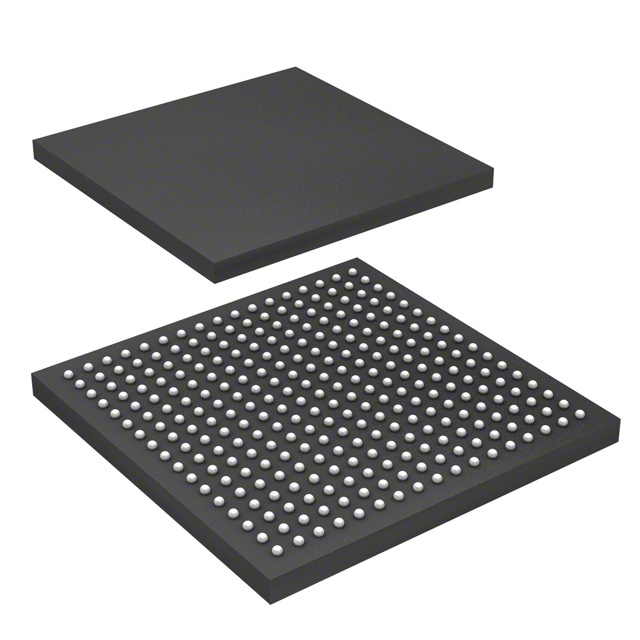
AFE58JD32LP Series
32-channel ultrasound AFE with 42-mW/ch power, digital demodulator, and JESD204B and LVDS interface
Manufacturer: Texas Instruments
Catalog
32-channel ultrasound AFE with 42-mW/ch power, digital demodulator, and JESD204B and LVDS interface
Key Features
• 32-Channel AFE for Ultrasound Applications:LNA, Attenuator, LPF, ADC, CW Mixer, and Digital I/Q DemodulatorDigital Time Gain Compensation (DTGC)Total Gain Range: 0 dB to 48 dBLow-Noise Amplifier (LNA) With Programmable Gain:Low Current Noise of 1pA/rtHzGain: 21 dB, 18 dB, and 15 dBLinear Input Range: up to 700 mVPPProgrammable Attenuator (ATTEN):Attenuation Range (Steps of 0.125 dB):0 to 36 dBDigital TGC EngineProgrammable Gain Amplifier (PGA):Gain: 21 dB, 24 dB, and 27 dBThird-Order, Linear-Phase, Low-Pass Filter (LPF):Cut-off Frequency From 10 MHz to 25 MHz16 ADCs Converting at 12-Bit, 80 MSPS or 10-Bit, 100 MSPS:Each ADC Converts Two Sets of Inputs at Half Rate12-Bit Mode: 72-dBFS SNR10-Bit Mode: 61-dBFS SNRTGC Mode Power w/o digital I/Q Demodulator:Lowest Power of 18.5 mW/Ch in Low Power Mode, 4 nV/rtHz, 10-Bit, 20 MSPS, LVDS (2x rate)27.8 mW/Ch at 3 nV/rtHzin Low Noise Mode at 12-Bit, 40 MSPS24.4 mW/Ch at 4 nV/rtHzin Low Power Mode at 12-Bit, 40 MSPSExcellent Device-to-Device Gain Matching:±0.5 dB (Typical)Harmonic Distortion: –55 dBc levelFast and Consistent Overload RecoveryContinuous Wave (CW) Path With:Low Close-In Phase Noise of –148 dBc/Hz at 1-kHz Frequency Offset off 5-MHz CarrierPower Consumption w/o Signal: 10 mW/ChPhase Resolution: λ/1612-dB Suppression on Third and Fifth HarmonicsDigital I/Q demodulator:Decimation Filter M = 1 to 63Data Throughput Reduction After DecimationOn-Chip RAM with 32 Preset ProfilesLVDS Interface with a Speed Up to 1-GbpsSmall Package: 15-mm × 15-mm NFBGA-28932-Channel AFE for Ultrasound Applications:LNA, Attenuator, LPF, ADC, CW Mixer, and Digital I/Q DemodulatorDigital Time Gain Compensation (DTGC)Total Gain Range: 0 dB to 48 dBLow-Noise Amplifier (LNA) With Programmable Gain:Low Current Noise of 1pA/rtHzGain: 21 dB, 18 dB, and 15 dBLinear Input Range: up to 700 mVPPProgrammable Attenuator (ATTEN):Attenuation Range (Steps of 0.125 dB):0 to 36 dBDigital TGC EngineProgrammable Gain Amplifier (PGA):Gain: 21 dB, 24 dB, and 27 dBThird-Order, Linear-Phase, Low-Pass Filter (LPF):Cut-off Frequency From 10 MHz to 25 MHz16 ADCs Converting at 12-Bit, 80 MSPS or 10-Bit, 100 MSPS:Each ADC Converts Two Sets of Inputs at Half Rate12-Bit Mode: 72-dBFS SNR10-Bit Mode: 61-dBFS SNRTGC Mode Power w/o digital I/Q Demodulator:Lowest Power of 18.5 mW/Ch in Low Power Mode, 4 nV/rtHz, 10-Bit, 20 MSPS, LVDS (2x rate)27.8 mW/Ch at 3 nV/rtHzin Low Noise Mode at 12-Bit, 40 MSPS24.4 mW/Ch at 4 nV/rtHzin Low Power Mode at 12-Bit, 40 MSPSExcellent Device-to-Device Gain Matching:±0.5 dB (Typical)Harmonic Distortion: –55 dBc levelFast and Consistent Overload RecoveryContinuous Wave (CW) Path With:Low Close-In Phase Noise of –148 dBc/Hz at 1-kHz Frequency Offset off 5-MHz CarrierPower Consumption w/o Signal: 10 mW/ChPhase Resolution: λ/1612-dB Suppression on Third and Fifth HarmonicsDigital I/Q demodulator:Decimation Filter M = 1 to 63Data Throughput Reduction After DecimationOn-Chip RAM with 32 Preset ProfilesLVDS Interface with a Speed Up to 1-GbpsSmall Package: 15-mm × 15-mm NFBGA-289
Description
AI
The AFE58JD32 device is a highly-integrated, analog front-end solution specifically designed for ultrasound systems where high performance, low power, and small size are required.
The AFE58JD32 is an integrated analog front-end (AFE) optimized for medical ultrasound application. The device is realized through a multichip module (MCM) with three dies: two voltage-controlled amplifier (VCA) dies and one analog-to-digital converter (ADC) die. Each VCA die has 16 channels and the ADC die converts all of the 32 channels.
Each channel in the VCA die is configured in either of two modes: time gain compensation (TGC) mode or continuous wave (CW) mode. In TGC mode, each channel includes an input attenuator (ATTEN), a low-noise amplifier (LNA) with variable-gain, and a third-order, low-pass filter (LPF). The attenuator supports an attenuation range of 8 dB to 0 dB, and the LNA supports gain ranges from 20 dB to 51 dB. The LPF cutoff frequency can be configured at 5 MHz, 7.5 MHz, 10 MHz, or 12.5 MHz to support ultrasound applications with different frequencies. In CW mode, each channel includes an LNA with a fixed gain of 18 dB, and a low-power passive mixer with 16 selectable phase delays. Different phase delays can be applied to each analog input signal to perform an on-chip beamforming operation. A harmonic filter in the CW mixer suppresses the third and fifth harmonic to enhance the sensitivity of the CW Doppler measurement.
The ADC die has 16 physical ADCs. Each ADC converts two sets of outputs – one from each VCA die. The ADC is configured to operate with a resolution of 12 bits or 10 bits. The ADC resolution can be traded off with conversion rate, and operates at maximum speeds of 80 MSPS and 100 MSPS at 12-bit and 10-bit resolution, respectively. The ADC is designed to scale its power with sampling rate. The output interface of the ADC comes out through a low-voltage differential signaling (LVDS) which can easily interface with low-cost field-programmable gate arrays (FPGAs).
The AFE58JD32 includes an optional digital demodulator and JESD204B data packing blocks. The digital in-phase and quadrature (I/Q) demodulator with programmable decimation filters accelerates computationally-intensive algorithms at low power. The device also supports an optional JESD204B interface that runs up to 5-Gbps and further reduces the circuit-board routing challenges in high-channel count systems.
The AFE58JD32 also allows various power and noise combinations to be selected for optimizing system performance. Therefore, this device is a suitable ultrasound AFE solution for systems with strict battery-life requirements.
The AFE58JD32 device is a highly-integrated, analog front-end solution specifically designed for ultrasound systems where high performance, low power, and small size are required.
The AFE58JD32 is an integrated analog front-end (AFE) optimized for medical ultrasound application. The device is realized through a multichip module (MCM) with three dies: two voltage-controlled amplifier (VCA) dies and one analog-to-digital converter (ADC) die. Each VCA die has 16 channels and the ADC die converts all of the 32 channels.
Each channel in the VCA die is configured in either of two modes: time gain compensation (TGC) mode or continuous wave (CW) mode. In TGC mode, each channel includes an input attenuator (ATTEN), a low-noise amplifier (LNA) with variable-gain, and a third-order, low-pass filter (LPF). The attenuator supports an attenuation range of 8 dB to 0 dB, and the LNA supports gain ranges from 20 dB to 51 dB. The LPF cutoff frequency can be configured at 5 MHz, 7.5 MHz, 10 MHz, or 12.5 MHz to support ultrasound applications with different frequencies. In CW mode, each channel includes an LNA with a fixed gain of 18 dB, and a low-power passive mixer with 16 selectable phase delays. Different phase delays can be applied to each analog input signal to perform an on-chip beamforming operation. A harmonic filter in the CW mixer suppresses the third and fifth harmonic to enhance the sensitivity of the CW Doppler measurement.
The ADC die has 16 physical ADCs. Each ADC converts two sets of outputs – one from each VCA die. The ADC is configured to operate with a resolution of 12 bits or 10 bits. The ADC resolution can be traded off with conversion rate, and operates at maximum speeds of 80 MSPS and 100 MSPS at 12-bit and 10-bit resolution, respectively. The ADC is designed to scale its power with sampling rate. The output interface of the ADC comes out through a low-voltage differential signaling (LVDS) which can easily interface with low-cost field-programmable gate arrays (FPGAs).
The AFE58JD32 includes an optional digital demodulator and JESD204B data packing blocks. The digital in-phase and quadrature (I/Q) demodulator with programmable decimation filters accelerates computationally-intensive algorithms at low power. The device also supports an optional JESD204B interface that runs up to 5-Gbps and further reduces the circuit-board routing challenges in high-channel count systems.
The AFE58JD32 also allows various power and noise combinations to be selected for optimizing system performance. Therefore, this device is a suitable ultrasound AFE solution for systems with strict battery-life requirements.