


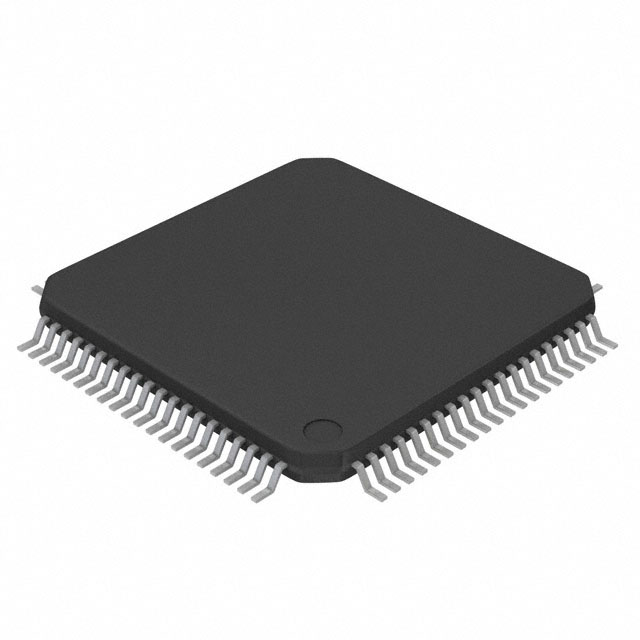
DS92LV18TVVX/NOPB
Active18-BIT BUS LVDS SERIALIZER/DESERIALIZER - 15-66 MHZ
Deep-Dive with AI
Search across all available documentation for this part.
DS92LV18TVVX/NOPB
Active18-BIT BUS LVDS SERIALIZER/DESERIALIZER - 15-66 MHZ
Technical Specifications
Parameters and characteristics for this part
| Specification | DS92LV18TVVX/NOPB |
|---|---|
| Data Rate | 2.376 Gbps |
| Function | Serializer/Deserializer |
| Input Type | LVTTL, BLVDS |
| Mounting Type | Surface Mount |
| Number of Inputs [custom] | 18 |
| Number of Inputs [custom] | 1 |
| Number of Outputs | 1/18 |
| Operating Temperature [Max] | 85 °C |
| Operating Temperature [Min] | -40 °C |
| Output Type | LVDS, BLVDS, LVTTL |
| Package / Case | 80-LQFP |
| Voltage - Supply [Max] | 3.45 V |
| Voltage - Supply [Min] | 3.15 V |
Pricing
Prices provided here are for design reference only. For realtime values and availability, please visit the distributors directly
| Distributor | Package | Quantity | $ | |
|---|---|---|---|---|
| Digikey | Bulk | 28 | $ 10.76 | |
| Tape & Reel (TR) | 1000 | $ 10.01 | ||
| Texas Instruments | LARGE T&R | 1 | $ 12.37 | |
| 100 | $ 10.81 | |||
| 250 | $ 8.33 | |||
| 1000 | $ 7.45 | |||
Description
General part information
DS92LV18 Series
The DS92LV18 Serializer/Deserializer (SERDES) pair transparently translates a 18–bit parallel bus into a BLVDS serial stream with embedded clock information. This single serial stream simplifies transferring a 18-bit, or less, bus over PCB traces and cables by eliminating the skew problems between parallel data and clock paths. It saves system cost by narrowing data paths that in turn reduce PCB layers, cable width, and connector size and pins.
This SERDES pair includes built-in system and device test capability. The line loopback feature enables the user to check the integrity of the serial data transmission paths of the transmitter and receiver while deserializing the serial data to parallel data at the receiver outputs. The local loopback feature enables the user to check the integrity of the transceiver from the local parallel-bus side.
The DS92LV18 incorporates modified BLVDS signaling on the high-speed I/O. BLVDS provides a low power and low noise environment for reliably transferring data over a serial transmission path. The equal and opposite currents through the differential data path control EMI by coupling the resulting fringing fields together.
Documents
Technical documentation and resources