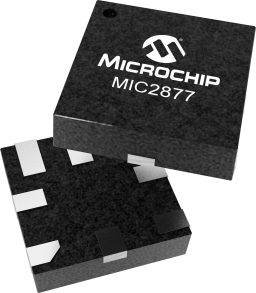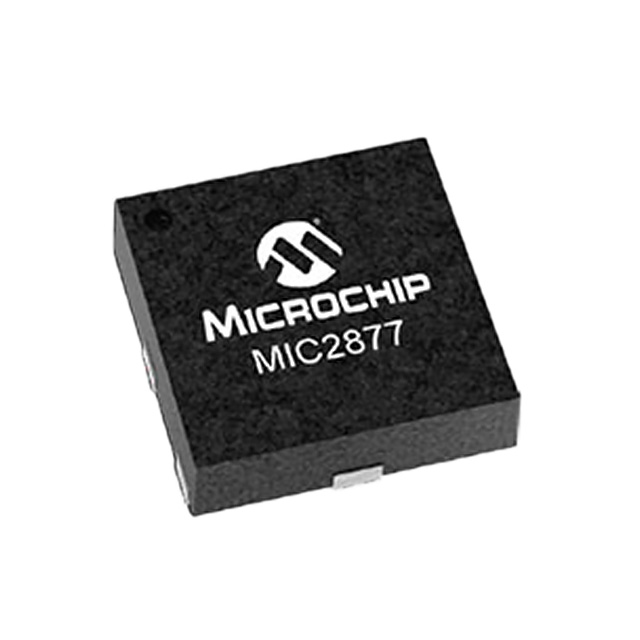
MIC2877-5.5YFT-TR
Active2MHZ 6.5A ISW SYNCHRONOUS BOOST REGULATOR
Deep-Dive with AI
Search across all available documentation for this part.
MIC2877-5.5YFT-TR
Active2MHZ 6.5A ISW SYNCHRONOUS BOOST REGULATOR
Deep-Dive with AI
Technical Specifications
Parameters and characteristics for this part
| Specification | MIC2877-5.5YFT-TR |
|---|---|
| Current - Output | 2 A |
| Frequency - Switching | 2 MHz |
| Function | Step-Up |
| Mounting Type | Surface Mount |
| Number of Outputs | 1 |
| Operating Temperature [Max] | 85 °C |
| Operating Temperature [Min] | -40 °C |
| Output Configuration | Positive |
| Output Type | 1.81 mOhm |
| Package / Case | 8-UQFN |
| Supplier Device Package | 8-FTQFN (2x2) |
| Synchronous Rectifier | True |
| Topology | Boost |
| Voltage - Input (Max) [Max] | 5.5 V |
| Voltage - Input (Min) [Min] | 2.5 V |
| Voltage - Output (Min/Fixed) | 5.5 V |
Pricing
Prices provided here are for design reference only. For realtime values and availability, please visit the distributors directly
| Distributor | Package | Quantity | $ | |
|---|---|---|---|---|
| Digikey | Cut Tape (CT) | 1 | $ 1.16 | |
| Digi-Reel® | 1 | $ 1.16 | ||
| Tape & Reel (TR) | 5000 | $ 0.89 | ||
| Microchip Direct | T/R | 1 | $ 1.16 | |
| 25 | $ 0.98 | |||
| 100 | $ 0.89 | |||
| 1000 | $ 0.81 | |||
| 5000 | $ 0.78 | |||
| Newark | Each (Supplied on Cut Tape) | 1 | $ 0.96 | |
Description
General part information
MIC2877 Series
The MIC2877 is a compact and highly efficient 2MHz synchronous boost regulator with a 6.5A (typical) switch. It features a bidirectional true load disconnect function that prevents any leakage current between the input and output when the device is disabled (EN = GND), protecting the input supply and improves the start-up performance.
The MIC2877 has the input voltage range between 2.5V and 5.5V and provides a 2A output continuous current for VIN = 3V and VOUT = 5V. Fixed output and adjustable output versions are available.
The MIC2877 operates in Bypass Mode automatically when the input voltage is higher or equal to the target output voltage. At light loads, the boost converter goes to Pulse Frequency Modulation (PFM) mode to improve the efficiency. In shutdown mode, the regulator typically consumes less than 2µA.